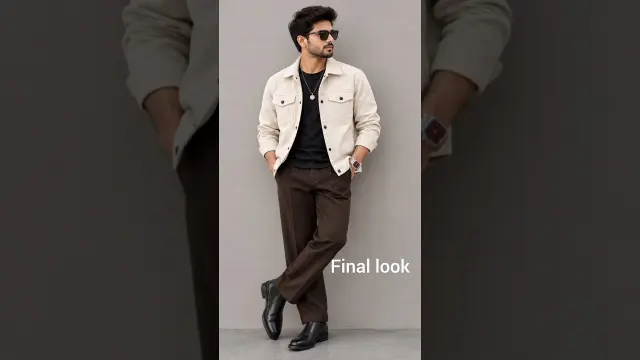
 Stylish Men Outfit Idea with T-Shirt Jacket and Brown Pants
#Mens Outfits
1 ideas
Stylish Men Outfit Idea with T-Shirt Jacket and Brown Pants
Get new #Mens Outfits ideas by email
Every Thursday: the week's best ideas, with the newest from #Mens Outfits.
Related tags
Men's Outfits: Building a Wardrobe That Works
A man's outfit is a small system of decisions — a top, a bottom, a layer, shoes, and a handful of details — and most of what makes it look good happens before anything is bought. Style, in men's clothing, is rarely about novelty. It is about proportion, fit, fabric and restraint, repeated consistently enough that people stop noticing the clothes and start noticing the person. Learning a few principles takes an afternoon; applying them takes a lifetime, which is roughly the point.
Start with fit, not fashion
The single most useful habit is learning what actually fits. A shoulder seam should sit at the edge of the shoulder, not below it. A jacket should close without pulling at the button, and the sleeve should stop where the wrist begins. Trouser hems should break once, lightly, over the shoe — or not break at all. Shirts should be close enough to feel neat and loose enough to move in. Most garments can be altered by a tailor, and shortening a sleeve or taking in a waist is often a small, unglamorous improvement that changes everything else.
The core pieces
Read more
A workable wardrobe is built from a short list of things that combine easily:
- Plain T-shirts in a few neutral shades, in a weight heavy enough to hang properly.
- A couple of button-up shirts, one in a solid colour and one in a quiet pattern.
- Dark jeans and a pair of well-cut trousers.
- Chinos in a mid-tone that sits between formal and casual.
- A jacket that layers cleanly — an unstructured blazer, a denim or utility jacket, or a simple overshirt.
- A neutral knit for cooler weather.
- One pair of clean leather shoes and one pair of simple sneakers.
- A belt that matches the shoes closely enough not to argue with them.
Everything on that list can be worn with most of the rest of it, which is the whole test.
Colour and pattern
Two or three colours per outfit is a reliable ceiling; neutrals — navy, grey, olive, brown, off-white, black — do most of the work, with one stronger tone as accent. Patterns are easiest when only one is present and the rest is plain. Texture is an underrated substitute for pattern: a ribbed knit against smooth cotton, or suede next to denim, adds interest without noise.
Dressing for the occasion
The common error is dressing one step too formally or too casually for the room. Workplaces, restaurants and weddings all carry quiet expectations, and it is generally safer to be slightly overdressed than visibly out of place. When unsure, plain, well-fitted and slightly more formal is the safer direction.
Small details that carry weight
Shoes are read first and forgotten last, so keep them clean. Clothes should be ironed or steamed, hems intact, buttons sewn. A watch, a plain ring, or nothing at all is usually enough. Fragrance, if used, should be discovered rather than announced.
A note for beginners
Buy slowly, try things on in person where possible, and resist filling a wardrobe in one afternoon. A few pieces that fit properly and suit your life will outperform a large collection bought on impulse — and they will still look right years from now.
#Mens Outfits: frequently asked questions
How do I start building a men's outfit wardrobe when I own almost nothing?
Begin with fit rather than fashion: learn how a shoulder seam, a sleeve and a trouser hem are supposed to sit on you, and have anything close-but-not-quite adjusted by a tailor. Then buy slowly, choosing a small set of plain, neutral pieces that can be worn together in different combinations. A short list that fits properly will serve you better than a large haul bought in one afternoon.
Which pieces are actually essential in a men's wardrobe?
Think in terms of a small core that mixes easily: plain tees in a wearable weight, a solid and a lightly patterned button-up, dark jeans, well-cut trousers, mid-tone chinos, a jacket that layers cleanly, a neutral knit, clean leather shoes, simple sneakers and a belt that sits comfortably with the shoes. The test for each item is whether it works with most of the others. If it only goes with one thing, it probably isn't core.
How do I choose colours and patterns without getting it wrong?
Keep the outfit to a tight palette, letting neutrals such as navy, grey, olive, brown, off-white and black carry most of the look, with a single stronger tone as the accent. If you want pattern, wear one patterned piece and keep everything else plain. Texture is an easy alternative — a ribbed knit against smooth cotton, or suede next to denim, adds interest without shouting.
How should I care for my clothes so they keep looking sharp?
Keep shoes clean and conditioned, since they are noticed first and remembered last, and iron or steam garments before wearing them. Check hems and buttons regularly and repair them early rather than letting small faults compound. Storing and washing pieces according to their fabric also helps them hold their shape, which matters more to how an outfit reads than any single purchase.
What should I wear to a wedding, dinner or smart-casual workplace?
The usual mistake is landing one step too formal or too casual for the room, so read the occasion's quiet expectations before deciding. When in doubt, choose plain, well-fitted clothes and lean slightly more formal — it is generally safer to be a touch overdressed than visibly out of place. A clean jacket, tidy trousers and polished shoes handle most situations between casual and dressy.
What are the most common mistakes men make with outfits?
Wearing clothes that don't fit properly is the biggest one, followed by piling on too many colours or competing patterns at once. Dressing for the wrong level of formality and neglecting small things — scruffy shoes, wrinkled shirts, missing buttons — undermine an otherwise good look. Restraint and consistency fix most of these more effectively than buying something new.
Videos come from YouTube and posts from Instagram; titles and summaries are our own. All rights belong to their creators.