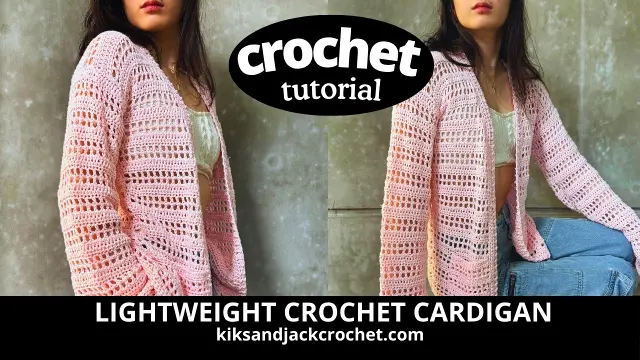
 Easy Flowy Lightweight Mesh Crochet Cardigan
#Mesh Cardigan
1 ideas
Easy Flowy Lightweight Mesh Crochet Cardigan
Get new #Mesh Cardigan ideas by email
Every Thursday: the week's best ideas, with the newest from #Mesh Cardigan.
Related tags
Mesh Cardigan: A Light Layer for Every Season
A mesh cardigan is a light, openwork layer: a cardigan whose fabric is deliberately full of holes. Rather than a solid knitted surface, the stitch pattern leaves gaps between stitches — small diamonds, hexagons, chains or lace-like motifs — so the piece reads as something between clothing and accessory. Because so much air moves through it, it works as a soft covering over a top, a dress or swimwear, giving coverage without weight or warmth.
Where it comes from
Openwork is an old idea. Crocheted and knitted laces have long been made for shawls, curtains, table linens and summer garments, and the mesh cardigan is a modern, casual descendant of those traditions. Crochet lends itself naturally to the look, since a chain space is the easiest way to leave a hole; knitters achieve similar effects with yarn-overs, dropped stitches or slip-stitch patterns. The garment became a staple of warm-weather dressing because it does the job a cardigan usually does — finishing an outfit — with almost no bulk.
The main kinds
- Crochet grid mesh, built from chains and single or double crochet, giving a square or diamond lattice.
- Filet crochet, where solid and open blocks form a picture or geometric motif.
- Knitted lace mesh, made with yarn-overs and decreases that create waves, leaves or eyelets.
- Dropped-stitch and ladder mesh, where columns of open stitches run vertically.
- Motif mesh, joined squares or flowers with open spaces between them.
Styles and shapes
Most mesh cardigans are loose and boxy or long and flowing, because the fabric itself is soft and collapsible. Cropped versions sit at the waist and suit high-waisted bottoms; long versions drape past the hip and work almost like a lightweight coat. Sleeves range from wide and bell-like to slim, and edges are often finished with a simple border of single crochet or ribbing to stop the fabric from stretching out of shape.
Read more
What beginners should know
Choose a smooth yarn in a light or medium weight so the stitch pattern stays visible; fuzzy or highly textured yarns hide the loops that make mesh interesting. Work a swatch and hold it up to the light — mesh changes size dramatically once it hangs, so gauge measured flat can mislead you. Keep your chain spaces even, since inconsistency shows more in openwork than in solid fabric. Count stitches at the end of every row: it is easy to lose a stitch at an open edge.
Practical tips
Block your finished piece to open up the pattern and even out the stitches. Store it folded rather than on a hanger, as the open structure stretches under its own weight. Wash gently by hand or on a delicate cycle and dry flat, and avoid anything that catches — velcro, rough jewellery, snagging bag straps. When layering, put the mesh over a smooth fabric so the openwork stays readable, and let one element be the focus: a patterned mesh cardigan needs a plain base underneath.
#Mesh Cardigan: frequently asked questions
How do I start making a mesh cardigan as a beginner?
Begin with a smooth yarn in a light or medium weight so the openwork stays visible, and pick a simple crochet grid or filet pattern rather than a lacy knitted one. Work a swatch first and hold it up to the light, because mesh stretches and grows once it hangs, so a flat measurement can mislead you. Then follow a boxy, loose shape, which is forgiving of small mistakes and needs little shaping.
What do I need to make a mesh cardigan?
A crochet hook or knitting needles sized to your yarn, a smooth yarn that shows the stitch definition, and a pattern whose openwork style you like. Add stitch markers and a tape measure for keeping the open edges even, plus blocking mats or a flat surface for finishing. A plain top to wear underneath is useful for trying it on as you go, since the fabric is see-through.
Which kind of mesh cardigan should I choose?
Crochet grid and filet mesh give a geometric lattice and are the most beginner-friendly, while knitted lace mesh creates softer waves and eyelets. Dropped-stitch and ladder mesh run in vertical columns and look more modern, and motif mesh made from joined squares or flowers has the most decorative feel. Match the style to what you will wear underneath: a busy motif reads best over a plain base.
How do I care for a mesh cardigan?
Wash it gently by hand or on a delicate cycle and dry it flat, since the open structure stretches when it hangs wet. Store it folded rather than on a hanger, as the weight of the fabric pulls it out of shape over time. Keep it away from anything that catches, such as velcro, rough jewellery or snagging bag straps.
What can I wear a mesh cardigan with?
It works as a soft layer over a plain top, a slip dress or swimwear, giving coverage without adding warmth or bulk. A cropped version sits at the waist and pairs well with high-waisted bottoms, while a long one drapes past the hip and behaves almost like a lightweight coat. Put it over smooth fabric and let only one element be patterned, so the openwork stays readable.
What mistakes should I avoid when making a mesh cardigan?
The most common slip is uneven chain spaces, which show far more in openwork than in solid fabric, so keep the gaps consistent as you go. Count your stitches at the end of every row, since an open edge makes it easy to lose one without noticing. Finally, block the finished piece to open up the pattern and even out the stitches, and finish the edges with a simple border so they do not stretch out of shape.
Videos come from YouTube and posts from Instagram; titles and summaries are our own. All rights belong to their creators.