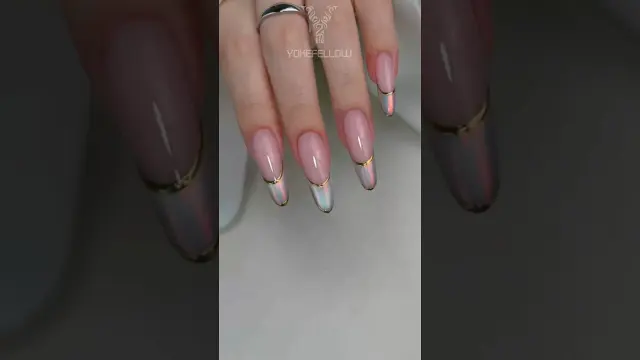
 Chrome and Cat Eye Nail Idea for a Metallic Finish
#Metallic Nails
1 ideas
Chrome and Cat Eye Nail Idea for a Metallic Finish
Get new #Metallic Nails ideas by email
Every Thursday: the week's best ideas, with the newest from #Metallic Nails.
Related tags
Metallic Nails: A Guide to Chrome, Mirror and Shine
Metallic nails describe any manicure that imitates the look of polished metal: silver, gold, bronze, copper, gunmetal, or a coloured foil that shifts light like a coin or a Christmas bauble. What separates a metallic finish from ordinary shimmer is how completely the surface reflects. A pearl polish scatters light softly; a true metallic throws it back, so you see the room in your nails and your nails in the room.
Where the look comes from
Metallic decoration is old — gilded surfaces, beaten metal leaf and mirrored ornament have appeared across many cultures for centuries. Nail polish took the idea up in the twentieth century, first with fine metallic pigments suspended in lacquer, and later with techniques borrowed from print, car paint and jewellers' work. The vocabulary still shows it: chrome, foil, mirror, powder.
The main finishes
Read more
- Classic metallic polish. Fine metal particles in a lacquer base. Easy to apply, forgiving of an imperfect surface, and the most wearable of the group.
- Chrome or mirror effect. Usually a powder rubbed over a cured gel colour, sealed with top coat. Achieves the closest thing to actual metal, but it magnifies every ridge beneath it.
- Foil transfer. A thin metallic film pressed onto a tacky layer, giving a slightly crumpled, hand-worked shine that suits textured or distressed designs.
- Cat eye. Magnetic particles in gel are drawn into a band with a magnet before curing, creating a moving line of light that reads as metallic without being mirror-flat.
- Accents. Metallic tips, a single chrome nail, thin metallic lines over matte colour. Useful when full metal feels like too much.
What beginners should know
Preparation decides the result. Metallic finishes show the nail plate underneath, so buffing out ridges, pushing back the cuticle and dealing with any peeling matters more here than with a cream colour. A ridge-filling base coat does a lot of quiet work.
Thin layers beat thick ones. Metallic lacquer streaked by a heavy hand is hard to rescue; two or three thin passes give a smoother, more reflective surface.
Application marks show. The whole point of a mirror is that it reflects what is in front of it, including brush lines. Work quickly and lightly, and avoid going over half-dried polish.
Metallics are less flattering on dry cuticles than any other finish. Oil before you photograph, and after.
Wearing it well
Cool silvers and gunmetals sit easily with most skin tones and read as modern; warm golds and coppers feel richer and suit jewellery you already wear. A full mirror set draws attention to the shape of the nail, so file evenly and keep the length consistent. If the shine feels severe, matte top coat over metallic colour produces a brushed-metal effect that is softer and surprisingly versatile.
Removal matters as much as application. Powder and foil effects often want soaking rather than scrubbing; peeling them off takes surface layers with them. Patience at the end protects the nail for the next set.
#Metallic Nails: frequently asked questions
What makes a metallic nail different from an ordinary shimmery polish?
Shimmer scatters light in a soft, pearly haze, while a metallic finish bounces light back so directly that you can almost see reflections in it. That mirror-like quality is what gives metal its look, and it is why the surface underneath matters so much — any ridge or dent shows through instead of being hidden.
Can I get a metallic look with regular polish, or do I need gel and a lamp?
You can absolutely start with standard metallic lacquer, which is the most forgiving option and needs no equipment beyond a base and top coat. Chrome powders and magnetic cat-eye effects are usually worked into gel and cured under a lamp, so save those for when you are comfortable with the basics.
Which metallic finish is the easiest to wear for a beginner?
Classic metallic polish is the safest starting point because it applies like a normal colour and smooths over small imperfections rather than magnifying them. If you want something closer to real metal, a chrome powder gives the strongest effect but demands a very even nail plate underneath. Accent versions — metallic tips or a single shiny nail against matte — let you try the look without committing to a full set.
How do I prepare my nails so the metal finish looks smooth?
Buff out ridges, push the cuticles back gently and sort out any peeling before you polish, since a reflective surface reveals everything below it. A ridge-filling base coat does a lot of quiet work here. Apply the colour in several thin passes rather than one thick one, and work quickly so you don't drag over half-dry polish.
How should I care for metallic nails once they're done?
Keep the cuticles oiled — dry skin looks harsher next to a high-shine finish than next to a cream colour. Treat the nails as the delicate surface they are: file evenly and keep the length consistent, since a mirror set draws the eye straight to the shape. When it's time to remove them, soak rather than scrub or peel, because pulling powder or foil off lifts surface layers with it.
What are the most common mistakes people make with metallic nails?
Overloading the brush is the big one, because a heavy hand leaves streaks that a reflective finish refuses to hide. Going back over polish that has started to set creates the same problem. The other frequent slip is skipping prep — assuming the shine will distract from an uneven surface, when in fact it does the opposite.
Videos come from YouTube and posts from Instagram; titles and summaries are our own. All rights belong to their creators.