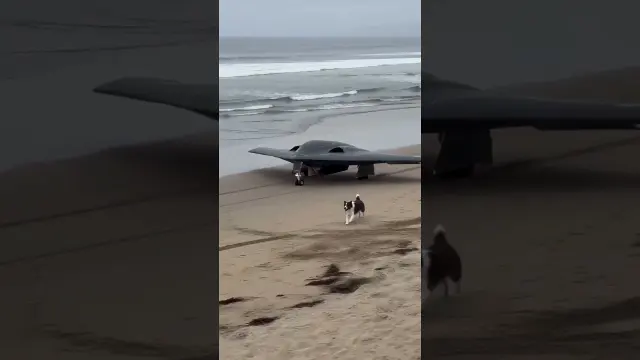
 B-2 Spirit Stealth Bomber RC Scale Model Flight Showcase
#Military Aircraft
1 ideas
B-2 Spirit Stealth Bomber RC Scale Model Flight Showcase
Get new #Military Aircraft ideas by email
Every Thursday: the week's best ideas, with the newest from #Military Aircraft.
Related tags
Military Aircraft: A Guide to Types and Roles
Military aircraft are airplanes and helicopters designed for defense, transport, observation, and other military duties. Unlike civilian aircraft, they are built to meet specific operational needs, such as speed, range, maneuverability, stealth, carrying capacity, or the ability to operate from rough or short runways. Over time, military aviation has become an important part of modern defense, reconnaissance, and logistics.
What military aircraft are used for
The main purpose of military aircraft is to support armed forces in the air, on the ground, and at sea. Some are designed for combat, while others carry supplies, evacuate wounded personnel, patrol coastlines, or gather information. In many cases, the same basic airframe may be adapted for different missions, depending on the equipment fitted inside or outside it.
Military aircraft are often grouped by role rather than by shape. This helps you understand why they look so different from one another. A fast fighter, a large cargo plane, and a helicopter all serve different functions, even though they may belong to the same air force.
Read more
Main types of military aircraft
Fighter aircraft are built primarily for air combat. They are usually fast, highly maneuverable, and fitted with sensors and weapons for defending airspace or engaging other aircraft.
Bomber aircraft are designed to deliver weapons over long distances. Some are made for conventional bombing, while others may be designed to carry heavy loads or operate with a low radar profile.
Transport aircraft carry troops, equipment, and supplies. They are usually larger and less agile than combat aircraft, but they are essential for moving people and material quickly.
Reconnaissance and surveillance aircraft are used to observe and collect information. Some fly high and fast, while others are built to stay in the air for a long time and watch large areas.
Tanker aircraft refuel other aircraft in flight. This extends the range and endurance of combat and support missions.
Helicopters have an important military role as well. They can transport personnel, evacuate casualties, perform search and rescue, and support ground forces in areas where fixed-wing aircraft are less practical.
Styles and features to notice
Military aircraft vary widely in design, but certain features are common. Some have swept wings for speed, while others have straight or high-mounted wings for stability and cargo handling. Fighters often have compact, streamlined bodies, while transports usually have broad fuselages and rear loading doors. Stealth aircraft are shaped to reduce detection, using careful lines and surfaces that help them blend into the background of radar systems.
You may also notice that military aircraft are often fitted with external stores, sensors, antennas, or hardpoints for weapons and fuel tanks. These add function, but they can also change how the aircraft flies.
What beginners should know
If you are starting to learn about military aircraft, begin with their mission rather than their appearance. Ask what the aircraft is meant to do, and that usually explains its shape and equipment. It also helps to learn the difference between fixed-wing aircraft and helicopters, then move on to the main categories.
When identifying aircraft, small details matter. The number of engines, wing position, tail shape, and the presence of a cargo ramp or weapons bays can all offer clues. Museum displays, scale models, and reference books can be useful ways to compare types and understand how they evolved.
Military aircraft combine engineering, strategy, and specialized design. Once you understand their roles, the variety becomes much easier to appreciate.
#Military Aircraft: frequently asked questions
How do I start learning about military aircraft?
Start with what each aircraft is built to do rather than how it looks. Once you know whether a plane is meant to fight, carry cargo, watch an area, or refuel others, its shape and equipment usually make sense. From there you can branch out into the main categories and compare examples as you come across them.
What do I need to begin identifying military aircraft?
Mostly a bit of patience and a few good reference sources, such as museum displays, scale models, or illustrated books. Train yourself to look at small clues first: wing position, tail shape, how many engines there are, and whether the aircraft has a cargo ramp or an internal weapons bay. Comparing several types side by side is far more useful than memorizing individual machines.
Which type of military aircraft should I focus on first?
It depends on what interests you most — speed and agility, heavy logistics, long endurance observation, or rotary flight. A common approach is to get comfortable with the difference between fixed-wing aircraft and helicopters, then pick one role that appeals to you and explore it in depth. Specializing early makes the huge variety feel manageable instead of overwhelming.
How are military aircraft cared for and maintained?
They need constant inspection, servicing of engines and airframes, and careful attention to anything mounted externally, since stores and sensors affect how the aircraft performs. Maintenance is planned around missions, with checks happening between flights and deeper work scheduled over the aircraft's life. Keeping records and replacing worn parts on time matters as much as the flying itself.
What are common mistakes beginners make with military aircraft?
The biggest one is judging an aircraft by appearance alone and assuming a sleek shape means a combat role. Another is overlooking how much external equipment — tanks, antennas, pods — changes both the look and the flying behavior of the same basic airframe. Rushing past the mission and jumping straight to model names usually leads to confusion later.
Where do military aircraft fit into a visual inspiration collection?
They're a strong subject for anyone drawn to engineering lines, surface detail, and purposeful design. The contrast between streamlined fighters and broad-bodied transports, or between fixed wings and rotors, gives plenty of material for sketching, modeling, or photography. Looking at them by role rather than by shape makes a collection feel coherent.
Videos come from YouTube and posts from Instagram; titles and summaries are our own. All rights belong to their creators.