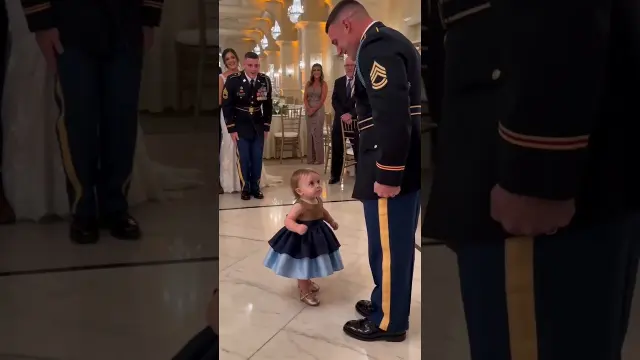
 Toddler Salutes Military Dad Across the Wedding Dance Floor
#Military Family
1 ideas
Toddler Salutes Military Dad Across the Wedding Dance Floor
Get new #Military Family ideas by email
Every Thursday: the week's best ideas, with the newest from #Military Family.
Related tags
Military Family: Life, Routine and Belonging
Military family is the term used for the household of someone serving in the armed forces, and for the wider circle of parents, partners, children and relatives whose lives are shaped by that service. It describes a way of living as much as a label: a home that runs on two calendars at once, one ordinary and one set by duty.
Where it comes from
The idea that a family serves alongside the person in uniform is old, but the phrase itself became common as military life grew more formal and moved away from the places families once lived together on base. Today it covers spouses and partners, children, and often grandparents and siblings who take part in care, celebration and worry from a distance.
How military family life is organised
Read more
Service life brings a rhythm of its own. There are postings and relocations, periods of training, deployments of varying length, and the return home afterwards. Families build routines around these cycles: a school calendar that may need to be rebuilt in a new town, a household budget that shifts during absence, a set of traditions that travel well because they do not depend on a particular house.
Much of this is supported by formal structures. Family support centres, welfare offices and community programmes exist to answer practical questions about housing, schooling, healthcare and finances, and to put people in touch with others in the same situation. Chaplaincy and counselling services are usually available too. Alongside them sits an informal network of neighbours and friends who understand without needing much explanation.
What beginners should know
If you are new to this life, start with information rather than assumptions. Learn who your local point of contact is and keep essential documents, numbers and appointment dates in one place that everyone in the household can find. Ask about the support available before you need it.
Expect mixed feelings, in yourself and in your children. Pride and worry often arrive together. Naming that is more useful than pretending one is absent.
Keep explanations age-appropriate and concrete. Children cope better with "Daddy will be away for the winter and we will write every week" than with vague reassurance.
Practical tips
- Protect small rituals: a weekly call, a shared photo album, a meal that marks a homecoming.
- Build a local map of help early, including a neighbour, a school contact and a support group.
- Keep a simple household file, paper or digital, for documents and deadlines.
- When someone returns, allow a slow readjustment. Routines changed while they were away and will change again.
- Look after the person who is holding things together at home. Rest and adult company are not luxuries.
Military family life asks a great deal of ordinary days. What holds it together is rarely heroism; it is steady communication, a willingness to ask for help, and the small repeatable habits that make a home feel like one wherever it happens to be.
#Military Family: frequently asked questions
What exactly does "military family" mean?
It refers to the household and wider circle of people whose lives are shaped by someone's service in the armed forces — partners, children, parents, siblings and grandparents included. It is less a formal status than a way of living, where home life runs on an ordinary calendar and a duty calendar at the same time.
How do I start finding my way around military family life as a newcomer?
Begin with information instead of guesswork: find out who your local point of contact is and what family support services exist near you. Gather essential documents, phone numbers and appointment dates into one file the whole household can locate, and ask about available help before a crisis makes it urgent.
Which support should we turn to first when something goes wrong?
Formal channels such as family support centres, welfare offices, chaplaincy and counselling services are set up for exactly these practical questions about housing, schooling and household arrangements. Just as important is the informal layer — a trusted neighbour, a school contact and other families in the same situation, who often understand without needing explanations.
How do we help children cope with a parent being away?
Keep explanations concrete and suited to their age — saying when the person will be back and how you will stay in touch works better than vague reassurance. Expect pride and worry to show up together, in children and in adults, and name those feelings rather than pretending only one is there.
What small habits make deployments and postings easier to live with?
Protect a few repeatable rituals: a regular call, a shared photo album, a meal that marks a homecoming. Because these do not depend on a particular house, they travel with you through relocations and keep the household feeling like itself.
What mistakes do families most often make?
Trying to hold everything alone is the common one — the person keeping the home running also needs rest and adult company, which are not indulgences. The other is expecting an instant return to normal when someone comes back; routines shifted during the absence, so give the readjustment time and keep talking.
Videos come from YouTube and posts from Instagram; titles and summaries are our own. All rights belong to their creators.