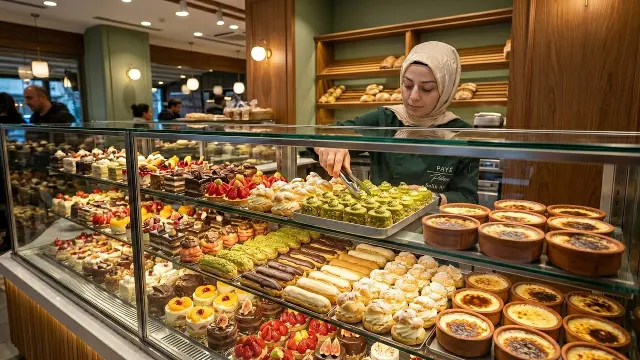
 Women Pastry Chefs Crafting Desserts in an Istanbul Patisserie
#Mini Pastries
1 ideas
Women Pastry Chefs Crafting Desserts in an Istanbul Patisserie
Get new #Mini Pastries ideas by email
Every Thursday: the week's best ideas, with the newest from #Mini Pastries.
Related tags
Mini Pastries: Small Bakes with Big Appeal
Mini pastries are small baked or assembled sweets and savouries made in bite-sized or hand-held portions. They can be as simple as a tiny tart filled with fruit or cream, or as intricate as a layered, glazed, or piped petit four. Because they are small, they are often associated with elegance, variety, and sharing. You’ll find them in many baking traditions, from French patisserie to home kitchens everywhere, where they are used for celebrations, afternoon tea, dessert tables, and snack platters.
What mini pastries are
The idea behind mini pastries is straightforward: the same flavours and techniques used in larger pastries are scaled down into smaller portions. This makes them useful when you want to offer more variety, control serving sizes, or create a polished presentation. Common forms include tartlets, mini éclairs, mini puff pastry turnovers, petits fours, small filled buns, and bite-sized layered desserts.
Because they are smaller, mini pastries often depend on balance. The pastry needs to be crisp, tender, or flaky, while the filling should be flavourful enough to stand out in just a few bites. A good mini pastry feels complete without being heavy.
Read more
Common styles and fillings
Mini pastries can be sweet or savoury, and many of the same basic doughs are used across both kinds.
- Shortcrust tartlets are often filled with fruit, custard, chocolate, lemon curd, or nut creams.
- Puff pastry minis can be shaped into turnovers, palmiers, pinwheels, or small filled bites.
- Choux pastry is used for small cream puffs and éclairs, usually finished with glaze, icing, or a dusting of sugar.
- Yeasted mini pastries may be filled buns, rolls, or brioche-style treats.
- Savoury versions can include cheese, herbs, vegetables, or spiced meats, depending on the occasion.
For filling, it helps to think about texture as well as taste. Smooth creams work well with crisp shells. Soft fruit fillings pair nicely with buttery pastry. Thicker fillings are usually easier to handle and less likely to leak during baking or assembly.
Techniques that help
Mini pastries reward careful shaping and even sizing. If the pieces are similar in size, they bake more evenly and look more refined. Chilling the dough before shaping often makes it easier to handle, especially for shortcrust and puff pastry. A sharp cutter or knife gives cleaner edges, which helps the pastry rise or bake neatly.
For beginners, simple designs are often the best place to start. Tartlets, mini turnovers, and small rolled pastries are easier than highly decorative confections. It also helps to avoid overfilling, since a little too much filling can cause leaking or uneven baking.
Practical tips for better results
- Keep the pastry cold when the recipe calls for it.
- Use a light touch when rolling and shaping dough.
- Bake on a flat tray so the pieces keep their form.
- Let hot pastries cool before filling, glazing, or dusting.
- Taste the filling before assembly, if the recipe allows, so you can adjust sweetness or seasoning.
Mini pastries are a lovely way to bake with variety and care. Once you understand the basic doughs and fillings, you can create many combinations, from simple and rustic to refined and delicate.
Videos come from YouTube and posts from Instagram; titles and summaries are our own. All rights belong to their creators.