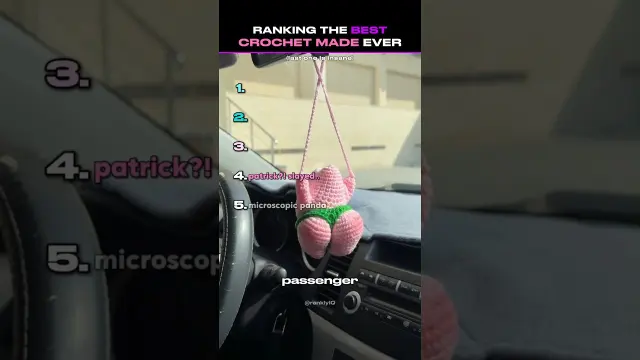
 Ranking Creative Crochet Creations, From Tiny Amigurumi to Flower Blankets
#Miniature Crochet
1 ideas
Ranking Creative Crochet Creations, From Tiny Amigurumi to Flower Blankets
Get new #Miniature Crochet ideas by email
Every Thursday: the week's best ideas, with the newest from #Miniature Crochet.
Related tags
Miniature Crochet: A Guide to Tiny Thread Projects
Miniature crochet is the practice of working the same stitches as ordinary crochet at a much smaller scale, usually with fine thread and a slender hook, to make pieces that fit in a palm or on a fingertip. It is less a separate craft than a change of proportion: the stitches are familiar, but everything around them shrinks, so the maker's patience and eyesight become part of the technique.
The craft grew out of the long tradition of fine thread work — lace, doilies, tatted edgings and decorated linens — where very thin cotton and steel hooks were ordinary household tools rather than a specialism. As crochet moved toward thicker yarns and larger garments through the twentieth century, the fine end of the tradition carried on in two directions: delicate lace for household textiles, and the small three-dimensional figures now usually called amigurumi. Miniature crochet sits where those meet, and it also borrows from the model-making and dollhouse world, where scale matters as much as stitch quality.
What people make falls into a few broad groups. Tiny amigurumi — small animals, dolls, food, household objects — are worked in continuous rounds so the fabric forms a closed shape. Miniature garments and accessories, from doll-sized cardigans to bags and shoes, follow the construction of full-size patterns at a reduced gauge. Fine lace pieces, including motifs, edgings and jewellery-like medallions, rely on open stitch patterns and block well when finished. Some makers work micro pieces measured in millimetres, often as a personal challenge rather than for practical use.
Beginners should start with small, flat projects rather than ambitious figures. Cotton thread and a steel hook in the range used for lace are the usual materials; the exact sizes are less important than matching hook to thread so the fabric stays firm and the stitches remain visible. Because the work is small, stitch markers help enormously — a misplaced stitch is harder to spot than in worsted-weight yarn. Good light and a plain background make the stitches easier to read, and short sessions protect both hands and eyes from strain. Tension is the hardest part: fine thread shows every inconsistency, so even, relaxed hands matter more than speed.
Read more
A few practical habits help. Keep the working yarn close to the hook so the thread does not twist, turn the piece rather than your wrist, and stop before your hands tire. Fine metal hooks can feel cold and slippery, so some makers prefer handles or grip aids. When a piece is finished, gentle blocking settles the shape, especially for lace.
Miniature crochet rewards slowness. The appeal is not only the finished object but the shift of attention it asks for — a small, quiet demand that makes the scale feel generous rather than limiting.
#Miniature Crochet: frequently asked questions
What exactly is miniature crochet, and is it a different technique from regular crochet?
It uses the same stitches as ordinary crochet, just worked at a much smaller scale with fine thread and a slender hook, so the finished piece fits in a palm or on a fingertip. Nothing about the stitches changes — it is really a change of proportion, where patience and close attention become part of the method rather than a separate skill.
What do I need to start miniature crochet?
Cotton thread and a steel hook in the range used for fine lace work are the usual materials, and matching the hook to the thread matters far more than any particular size. Stitch markers, good light and a plain background help a great deal, because a misplaced stitch is much harder to spot here than in thicker yarn.
Which kind of miniature crochet project suits a beginner best?
Small flat projects — simple motifs, edgings or tiny flat accessories — are the easiest entry point compared with dolls, animals or other three-dimensional figures. Working flat lets you learn to read your stitches and even out your tension before taking on the continuous rounds that closed shapes require.
How do I keep my tension even when the work is so small?
Fine thread reveals every inconsistency, so relaxed, even hands matter much more than speed. Keep the working yarn close to the hook so it does not twist, turn the piece rather than your wrist, and stop before your hands tire.
How should a finished miniature crochet piece be finished and cared for?
Gentle blocking settles the shape once a piece is complete, and it makes the biggest difference to lace and open stitch patterns. Small pieces keep their form best when stored flat or lightly padded rather than pressed under other things.
What mistakes do people most often make with miniature crochet?
The common mistake is rushing in long sessions — hands and eyes tire quickly at this scale, and errors are harder to notice than in heavier work. Another frequent one is pairing hook and thread badly, which leaves the fabric either too loose to hold its shape or too tight to read.
Videos come from YouTube and posts from Instagram; titles and summaries are our own. All rights belong to their creators.