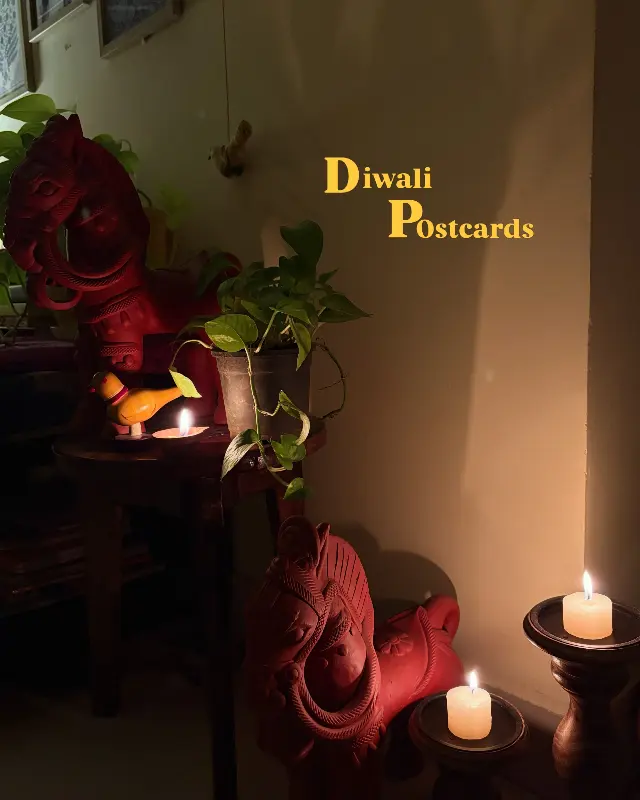
 Simple and Personal Diwali Decorations at Home
#Minimal Decorating
1 ideas
Simple and Personal Diwali Decorations at Home
Get new #Minimal Decorating ideas by email
Every Thursday: the week's best ideas, with the newest from #Minimal Decorating.
Related tags
Minimal Decorating: A Calm, Considered Guide
Minimal decorating is a way of furnishing a room around what you actually need and love, rather than filling every surface. It is less a strict style than a set of priorities: fewer objects, more empty space, and a deliberate choice about each thing that stays. The result usually reads as calm and uncluttered, but the point is not emptiness for its own sake — it is making room for the things that matter to look their best.
The approach grows out of modern design movements of the twentieth century, which favoured simple forms, honest materials and the idea that good design should serve daily life. It has since blended with many other traditions, including Scandinavian and Japanese ideas about light, natural textures and the beauty of restraint, so a minimal room today might feel warm and lived-in rather than cold and bare.
What it looks like in practice
Most minimal decorating rests on a few shared habits. Colour palettes are narrow, often whites, off-whites, greys, soft browns or a single accent repeated in small doses. Furniture is chosen for clean lines and useful function, and tends to sit lower and lighter so that floor and wall space stay visible. Storage matters enormously: if everything has a home behind a door or inside a basket, surfaces can stay clear without the room feeling deprived.
Read more
Texture does the work that pattern would otherwise do. Linen, wool, wood grain, stone, ceramic and matte paint add interest without visual noise. Light is treated as part of the decoration — sheer curtains, mirrors placed to catch daylight, and a few well-placed lamps rather than one harsh overhead source.
Where beginners usually start
Begin with one room, and begin by subtracting rather than buying. Clear a surface completely, then put back only the things you genuinely use or want to see. Notice what you keep reaching for and what you have stopped noticing at all.
From there, choose a small number of focal points. A single piece of art above a sofa, one plant, one bowl, a few books — each given space around it — will feel more intentional than a busy arrangement. Resist the urge to fill gaps immediately; living with a little empty space for a while helps you judge what is actually missing.
Practical tips
- Decide where things live before you decorate, so clutter has somewhere to go.
- Limit display to a handful of objects per surface, and rotate them when you want change.
- Repeat a colour or material two or three times through a room to create coherence.
- Choose fewer, larger pieces over many small ones; scale is what makes a simple room feel composed.
- Keep cords, packaging and everyday clutter out of sight where you can.
- Let one thing be imperfect or personal — minimal rooms still need warmth and character.
Minimal decorating asks for patience more than budget. It is a slow process of editing, and the room improves each time you decide that something is not quite worth the space it takes up.
#Minimal Decorating: frequently asked questions
How do I start minimal decorating without buying anything new?
Start in a single room and subtract before you add: clear a surface completely, then return only what you actually use or enjoy looking at. Living with the empty space for a while tells you what is genuinely missing, and often nothing is.
What do I actually need for a minimal room?
You need storage more than you need decor, since hidden storage is what lets surfaces stay clear without the room feeling empty. Beyond that, a narrow colour palette, a small number of larger well-chosen pieces, and a mix of natural textures such as linen, wool, wood and ceramic do most of the work.
Which kind of minimal decorating should I choose — warm and natural, or cool and stark?
Minimal decorating is a set of priorities rather than one fixed style, so pick the version that suits how you live. Warm minimalism leans on wood, stone, soft browns and layered texture, while a cooler, more graphic approach relies on very pale walls and sharper contrast — both work as long as the palette stays narrow and the objects are deliberate.
How do I keep a minimal room looking good over time?
The upkeep is mostly editing: keep everyday clutter, cords and packaging out of sight, and limit what sits on each surface to a small group of objects you can rotate when you want a change. Repeating one colour or material through the room keeps it coherent as things come and go.
Can minimal decorating work for a festive occasion like Diwali?
Yes — restraint suits celebration well, because a few well-placed lights, a single arrangement or one bowl of flowers read as more intentional than a crowded room. Give each festive element space around it, and let one personal or handmade piece carry the warmth.
What are the common mistakes people make when decorating minimally?
The usual slip is treating it as emptiness for its own sake, which leaves a room feeling cold and unfinished rather than calm. Another is filling gaps immediately instead of waiting, and a third is buying many small things instead of a few larger ones — scale is what makes a simple room feel composed.
Videos come from YouTube and posts from Instagram; titles and summaries are our own. All rights belong to their creators.