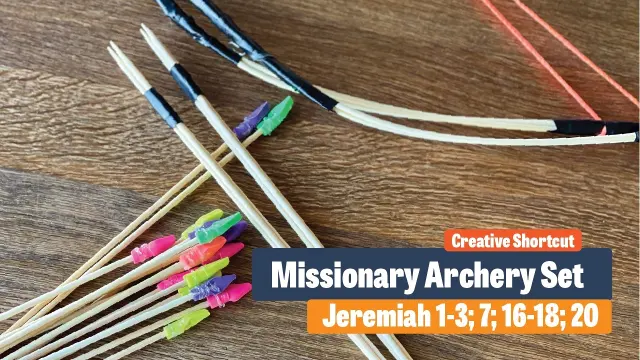
 Archery Challenge Hunters and Fishers Lesson
#Mission
1 ideas
Archery Challenge Hunters and Fishers Lesson
Get new #Mission ideas by email
Every Thursday: the week's best ideas, with the newest from #Mission.
Related tags
Mission: Finding Purpose in Everyday Life
The word mission carries two meanings at once, and both are useful. It can be a sending — a person travelling somewhere with a purpose, a task entrusted to someone, an errand with weight behind it. And it can be the purpose itself: the reason you set out, the thing you keep returning to when the days get noisy. Most of us live somewhere between the two.
Where the idea comes from
Mission descends from the Latin mittere, to send, and for centuries it described people sent out to do a particular work, often of a religious or charitable kind. Over time the word loosened. Institutions began writing mission statements to say plainly why they exist. And ordinary people borrowed the language, because it turns out we need it: a sentence that answers the question "what am I actually for?"
The shapes a mission can take
Read more
A mission does not have to be grand to be real. It can look like:
- A personal statement — a few lines about what you want to give your attention to and who benefits from it.
- A family mission — a short shared sentence that helps everyone agree on how the household treats people, time and money.
- A service mission — a period of volunteering, teaching, building or travelling to help a community, whether near home or far.
- A challenge or quest — a self-set goal with a beginning and an end, such as learning a skill, finishing a project or spending a season outdoors.
- A creative mission — a year of drawing daily, cooking through a cuisine, or making something for every person you love.
Writing one that holds up
Keep it short enough to remember without looking it up. One or two sentences, written in the present tense, using verbs rather than adjectives. "I make room for people who are lonely" says more than "I value kindness." Name who it is for, because a mission aimed at nobody becomes a mood. And expect to revise it: a statement you wrote at twenty-five may need rewording at forty, and that is not failure, it is attention.
Keeping it in sight
A mission only works if you meet it again. Some people print it and pin it where the day starts. Others give it a page in a journal, a corner of a mood board, or a line on a kitchen board everyone walks past. Reviewing it once a year — reading it aloud, noting what you kept and what you let slide — turns a nice sentence into something closer to a compass.
If you are just beginning
Start small and specific rather than sweeping. Choose one area of your life, give yourself a month, and see whether the words change how you spend a Tuesday. Ask someone who knows you well to read it and tell you honestly whether it sounds like you. Share it only if sharing helps; some missions are stronger kept quiet.
A mission is not a promise to be perfect. It is a direction you choose to keep pointing in, and then point in again.
#Mission: frequently asked questions
How do I start writing a mission if I've never done it before?
Begin with a single area of your life rather than trying to sum up everything at once, and write down what you actually want to give your attention to and who benefits from it. Keep the first draft rough and short — it only needs to be honest enough to test. Then live with it for a while and notice whether it changes how an ordinary weekday goes.
What do I actually need to create one?
You need very little: something to write with, a quiet stretch of time, and the willingness to be specific. Writing in the present tense with active verbs helps, and naming the people your mission serves keeps it from drifting into vague good intentions. An honest reader who knows you well is the most useful extra you can have.
Which kind of mission should I choose?
Pick the shape that matches what you are actually trying to do — a personal statement for your own direction, a shared family sentence, a period of service, a self-set challenge with a clear end, or a creative project you can return to. The form matters less than the fit; a modest personal statement can hold more weight than a grand plan that never touches your week.
How do I keep a mission from fading after the first enthusiasm wears off?
Make sure you meet it again regularly — print it and pin it where your day starts, give it a page in a journal or a line on a board everyone walks past. Revisit it deliberately rather than constantly, reading it through and noting what you kept and what you let slide. That slow return is what turns a nice sentence into a compass.
Is it a problem if my mission changes over time?
No — expecting revision is part of doing it well. The words you wrote at one stage of life may need rewording at another, and that reflects attention rather than failure. A worthwhile mission holds a direction steady while its wording catches up with who you have become.
What mistakes should I avoid?
The common ones are going too big and too abstract to remember, reaching for values instead of actions, and writing something aimed at nobody, which turns into a mood rather than a purpose. Sharing it widely before it is ready is another easy slip — some missions are stronger kept quiet until they have proven themselves.
Videos come from YouTube and posts from Instagram; titles and summaries are our own. All rights belong to their creators.