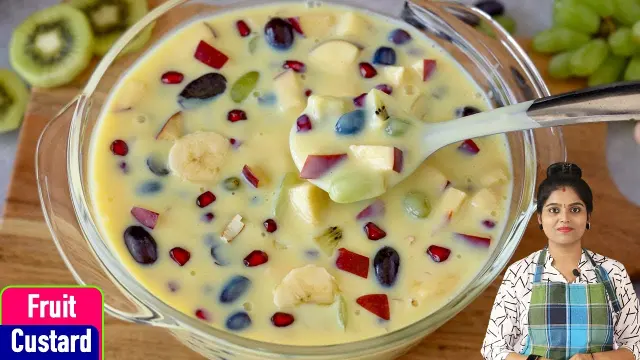
 Quick and Easy Homemade Mixed Fruit Custard
#Mixed Fruit
1 ideas
Quick and Easy Homemade Mixed Fruit Custard
Get new #Mixed Fruit ideas by email
Every Thursday: the week's best ideas, with the newest from #Mixed Fruit.
Related tags
Mixed Fruit: A Simple Guide to Combining and Serving
Mixed fruit simply means fruit from more than one source served together — a bowl of cut fruit, a compote simmered with sugar, a custard studded with banana and berries, or a bag of frozen chunks blended into a smoothie. Almost every food culture has its own version, because combining whatever fruit ripens at the same time is an obvious and practical thing to do. What changes from place to place is the treatment: raw and chilled, cooked down into a syrup, layered with cream, dried and mixed with nuts, or preserved as jam and chutney.
The main ways mixed fruit is used
- Fresh fruit salad: raw fruit cut into even pieces and eaten as it is, sometimes with citrus juice to keep pale fruit from browning.
- Compote or stewed fruit: fruit gently cooked with sugar, water or wine until soft, served warm or cold.
- Fruit and custard or cream desserts: cooked fruit or raw fruit layered with a pouring custard, whipped cream or yogurt.
- Baked dishes: crumbles, pies and tarts where several fruits are combined so that one balances another.
- Preserves, smoothies and frozen blends: fruit processed together for keeping or drinking.
What beginners should know
Read more
The single most useful skill is matching textures and sweetness levels. A fruit that turns soft quickly, such as a ripe banana or a strawberry, sits badly next to something crisp and firm unless you add them at the last moment. Pair a very sweet fruit with a sharp one — apple with blackcurrant, mango with lime, peach with raspberry — and the result tastes fuller than either fruit alone. A small amount of salt or acid often does more for a fruit mixture than extra sugar.
Choosing and preparing fruit
Ripe fruit smells of itself and gives slightly when pressed; hard fruit with no aroma will not improve much once cut. Wash everything before cutting, use a clean board and knife, and cut pieces to a similar size so the mixture eats well with a spoon. Fruits that brown quickly benefit from a squeeze of lemon or lime juice tossed through immediately. Leave delicate berries and soft herbs until serving, and add crunchy elements such as toasted nuts or seeds at the end so they stay crisp.
Practical tips
- Keep the sugar light at first; you can always add more, but you cannot take it out.
- Drain juicy fruit such as melon or pineapple before folding it into cream or custard, or the dessert will turn watery.
- Chill a fruit salad for a short while before serving, but not for days — cut fruit loses texture and freshness quickly.
- Store anything containing dairy or custard in the refrigerator and eat it within a day or two.
- Frozen mixed fruit is a reliable option when fresh fruit is scarce, and it works well in cooking and blending.
There is no fixed recipe for a good mixture. Taste as you go, adjust with acid, sweetness and a pinch of salt, and let what looks best on the day guide the bowl.
#Mixed Fruit: frequently asked questions
How do I start making a mixed fruit bowl if I've never done it before?
Begin with whatever ripe fruit you have on hand and cut it into pieces of roughly the same size, so everything eats well from a spoon. Taste as you go and adjust rather than following a fixed recipe — a little acidity or a pinch of salt usually does more than adding sugar. The aim is a bowl that feels balanced rather than a long list of ingredients.
What do I actually need to prepare mixed fruit?
A clean board, a sharp knife and a bowl will get you most of the way, plus a squeeze of lemon or lime for fruit that browns quickly. Beyond that, a little sugar, something acidic and a pinch of salt are the only extras worth keeping nearby. Special equipment is rarely necessary.
Which fruits should I combine, and which should I keep apart?
Pair a very sweet fruit with a sharper one so the mixture tastes fuller than either would alone, and try to match textures as well as flavours. Soft fruit like berries or ripe banana should go in at the last moment, since it breaks down next to anything crisp and firm. Crunchy additions such as toasted nuts or seeds also belong at the end so they stay crisp.
How should I store mixed fruit so it stays good?
Chill a fruit salad briefly before serving, but don't make it days ahead — cut fruit loses texture and freshness quite quickly. Anything containing custard, cream or yogurt needs to stay in the refrigerator and be eaten soon after assembly. Draining juicy fruit like melon or pineapple first keeps a creamy dessert from turning watery.
What are common mistakes people make with mixed fruit?
Sweetening too early is the most frequent one, since sugar can be added but never taken back out. Another is combining fruit of wildly different firmness at the same moment, which leaves some pieces mushy while others stay hard. Adding delicate berries, soft herbs and crunchy toppings too soon also spoils the texture.
Can I use frozen fruit instead of fresh?
Yes — frozen mixed fruit is a dependable stand-in when fresh fruit is scarce, and it works especially well for cooking, compotes and blending. It won't have the same bite as fresh fruit in a raw salad, so save it for dishes where the fruit softens anyway. Taste and adjust as you would with fresh.
Videos come from YouTube and posts from Instagram; titles and summaries are our own. All rights belong to their creators.