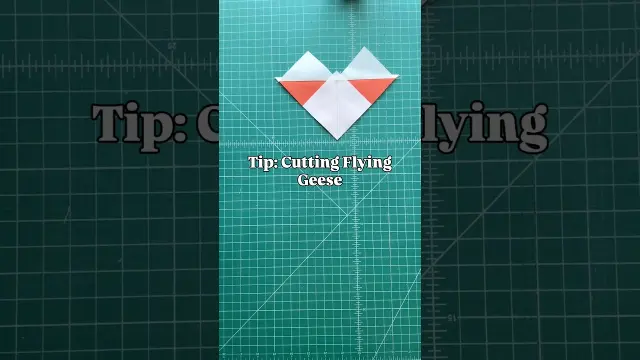
 Quick Cutting Shortcut for Flying Geese Blocks
#Modern Quilting
1 ideas
Quick Cutting Shortcut for Flying Geese Blocks
Get new #Modern Quilting ideas by email
Every Thursday: the week's best ideas, with the newest from #Modern Quilting.
Related tags
Modern Quilting: A Guide to the Contemporary Style
Quilting is one of the oldest textile crafts there is: layers of cloth stitched together to make a warm, durable bedcover, built from patchwork or a single piece of fabric. Modern quilting is a way of working within that tradition while looking forward rather than back. It borrows the techniques of the past — piecing, appliqué, layering, stitching — and turns them toward a different visual language: simpler, bolder, more graphic.
Where it comes from
Modern quilting grew out of a wider movement among makers who wanted to quilt in a way that felt personal and current. It draws on several streams: the clean geometry and negative space of mid-century modern design, the improvisational freedom of art quilting, and the revival of interest in handmade textiles that has run through craft culture for decades. Much of it spread through quilt guilds, workshops and online communities, where makers share work, swap techniques and encourage one another rather than compete over perfect points.
What makes a quilt modern
Read more
There is no rulebook, but certain qualities show up again and again.
- Negative space: large areas of unpieced background fabric, treated as a design element in their own right rather than something to fill.
- Graphic scale: oversized blocks, bold repeats and strong contrasts instead of small, busy prints.
- Improvisation: cutting and piecing without a fixed pattern, letting the design develop as you sew.
- Asymmetry and off-centre layouts, which give a quilt movement.
- Alternative grid: blocks placed on a shifted or tilted grid rather than a straight one.
- Modern quilting stitches: straight-line walking-foot quilting, all-over texture and machine quilting that complements rather than competes with the patchwork.
- A practical spirit: many modern quilts are made to be used, not stored.
Good starting points
If you are new to quilting, begin smaller than a bed quilt. A baby quilt, a wall hanging or a set of placemats lets you practise the whole sequence — cutting, piecing, basting, quilting and binding — without weeks of commitment. A single repeated block in three or four fabrics teaches accuracy and lets you see how colour choices change a design, and a simple block with generous background is a forgiving introduction to negative space.
Tools matter less than consistency. A rotary cutter, a self-healing mat and a long acrylic ruler make cutting faster and more accurate, but what really improves results is careful measuring and a consistent quarter-inch seam allowance.
Practical tips
Press seams as you go, and press rather than iron — sliding the iron distorts the fabric. Pre-wash if you want to avoid shrinkage later, and skip it if you prefer the crinkle that appears after the first wash. Baste thoroughly; many quilting problems begin with a basting layer that shifted. Quilt with a design that suits your patchwork: dense, even straight lines will make a busy quilt look calmer. And when a layout feels wrong, take a photo of it — the distance helps you see balance and colour better than standing over the design wall.
Modern quilting rewards curiosity more than precision. Start with fabric you love, keep the design simple, and let the quilt become yours.
#Modern Quilting: frequently asked questions
How do I get started with modern quilting as a complete beginner?
Start with something smaller than a full bed quilt — a baby quilt, wall hanging or set of placemats lets you practise the whole sequence of cutting, piecing, basting, quilting and binding without a long commitment. Pick one simple repeated block and a restrained palette so you can focus on accuracy rather than decisions. The goal of a first project is to finish it and learn the rhythm, not to make an heirloom.
What tools and supplies do I really need to begin?
A rotary cutter, a self-healing cutting mat and a long acrylic ruler will make your cutting faster and far more accurate, and they matter more than any other equipment. Beyond that you need fabric, batting, thread, a way to baste the layers and something to bind the edges with. Tools matter less than consistency — careful measuring and an even seam allowance are what actually improve your results.
What makes a quilt look modern instead of traditional?
Modern quilts tend to favour large areas of plain background fabric used as a design element, oversized blocks and strong graphic contrast rather than small busy prints. Asymmetry, off-centre placement and blocks set on a tilted or shifted grid give the design a sense of movement. Improvisation matters too — many makers cut and piece without a fixed pattern and let the layout develop as they sew.
How do I choose a quilting design that suits my patchwork?
Let the quilting complement the piecing rather than compete with it: dense, even straight lines or an all-over texture will calm a busy top, while a simpler top can carry more elaborate stitching. Straight-line walking-foot quilting is a reliable, forgiving choice that suits most modern designs. Try your idea on a small sample sandwich first if you are unsure how the two will read together.
How should I care for a modern quilt so it lasts?
Because many modern quilts are made to be used rather than stored, gentle regular washing and everyday wear are part of the point. Pre-wash your fabric if you want to avoid shrinkage and colour bleeding later, or skip it if you like the crinkled texture that develops after the first wash. Press seams as you sew rather than ironing them, since sliding the iron can distort the fabric and the finished shape.
What mistakes should I avoid when making a modern quilt?
The most common problem is careless basting — a basting layer that shifts will cause tucks and puckers that are hard to fix later, so take the time to secure all three layers thoroughly. Rushing the cutting and letting your seam allowance drift is the other big one, since small inaccuracies multiply across repeated blocks. When a layout feels wrong, photograph it and step back; the distance shows balance and colour far better than standing right in front of it.
Videos come from YouTube and posts from Instagram; titles and summaries are our own. All rights belong to their creators.