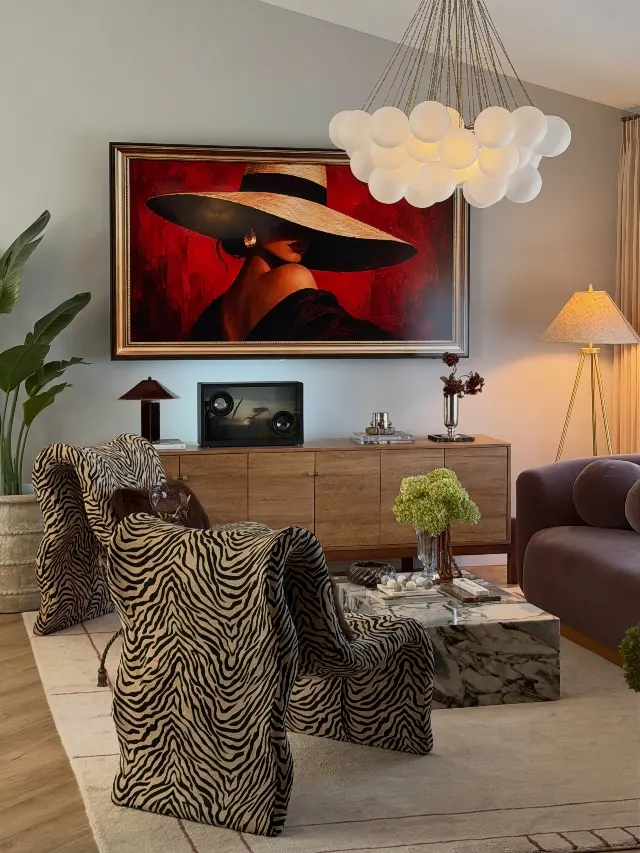
 Vintage-Meets-Modern Living Room With Layered Eclectic Styling
#Modern Vintage
1 ideas
Vintage-Meets-Modern Living Room With Layered Eclectic Styling
Get new #Modern Vintage ideas by email
Every Thursday: the week's best ideas, with the newest from #Modern Vintage.
Related tags
Modern Vintage: Mixing Old and New With Ease
Modern vintage is less a single look than a way of putting a room, an outfit or a table together: older pieces, chosen with care, sitting alongside things that are plainly of today. The result should feel lived-in rather than staged, and the pleasure of it lies in the contrast — a mid-century sideboard under a plain white wall, a worn wooden table with modern chairs, a hand-me-down mirror above a simple new console.
The idea has roots in the way homes have always accumulated things across generations, but it took shape as a deliberate style when people began to value older objects not as antiques to be protected but as useful furniture with character. Today it sits somewhere between thrift-shop practicality and a considered design choice, which is why it appeals to people furnishing a first flat and to those who have been collecting for years.
What makes something "modern vintage"
The word vintage is used loosely. Strictly, it describes items old enough to be of their time and not yet antique — furniture, textiles, glassware, clothing that carries the marks of an earlier decade. In practice, most people apply it to anything with visible age and honesty: patina on wood, a slightly faded print, a shape that no longer appears in shops.
Read more
What keeps the mix modern is restraint. A hundred old things together read as a junk shop. A handful, spaced among plain contemporary pieces, read as a point of view.
Common ways to approach it
- Pair one strong vintage piece with quiet, neutral modern surroundings, and let it be the focal point.
- Repeat a material across eras — wood, brass, linen, glass — so old and new share a common thread.
- Keep the colour palette tight. Two or three tones stop a mixed room from feeling noisy.
- Use vintage for texture and small items (lamps, vases, frames, textiles) if large furniture feels like a commitment.
- Let function lead. A chair you cannot sit on comfortably is decor, not furniture.
What beginners should know
Start with what you already own or have inherited. Family pieces carry a story that no purchase can imitate, and they force you to work with what is there rather than following a catalogue.
When buying, look at construction before appearance: joints, drawer runners, the weight of the piece. Wear is fine and often desirable; structural damage is a project. Ask yourself where it will actually go and measure the space first — the most common mistake is falling for something that does not fit.
Do not feel obliged to restore. Cleaning gently and stopping there preserves the surface that makes the object worth having. And resist the urge to complete a room at once; the style works best when it accumulates slowly, over years, from things you genuinely liked when you found them.
Finally, be willing to edit. Modern vintage depends on the modern part as much as the vintage one — clear away what crowds the pieces you love, and the room will do the rest.
#Modern Vintage: frequently asked questions
How do I start a modern vintage room without buying lots of new things?
Begin with what is already in your home or what has come down through your family, since inherited pieces carry a personal story and save you from decorating straight out of a catalogue. Work out where each thing actually lives before you add anything else, and let the room grow from there. The style rewards patience far more than a single shopping trip.
What should I look at when buying a vintage piece?
Check how it is built before you fall for how it looks — the joints, the drawer runners, the solidity of the frame. Honest wear such as patina or a faded print is part of the appeal, while structural damage turns the purchase into a repair job. Measure the space it is meant for first, because a piece that does not fit is the most frequent regret.
How many old pieces do I need for the look to work?
Fewer than you would think. A large collection of old items reads as a jumble, whereas a small handful set among plain contemporary furniture reads as a deliberate point of view. Pick one or two pieces you love and let the modern surroundings give them room.
Which approach suits a small flat or a first home?
Small items are the easiest entry point — lamps, vases, picture frames and textiles add age and texture without demanding a whole wall. If you do go for furniture, choose one strong piece and keep everything around it quiet and neutral. Repeating a single material such as wood, brass or linen across old and new helps the mix feel intentional rather than accidental.
Should I restore old furniture to fit the modern vintage look?
Usually not. A gentle clean that stops there protects the surface and patina that made the object worth having in the first place, and stripping it back can remove exactly what gives it character. Repair what is broken for safety and function, but leave the finish alone where you can.
What are the most common mistakes when mixing vintage with modern?
Treating every old object as display-worthy, following a strict period style to the letter, or trying to finish a room all at once. A chair nobody can sit in comfortably is decoration, not furniture, so let function guide what you keep. Above all, be willing to edit — modern vintage relies on the modern part as much as on the vintage, and clearing away the clutter is often all a room needs.
Videos come from YouTube and posts from Instagram; titles and summaries are our own. All rights belong to their creators.