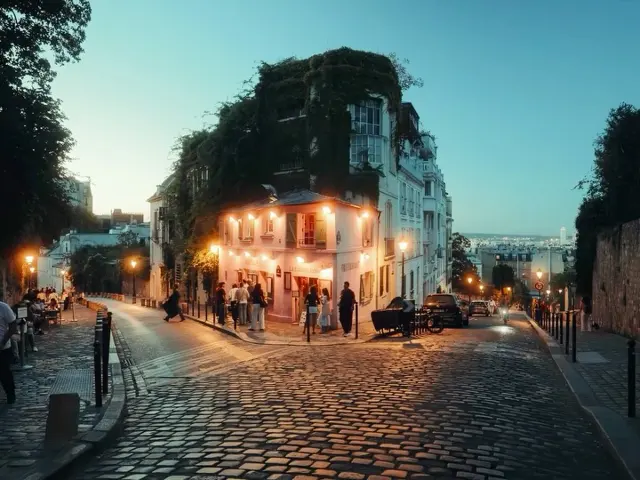
 Montmartre after dark: quiet cobblestone streets in Paris
#Montmartre
1 ideas
Montmartre after dark: quiet cobblestone streets in Paris
Get new #Montmartre ideas by email
Every Thursday: the week's best ideas, with the newest from #Montmartre.
Related tags
Montmartre: A Guide to Paris's Bohemian Hill
Montmartre is a hill in the north of Paris that has never quite agreed to be a neighbourhood. It sits above the city on a rise of old stone stairs and steep lanes, and it still behaves like the village it once was: low houses, small gardens, a parish church, a square where people paint outdoors. The name comes from the Latin for "mount of the martyrs", a reference to the early Christian tradition that a bishop was executed there. For centuries it was farmland and windmills, then a bohemian quarter, and today it is one of the most photographed places in France.
A hill with a village soul
The heart of Montmartre is its topography. Everything climbs. Narrow streets turn into flights of steps, walls are covered in ivy and grapevines, and the white-domed basilica of Sacré-Cœur sits at the summit like a landmark you can navigate by. Below it, the old village keeps a slower rhythm: butchers, bakeries, tiny theatres, a vineyard that still produces a small harvest each autumn, and the last of the windmills that once ground flour and later hosted open-air dances.
The artists' quarter
Read more
In the late nineteenth and early twentieth centuries, Montmartre drew painters, writers and musicians who could afford the cheap rents and liked living outside the rules. Studios were cold, life was social, and the cafés and cabarets became a stage for everything new in art. That period is gone, but its residue is everywhere: the studio buildings, the plaques on facades, the easels on the main square, where portrait painters still work in the open air.
What to look for
- Easel painters and caricaturists around the central square, working in pencil, pastel and watercolour.
- The stairways and hidden alleys away from the main routes — quieter, greener, and far better for photographs.
- The vineyard and the small museum of local history, which explains how the hill lived before tourism.
- Shopfronts of the early twentieth century: painted signs, tiled fronts, ironwork balconies, café terraces.
- The view from the top, especially in early morning when the light is soft and the steps are empty.
Practical tips
Wear shoes you can climb in, and carry water in warm weather. Go early: the hill is at its best before the crowds arrive and again after they leave. If the stairs are too much, a funicular and a small train will take you up. Buy from working artisans rather than souvenir racks if you want something that lasts. And step off the main square — one street back, the neighbourhood becomes itself again.
Bringing it home
Montmartre is easy to borrow from as a maker: muted stone greys and plaster whites, faded shop-sign lettering, cabbage roses on a café wall, the geometry of iron railings, the honesty of a paintbox left open. Photograph textures rather than monuments and you will carry the hill away with you.
#Montmartre: frequently asked questions
What is Montmartre like, and why do people visit it?
Montmartre is a hill in the north of Paris that still feels like a village: low houses, small gardens, steep lanes and flights of stone stairs climbing toward a white-domed basilica at the top. People come for that stacked, walkable charm — the easel painters on the main square, the old shopfronts, and the views over the city. It is less a single sight than a whole neighbourhood to wander through slowly.
How should I plan a first visit to Montmartre?
Start early, when the light is soft and the steps are still empty, and work your way up rather than down so the climbing happens while you are fresh. Once you reach the top, drift one or two streets back from the main square, where the neighbourhood quiets down and becomes itself again. Finish with the view before the afternoon crowds build.
What should I bring or wear for the hill?
Wear shoes you can actually climb in, since much of the neighbourhood is stairs and uneven cobblestone, and carry water when the weather is warm. A camera matters more than a checklist here — photograph textures like painted signs, tiled fronts and iron railings instead of monuments. If the stairs are too much for anyone in your group, a funicular and a small train will carry you up.
What is there to see beyond the main square and the basilica?
The quieter rewards are the hidden alleys, the vineyard that still gives a small harvest each autumn, the last remaining windmills, and the little museum of local history that explains how the hill lived before tourism. Look for early twentieth-century shopfronts with painted lettering and ironwork balconies. The studio buildings and facade plaques recall the painters and writers who once rented cheap rooms here.
What are common mistakes visitors make in Montmartre?
The biggest one is staying on the main square and treating the hill as a single photo stop — the real character is a street or two away. Another is arriving at midday, when the crowds are thickest and the light is harshest. Buying from souvenir racks instead of working artisans is a third; if you want something that lasts, buy from the people making it.
How can I bring Montmartre's look into my own projects?
Borrow the palette rather than the landmarks: muted stone greys and plaster whites, faded shop-sign lettering, cabbage roses on a café wall, the geometry of iron railings. The spirit of the place is a paintbox left open — informal, handmade, slightly worn. That translates easily into crafts, home styling or wedding details without turning into a literal postcard.
Videos come from YouTube and posts from Instagram; titles and summaries are our own. All rights belong to their creators.