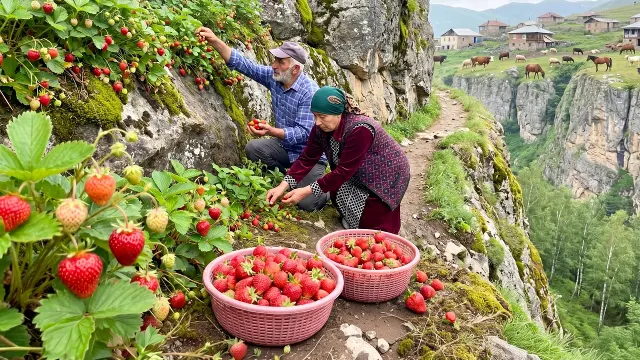
 Harvesting Wild Strawberries on Mountain Slopes
#Mountain Life
1 ideas
Harvesting Wild Strawberries on Mountain Slopes
Get new #Mountain Life ideas by email
Every Thursday: the week's best ideas, with the newest from #Mountain Life.
Related tags
Mountain Life: Living Close to the Land
What mountain life means
Mountain life is the way people live in high, often rugged places where slopes, weather, and distance shape daily routines. It can refer to permanent life in mountain villages, seasonal living in upland areas, or a lifestyle built around hiking, farming, shepherding, and time outdoors. Across cultures, mountain life has often developed from the need to adapt to steep terrain, changing weather, and limited access.
What makes mountain living distinctive is not only the landscape, but the rhythm it creates. Travel may take longer. Weather can change quickly. Work, food, and shelter are often planned with care. At the same time, mountain life is known for closeness to nature, strong local traditions, and a deep sense of place.
Common ways mountain life is lived
Read more
Mountain life can take many forms depending on the region and climate. In some places, people live in compact villages on valley floors or terraces. In others, homes are spread across hillsides, with land used for grazing, small gardens, or orchards. Some communities rely on farming, forestry, animal care, or seasonal tourism. Others combine several kinds of work to fit the mountain environment.
The landscape often shapes everyday habits:
- Homes are built to handle cold, wind, snow, or steep ground.
- Paths and roads may be narrow or difficult to maintain.
- Food traditions often reflect what grows well in the local climate.
- Community ties can be especially important where neighbors depend on one another.
Skills and knowledge that matter
If you are interested in mountain life, it helps to appreciate the practical knowledge it often requires. Reading weather, dressing in layers, moving safely on uneven ground, and planning ahead are all useful habits. In mountain areas, even simple tasks may take more time and attention than in flatter places.
For beginners who are drawn to this way of life, a few principles stand out:
- Respect the weather and terrain.
- Build routines that allow for flexibility.
- Learn local plants, paths, and seasonal patterns slowly.
- Prepare well before long walks or outdoor work.
- Value self-reliance, but also community support.
Traditions, food, and outdoor living
Mountain regions often have rich food and craft traditions shaped by the land. People may gather wild herbs, berries, mushrooms, or other seasonal ingredients where local conditions allow. Cooking often reflects practical needs: warming meals, preserved foods, and ingredients that travel or store well. Handcrafts, wool work, woodwork, and other skills are also common in many mountain cultures.
Outdoor life is a central part of mountain living. Walking, climbing, gardening, and caring for animals may be part of daily routine rather than recreation alone. This closeness to the outdoors can be rewarding, but it also asks for patience and awareness of safety.
A way of life shaped by place
Mountain life is ultimately about adaptation and connection. It asks people to live in step with the land, the seasons, and the limits of the terrain. For many, that brings a slower rhythm, a strong sense of independence, and a close relationship with nature. Whether you live in the mountains or simply admire them, mountain life offers a reminder that place shapes how we work, eat, move, and belong.
#Mountain Life: frequently asked questions
How can someone begin to experience mountain life?
Start by spending short stretches in a mountain area rather than jumping straight into a full move, and get used to walking on uneven ground, dressing in layers, and pacing yourself. Talk with people who live there about how days actually run, since the pace of errands, chores, and travel is usually quite different from flatter places. Let the practical side come first — weather, paths, seasonal rhythms — and the appreciation follows naturally.
What do you really need to live comfortably in the mountains?
Layered clothing, sturdy footwear, and a way to keep warm and dry matter more than most other things, because conditions shift quickly. Beyond gear, you need flexibility: plans for travel and work often have to bend around weather and terrain. A good relationship with neighbours and a willingness to learn local knowledge are just as important as equipment.
Which style of mountain living suits different people?
Some people do best in a compact village where services and neighbours are close, while others prefer a spread-out hillside place with more land and more quiet. Seasonal living — part of the year in the mountains and part elsewhere — can suit people who want the experience without a permanent commitment. Think about how much isolation, work, and daily effort you actually want before choosing.
How do you keep up with the demands of mountain living over time?
Build routines that leave room for delays, and handle repairs, supplies, and outdoor work before the season makes them harder. Learn the local paths, plants, and weather patterns gradually instead of trying to absorb everything at once. Relying on community as well as on yourself keeps the workload realistic.
What are common mistakes newcomers make in mountain areas?
Underestimating how much slower ordinary tasks become is the big one, along with heading out unprepared for a change in weather. Newcomers also sometimes overlook how much local knowledge — about terrain, seasons, and food traditions — comes from people who have lived there a long time. Patience and humility tend to prevent most of these.
What are some good ways to enjoy mountain life on a short visit?
Walking and foraging for seasonal wild ingredients, taking part in local food and craft traditions, and simply sitting with the slower rhythm of a mountain day all work well. Plan around the weather rather than against it, and keep outings modest until you know how your body handles the slopes. A short visit is also a good chance to ask residents what they would want a newcomer to understand.
Videos come from YouTube and posts from Instagram; titles and summaries are our own. All rights belong to their creators.