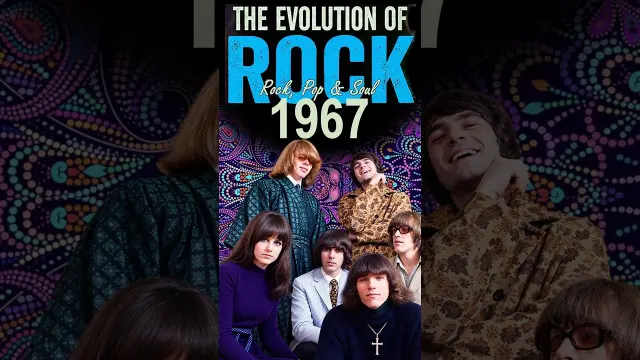
 1967 Billboard Hit Songs Countdown by Month
#Music History
1 ideas
1967 Billboard Hit Songs Countdown by Month
Get new #Music History ideas by email
Every Thursday: the week's best ideas, with the newest from #Music History.
Related tags
Music History: A Beginner's Guide to the Sounds of the Past
Music history is the study of how people have made, shared and listened to music across time. It is not only a list of composers and dates, but an account of how instruments, notation, performance spaces, religious practice, trade, migration and technology shaped the sounds people heard. Because music leaves few physical traces, historians work from surviving scores, instruments, treatises, letters, paintings, recordings and the memories of living musicians.
The long view
Most broad surveys begin with the medieval period, where much surviving music is sacred: plainchant sung in monasteries and cathedrals, later enriched by early polyphony in which two or more melodic lines move together. The Renaissance brought smoother textures and a flowering of secular song. The Baroque era is often associated with elaborate ornamentation, the rise of opera and the concerto, and the tuning and building of instruments in forms still recognisable today.
The Classical period is usually described as favouring balance and clear melodic lines, while the Romantic era expanded orchestras and leaned into personal expression. In the twentieth century, recorded sound, radio and mass manufacturing changed things fundamentally: music could be captured, copied and carried anywhere, and traditions from every continent met one another.
Read more
Beyond the concert hall
Music history is much wider than Western classical music. It includes folk traditions passed on by ear, devotional music of many faiths, court and theatre music, work songs, marching bands, and the popular styles that grew from them. Jazz, blues, gospel, country and later rock and pop all have deep roots in specific communities, and learning where a style comes from — and who made it — is part of understanding it.
Ideas worth knowing
A few concepts help beginners make sense of what they hear. Texture describes how many layers of sound are present and how they relate. Form is the shape of a piece: how sections repeat, contrast or return. Timbre is tone colour, the quality that makes a trumpet sound unlike a violin. Period is the conventions of a time and place. None of these labels are rules; they are useful shorthand for music that was often messier and more mixed than the textbooks suggest.
Getting started
Pick a single thread rather than trying to cover everything. Follow one instrument, one city, one genre or one question — how did people listen before recordings? — and let it lead you sideways. Listen repeatedly rather than widely: familiarity reveals detail. Read programme notes and liner essays, but trust your ears first. Seek out performances by the communities a music belongs to, and be wary of any history that treats one tradition as the main story and the rest as footnotes. Keep in mind that every era had its own popular music, its own arguments about taste and its own listeners who thought the new sound was noise. That continuity is what makes the subject worth returning to.
#Music History: frequently asked questions
How should a complete beginner start learning about music history?
Choose one narrow thread instead of trying to cover every era and genre at once — a single instrument, a city, a style, or a question like how people listened before recordings existed. Follow that thread wherever it leads, and let it pull you into neighbouring topics naturally. Listening repeatedly to a small amount of music teaches you more than skimming widely.
What do I actually need to study music history on my own?
Mostly your ears and a willingness to listen to the same piece many times, since familiarity is what reveals detail. Programme notes, liner essays and recordings of performances by the communities the music belongs to are the most useful companions. You do not need to read notation or own an instrument to follow the subject.
Which kind of music history should I focus on first — classical, folk or popular?
Whichever you already love, because that gives you a foothold for understanding the concepts that apply everywhere. Folk, devotional, court, work and popular traditions all belong to the subject, and none of them is the main story with the others as footnotes. Starting from something familiar makes the unfamiliar easier to approach later.
How do terms like texture, form, timbre and period help when I listen?
They are shorthand: texture for how many layers of sound are present, form for how sections repeat or contrast, timbre for tone colour, and period for the conventions of a time and place. They give you words for what you are already hearing, which makes comparisons easier to hold onto. Treat them as labels of convenience rather than rules, since real music is usually messier and more mixed than the categories suggest.
Is there a good way to study music history with children or as a family activity?
Keep it concrete and active — listen to a piece together, then talk about what instruments you can pick out, whether it feels busy or sparse, and what occasion it might have been made for. Following one instrument or one style across time works well because it gives a young listener a thread to hold. Live performance, even small and local, does a lot of the work that description cannot.
What common mistakes should I avoid when reading about music history?
The biggest is treating one tradition as the central story and everything else as a rounding-off, which flattens how much music travelled through trade, migration and religious practice. Another is assuming earlier listeners were less discriminating — every era had its popular music, its arguments about taste, and people who found the new sound unbearable. Be sceptical of tidy timelines and check whose account you are reading.
Videos come from YouTube and posts from Instagram; titles and summaries are our own. All rights belong to their creators.