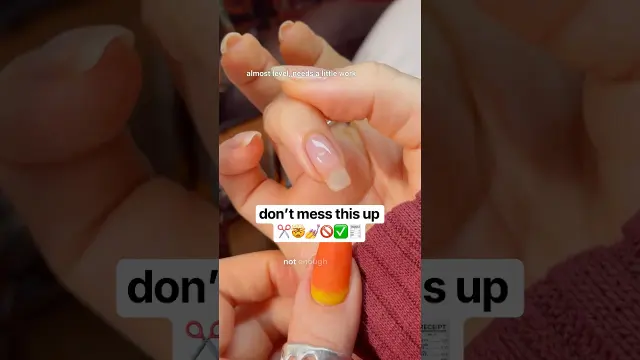
 Switching Nail Shapes from Square to Round with Builder Gel Refills
#Nail Shape
1 ideas
Switching Nail Shapes from Square to Round with Builder Gel Refills
Get new #Nail Shape ideas by email
Every Thursday: the week's best ideas, with the newest from #Nail Shape.
Related tags
Nail Shapes: A Guide to Every Silhouette
Nail shape refers to the outline of the free edge of the nail — the way the tip is filed, tapered or squared off. It is one of the most visible choices in a manicure, and it changes how the hand reads almost as much as colour does. The same polish on a short rounded nail and a long stiletto looks like two different manicures, which is why shape is usually decided before length, colour or finish.
The practice of deliberately filing nails into decorative silhouettes is old, but it became a mainstream beauty habit in the twentieth century alongside the manicure itself. Today shape is a standard part of any salon visit and a common subject of at-home experimentation.
The main shapes
- Square: straight sides with a flat tip and sharp corners. Clean and graphic, and it shows off a solid colour well, but the corners catch on things and chip more easily.
- Squoval: a square softened at the corners. The compromise most people end up choosing at first, because it keeps the tidy look without the snagging.
- Round: follows the natural curve of the fingertip. The most forgiving shape and the easiest to maintain, especially on short nails.
- Oval: longer than round, tapered gently along the sides. It lengthens the finger visually and is flattering on most hands.
- Almond: narrow, pointed but soft at the tip. It needs some length to work and requires a little more care to keep symmetrical.
- Coffin or ballerina: a tapered square, narrow at the tip and straight at the end. Dramatic and popular with extensions, though it demands real length.
- Stiletto: sharply pointed. Striking but fragile, and best treated as an occasional choice rather than a daily one.
Read more
What beginners should know
Shape follows the anatomy of the nail plate. Some nails curve strongly, some lie flat, and some have wide or uneven sidewalls. Filing against that natural grain is what causes breakage, so a shape that fights the nail will always be more work than one that works with it.
Length matters more than people expect. Almond and stiletto need the free edge to be long enough to taper; on short nails they collapse into a narrow, weak point. Square and round suit shorter lengths and are the sensible place to start.
Practical tips
File in one direction rather than sawing back and forth, which roughens the edge and encourages splitting. Work on dry nails, since wet nails bend and the finished shape shifts as they dry. Keep the shape of both hands even — file the same finger type on each hand in turn rather than finishing one hand entirely. If nails are weak or prone to peeling, shorter shapes reduce the amount of free edge that can catch.
Finally, shape is not permanent. It can be adjusted at each manicure or refill, and many people move gradually from round to almond to coffin as their nails gain length and strength.
#Nail Shape: frequently asked questions
How do I choose a nail shape that suits my hands?
Start with what your nails naturally do: strong curves, flat plates and wide sidewalls all file better into certain silhouettes than others. Length is the second factor, since almond and stiletto only read as intended once there is enough free edge to taper. Most people land on squoval or round first and move outward from there.
What do I need to shape my nails at home?
A decent file, a buffer and a steady light are really all it takes to begin. Work on nails that are completely dry, because a wet nail bends and the shape you file will shift as it dries. Filing in a single direction, rather than back and forth, keeps the edge smooth and less likely to split.
Which shapes are easiest to keep on short nails?
Round and square are the practical choices when there is little free edge to work with. Round simply follows the fingertip's own curve, which makes it forgiving and simple to maintain, while square stays tidy if you soften the corners into a squoval. Pointed shapes collapse into a narrow, weak tip at that length.
How do I care for a longer shape like almond or coffin?
These shapes need real length, and the longer the free edge, the more it can catch on things. Keeping both hands symmetrical takes patience, so file the same finger on each hand in turn instead of finishing one hand entirely. If a tip chips or breaks, it is usually quicker to re-file the whole shape than to patch one corner.
What shape works for a special occasion?
For a wedding, party or photo-heavy event, almond and oval tend to flatter most hands and lengthen the finger visually. Stiletto and coffin are the dramatic picks and often sit on extensions, which is fine for an evening but fiddly for everyday tasks. A solid colour reads particularly well on a clean square or squoval.
What mistakes should I avoid when filing?
Sawing the file back and forth roughens the edge and invites splitting, and filing wet nails means the shape changes as they dry. Forcing a silhouette that fights the nail's natural curve is another common trap, since it creates weak points that break. Shorter shapes reduce the amount of free edge exposed to damage when nails are peeling or fragile.
Videos come from YouTube and posts from Instagram; titles and summaries are our own. All rights belong to their creators.