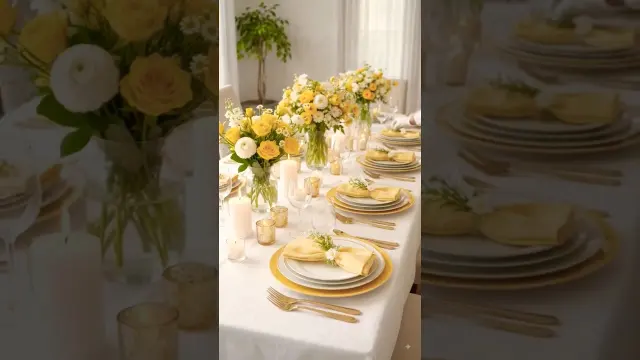
 Elegant White and Gold Table Setting with Yellow Flowers
#Napkin Folding
4 ideas
Elegant White and Gold Table Setting with Yellow Flowers
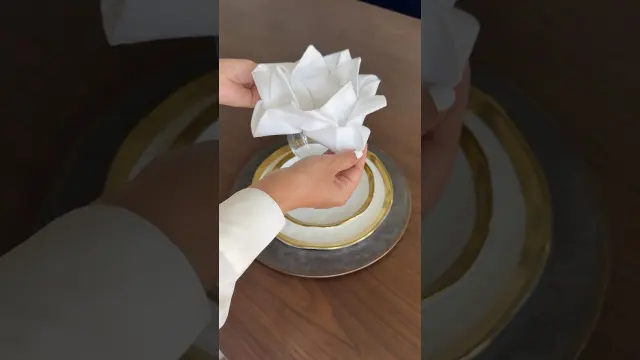 Lotus Flower Napkin Folding Tutorial for Elegant Tablescapes
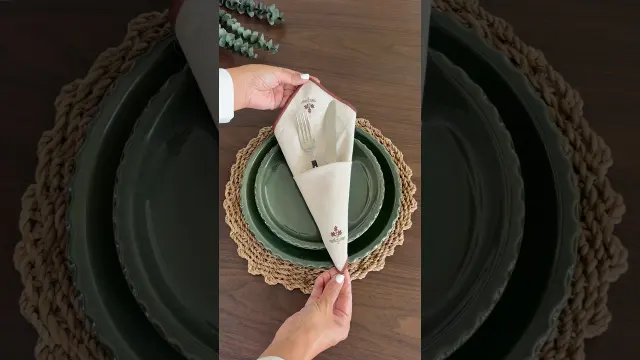 Easy Bouquet Napkin Folding Tutorial for Table Settings
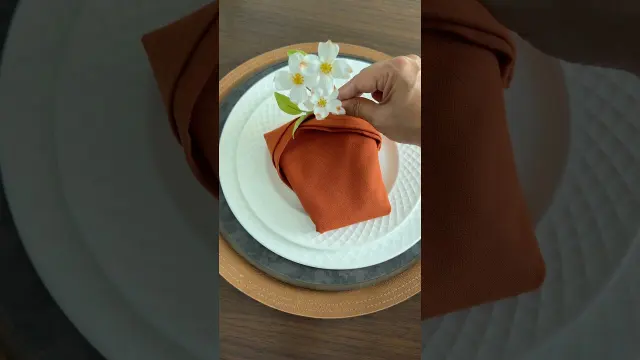 Flower Pot Napkin Folding Tutorial for Fall Tables
Get new #Napkin Folding ideas by email
Every Thursday: the week's best ideas, with the newest from #Napkin Folding.
Related tags
Napkin Folding: A Beginner's Guide to Table Settings
Folding a napkin is one of the smallest gestures in setting a table, and one of the most satisfying. A square of cloth or paper, creased a few times and stood upright, turns a plain place setting into something that looks considered. It costs nothing, takes a minute, and needs no special equipment beyond a flat surface and clean hands.
The practice has practical roots. Cloth napkins were once folded and pressed for storage, and a neat fold kept linens tidy between uses. Over time, households and hotels began shaping them into fans, cones and envelopes, and the fold became part of the welcome a table offers. Paper napkins later brought the same idea to everyday meals, picnics and children's parties.
The basic shapes
Most folds grow from a handful of foundations. The square or envelope fold lies flat and suits casual dinners and buffets. The triangle, folded on the diagonal and rolled or layered, is the starting point for fans and standing shapes. The roll, worked from one corner to the opposite, produces neat cylinders that sit well inside a glass or on a plate. The cone and the pocket hold cutlery or a small gift, making them useful as well as decorative. From these, more elaborate forms appear: flowers, birds, boats, bows and little baskets, all built from the same simple creases.
Read more
Cloth or paper
Cloth napkins hold a crease and stand up well, which makes them the choice for formal tables; linen and cotton are traditional, and a light starching or a quick press helps folds keep their shape. Paper napkins are easier for beginners and for large gatherings, though thin paper tears at tight corners, so choose a slightly thicker stock for standing designs. Size matters too: a large square gives more room to work, while smaller napkins suit flat folds and simple pockets.
Getting started
Begin with clean, ironed napkins and a flat, dry surface. Work slowly and press each crease firmly with your fingers as you go, since a soft fold collapses later. Symmetry is what makes a fold look polished, so line up corners before pressing. If a design has several steps, practise once with a paper napkin before using your good linen.
Keep in mind what the napkin has to do. If guests will actually use it, avoid folds that trap crumbs or require unfolding several tight layers. A simple pocket holding the cutlery is often more welcome than a complicated sculpture. When setting a table, repeat the same fold at every place for a calm, unified look, or vary the shape only when the table is large enough to carry it.
Finally, store folded napkins flat and loosely stacked, and unfold them fully after use before washing so creases do not set. With a little practice, the folds become quick and familiar, and the table gains a small, quiet pleasure each time you set it.
#Napkin Folding: frequently asked questions
How do I start with napkin folding if I’m a beginner?
Start with a clean, ironed napkin and a flat, dry surface. Simple shapes like a square, triangle, roll, or pocket are the easiest to learn and still look polished. Practicing first with a paper napkin can help before you try cloth.
What do I need to fold napkins at home?
You usually only need a square napkin, a clean work surface, and your hands. Cloth napkins hold their shape best, but paper napkins work well for casual settings and are easier for beginners. A quick press or light starch can help cloth folds stay crisp.
Should I choose cloth or paper napkins for folding?
Cloth napkins are better when you want a formal look and folds that stand up well, especially for elegant table settings. Paper napkins are more convenient for everyday meals, picnics, and larger gatherings, though thicker ones work best for shaped folds. The right choice depends on the occasion and how decorative you want the table to feel.
What napkin folds work best for special occasions?
For elegant tables, flower-inspired folds like a lotus or bouquet style can make the setting feel more refined and festive. For fall tables or a warmer seasonal look, a flower pot style can be a nice choice. A simple pocket fold also works well when you want something attractive but practical.
What are the most common mistakes when folding napkins?
One common mistake is making folds too loose, which causes them to collapse after you set the table. Uneven corners can also make even a simple fold look messy, so symmetry matters. Another mistake is choosing a design that is too complicated for the napkin type or for guests who still need to use it comfortably.
Videos come from YouTube and posts from Instagram; titles and summaries are our own. All rights belong to their creators.