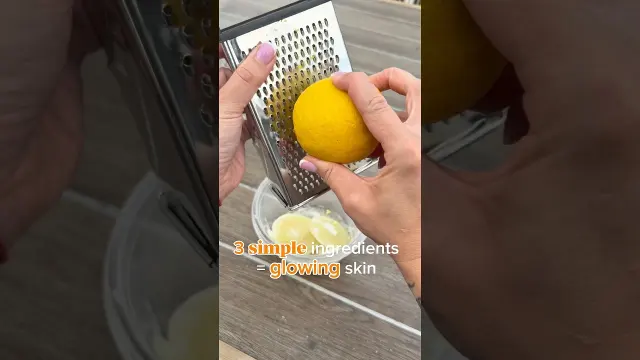
 Three-Ingredient DIY Body Scrub for Soft Skin
#Natural Exfoliant
1 ideas
Three-Ingredient DIY Body Scrub for Soft Skin
Get new #Natural Exfoliant ideas by email
Every Thursday: the week's best ideas, with the newest from #Natural Exfoliant.
Related tags
Natural Exfoliants: A Gentle Guide to Smoother Skin
Your skin renews itself on its own, shedding old cells and bringing fresh ones to the surface. Exfoliation simply gives that process a hand, lifting away the dull, flaky layer so what sits underneath looks and feels smoother. It has been part of beauty routines for a very long time, across many cultures, using little more than what kitchens, gardens and markets had to offer — salt, sugar, ground seeds, clay, sour milk. The appeal of a natural exfoliant is exactly that: simple ingredients you can recognise, often mixed at home, and a scrub you can adjust to suit your own skin.
Two ways to exfoliate
Exfoliants generally work in one of two ways. Physical, or mechanical, scrubs use small gritty particles that you massage over the skin — sugar, fine salt, coffee grounds, oatmeal, ground nut shells, jojoba beads. Chemical exfoliants work differently: they loosen the bonds holding dead cells together, without any rubbing. In the natural world these come from fruit acids, such as those found in citrus, papaya and pineapple, and from lactic acid in yogurt or buttermilk. A third, gentler category is enzymatic, using fruit enzymes to soften the surface.
Both approaches have their place. Physical scrubs give instant feedback and are easy to control by pressure; chemical and enzymatic ones tend to be more even but need a little patience and more caution, since you cannot feel them working.
Read more
Choosing your ingredients
- Sugar is the gentlest of the common scrub bases and dissolves as you rub, so it softens as it goes. Good for the body and for drier skin.
- Fine salt is slightly more assertive and suits rougher areas such as feet, elbows and knees.
- Coffee grounds are pleasantly textured and popular in body scrubs, though they can be messy.
- Oatmeal, finely ground, is soothing and works well for sensitive or easily irritated skin.
- Clay offers a gentler polish and is often combined with a little oil or water into a paste.
Whatever you choose, the carrier matters as much as the grit. A plant oil, honey or plain yogurt turns a scratchy powder into something that glides.
Using them kindly
A few habits make the difference between glowing and sore. Always patch test a new mixture on a small area first, especially if your skin is reactive. Work on damp skin, use light pressure, and let the grains do the work rather than your hand. Rinse with lukewarm water and follow with a moisturiser, since freshly exfoliated skin loses moisture more readily.
Keep it to once or twice a week for the face, and up to a few times for the body. More is not better: over-scrubbing leaves skin tight, red and unhappy. Skip exfoliation on broken, sunburnt or irritated skin, and be extra careful with anything abrasive around the eyes.
Making and keeping it
Fresh scrubs made with water, yogurt or fruit spoil quickly, so mix small batches and keep them in the fridge for a few days at most. Oil-based sugar or salt scrubs last longer but still benefit from a clean jar and a dry spoon. Add essential oils sparingly, if at all, and remember that citrus juices can make skin more sensitive to sunlight.
Start simple, pay attention to how your skin responds, and adjust from there. A good exfoliant should leave you soft and comfortable, never stinging.
#Natural Exfoliant: frequently asked questions
How do I start exfoliating naturally without irritating my skin?
Begin with a gentle option such as sugar or finely ground oatmeal, and patch test the mixture on a small area before using it anywhere else. Work on damp skin with light pressure, rinse with lukewarm water, and follow with a moisturiser so the fresh surface doesn't dry out.
What do I need to make a natural exfoliant at home?
You need two things: a fine grit such as sugar, salt, coffee grounds, oatmeal or clay, and a carrier that lets it glide, like a plant oil, honey or plain yogurt. The carrier matters as much as the grit, since it turns a scratchy powder into something comfortable on the skin.
Should I choose a physical scrub or a fruit-acid exfoliant?
Physical scrubs give instant feedback and are easy to control through pressure, which makes them a friendly place to start. Fruit acids and enzymes from citrus, papaya, pineapple or buttermilk work more evenly but are harder to feel, so they call for more patience and caution.
How should I store a homemade scrub so it stays good?
Scrubs made with water, yogurt or fruit are perishable, so mix them in small batches and keep them chilled for only a short while. Oil-based sugar or salt scrubs keep longer, but still deserve a clean jar and a dry spoon so no water gets in.
What are the most common mistakes with natural exfoliants?
The usual slip is doing too much: scrubbing often, pressing hard, or using grains on broken, sunburnt or irritated skin leaves it tight and red instead of soft. Rushing to moisturise, or forgetting that citrus juices can make skin more sun-sensitive, are the other easy ones to avoid.
Can I use a natural exfoliant before a special occasion?
A gentle scrub can help skin look smoother and brighter ahead of an event, but leave a little time between the scrub and the occasion rather than doing it at the last moment. Freshly exfoliated skin is more responsive, so keep the routine simple and moisturise well afterwards.
Videos come from YouTube and posts from Instagram; titles and summaries are our own. All rights belong to their creators.