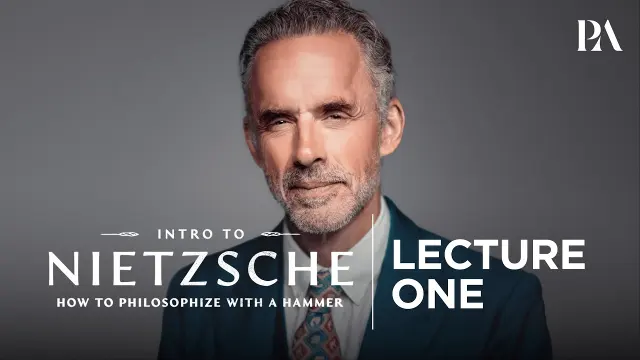
 Jordan Peterson Introduces Nietzsche's Philosophy in Lecture One
#Nihilism
1 ideas
Jordan Peterson Introduces Nietzsche's Philosophy in Lecture One
Get new #Nihilism ideas by email
Every Thursday: the week's best ideas, with the newest from #Nihilism.
Related tags
Nihilism Explained: Meaning, Doubt and How to Respond
Nihilism is the position that life, the world, or morality has no inherent meaning, purpose, or value — that nothing comes with a meaning built in. The word comes from the Latin "nihil", meaning "nothing", and that is the whole of the idea in miniature: the claim that certain things we assume are there turn out not to be.
It helps to separate the word from the mood. People often say "that's so nihilistic" about cruelty, despair, or a shrug. Those can accompany nihilism, but they are not the same thing. Nihilism is a claim about how things are, and claims can be argued for or against. A person can hold that no meaning is given and still be warm, curious, and deeply engaged with life.
Where the idea comes from
The word entered common use in nineteenth-century Europe, in the arguments of Russian writers and later in the philosophy of Friedrich Nietzsche. Nietzsche's famous line about the death of God is best read as a diagnosis rather than a celebration: he was describing what happens to a culture when the framework that once guaranteed its values stops being believed, and warning that the space left behind is not automatically comfortable. Older roots run back to ancient scepticism and to the persistent question of why anything should matter at all.
Read more
The main forms
- Moral nihilism: the view that there are no objective moral truths, only preferences and conventions.
- Existential nihilism: the view that existence has no given purpose or significance.
- Epistemological nihilism: the view that knowledge itself is impossible.
- Passive and active: some thinkers distinguish nihilism as resignation from nihilism as a starting point, a clearing of inherited assumptions you did not choose.
What it is good for
Nihilism works as a solvent. It asks you to notice which of your beliefs you actually hold and which you simply absorbed. That can be uncomfortable, and it can also be clarifying. Existentialist and absurdist writers took the question seriously and answered it in different ways: some argued that meaning is something you create rather than find, others that you can live well alongside the absence of a final answer.
If you are new to this
Start by separating two very different statements: "there is no meaning" and "I do not currently feel any meaning". The first is a philosophical claim that needs an argument. The second is an experience, and it belongs in a different conversation.
Read the primary texts rather than summaries, and read more than one. Keep a notebook of what you genuinely care about and why — you will learn quickly whether your reasons survive scrutiny. Be sceptical of anyone, including yourself, who uses nihilism as permission to be careless with other people; nothing in the argument requires that.
And be honest about the weight of it. If the thought darkens your ordinary days rather than sharpening your thinking, that is worth talking through with someone you trust.
Nihilism is a question, not an obligation. You are allowed to take it seriously and still decide what your life is for.
#Nihilism: frequently asked questions
What does nihilism actually mean, in plain terms?
It is the claim that life, the world, or morality has no meaning, purpose, or value built into it — that these things are not simply waiting there to be discovered. The word comes from the Latin for "nothing", which captures the idea neatly: something we assume is present turns out not to be. It is a claim about how things are, not a description of a personality or a mood.
What are the different kinds of nihilism, and how do I choose which one to look into?
The usual split is between moral nihilism (no objective moral truths, only preferences and conventions), existential nihilism (no given purpose or significance to existence), and epistemological nihilism (knowledge itself is impossible). Pick the one that matches the question actually nagging at you, since they are argued for in quite different ways. Some writers also separate passive nihilism, which is resignation, from active nihilism, which clears away inherited assumptions and starts from there.
I'm new to nihilism — where should I start?
Begin by separating two statements that feel similar but are not: "there is no meaning" and "I do not currently feel any meaning". The first is a philosophical claim that needs an argument; the second is an experience and belongs in a different conversation. Then read the primary texts rather than summaries, and read more than one, so you are weighing arguments instead of inheriting a single voice.
Is nihilism the same as being gloomy or careless with people?
No — people often use the word for cruelty, despair, or a shrug, but those can accompany the position without being it. Someone can hold that no meaning is given and still be warm, curious, and deeply engaged with life. Treat it as a question to be argued rather than a licence, and be sceptical of anyone, including yourself, who uses it as permission to be careless with others.
What mistakes do people usually make when they get into nihilism?
The most common is reading only secondhand summaries and then arguing with the summary rather than the idea. Another is letting the philosophical claim and the personal experience blur together, so a thought experiment starts to darken ordinary days instead of sharpening them. A useful habit is to keep a notebook of what you genuinely care about and why, so you can see whether your reasons survive scrutiny.
Can I take nihilism seriously and still decide my life means something?
Yes. Several writers took the question seriously and answered it in opposite ways — some holding that meaning is something you create rather than find, others that you can live well alongside the absence of a final answer. Nothing in the argument obliges you to stop caring about anything. Nihilism is a question, not an obligation, and what your life is for remains yours to decide.
Videos come from YouTube and posts from Instagram; titles and summaries are our own. All rights belong to their creators.