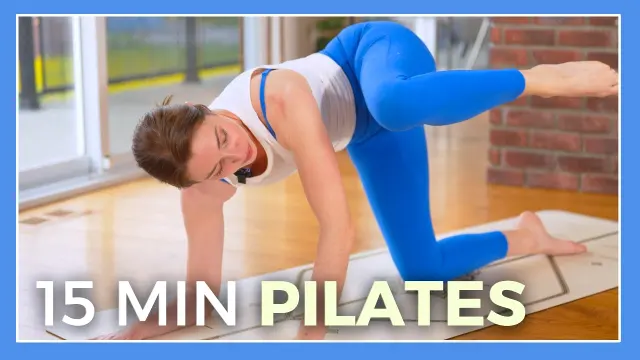
 15-Minute Full Body Mat Pilates Class With No Props
#No Props Workout
1 ideas
15-Minute Full Body Mat Pilates Class With No Props
Get new #No Props Workout ideas by email
Every Thursday: the week's best ideas, with the newest from #No Props Workout.
Related tags
No Props Workout: Training With Just Your Bodyweight
A no props workout is any training session that relies on nothing but your own body and the space around you. No dumbbells, no bands, no machines, no mat required — though a mat is welcome if the floor is hard. The resistance comes from gravity and from the way you position your limbs: a push-up is harder than a wall push because of where your weight sits, not because you added anything. That simple principle is what makes the format so portable, and why it has been part of physical culture for as long as people have trained at home, while travelling, or in a room too small for equipment.
What it trains
Bodyweight work can cover all the main capacities if you choose movements thoughtfully. Pushing patterns such as push-ups and their many variations build the chest, shoulders and arms. Pulling is the harder one without props — a sturdy table edge or a doorway can stand in for a bar, and floor-based movements like reverse snow angels work the upper back. Squats, lunges, glute bridges and single-leg variations train the lower body. Planks, dead bugs and bird dogs build trunk stability. Add a short burst of faster movement — stepping, marching, squatting at pace — and you have a gentle cardiovascular element too.
The main styles
Read more
Several approaches share the no-props premise. Mat Pilates emphasises controlled movement, breath and deep abdominal engagement, usually lying down or on hands and knees. Calisthenics is the gymnastic end of the spectrum, built on progressive bodyweight strength. Flow-style sessions link movements continuously so the heart rate stays elevated. Mobility and stretching routines use the floor, gravity and slow positional changes. Circuit training simply arranges a handful of exercises in sequence with short rests. Most home sessions are a blend, and that is entirely fine.
Where to begin
Start with what you can already do well rather than what looks impressive. Learn five or six basic movements — squat, hip hinge, push-up (against a wall or on your knees if needed), a row substitute, a plank and a glute bridge — and repeat them in a simple circuit: each for a set number of repetitions, two or three rounds, with rest when you need it.
Beginners should pay attention to a few things. Warm up first with gentle movement through the joints. Keep the range of motion honest: partial repetitions done quickly teach you little. Breathe steadily rather than holding your breath. Progress by making a movement slightly harder — raising a foot, slowing the lowering phase, adding a pause — rather than by adding repetitions endlessly. And stop when something hurts in a sharp or joint-specific way; muscular effort is the point, pain is not.
Because there is no equipment to adjust, the body itself becomes the dial. That makes no props training easy to begin and almost impossible to outgrow.
#No Props Workout: frequently asked questions
How do I start a no props workout if I've never trained before?
Begin with a handful of basic movements you can already perform comfortably — a squat, a hip hinge, a push-up done against a wall or on your knees, a plank and a glute bridge — and put them in a simple circuit with rest whenever you need it. Warm up first by moving gently through your joints, and keep your breathing steady throughout rather than holding it. Once the movements feel familiar, you can make them slightly harder instead of just adding more repetitions.
What equipment do I actually need for a no props workout?
Nothing beyond your own body and a bit of clear floor space; the resistance comes from gravity and from how you position your limbs. A mat is a nice extra if your floor is hard, and a sturdy table edge or doorway can stand in for a bar when you want to work your back. That portability is exactly why the format works at home, while travelling, or in a small room.
Which style of no props training should I choose?
It depends on what you want from the session: mat Pilates is slow and controlled with an emphasis on breath and deep abdominal work, calisthenics pushes towards bodyweight strength, and flow-style or circuit sessions keep you moving with less rest. Mobility routines are the gentlest option if you mainly want to loosen up. Most people end up blending a couple of these, which is completely fine.
How should I progress without any equipment to adjust?
Your body is the dial — you make a movement harder by changing leverage or tempo rather than by loading more weight. Raising a foot, slowing the lowering phase, or adding a pause at the bottom all increase the challenge while keeping the movement honest. Endless extra repetitions are a weaker route than a small jump in difficulty, and partial fast reps teach you very little.
What mistakes do people make most often with bodyweight sessions?
The common ones are skipping the warm-up, rushing through partial ranges of motion, and holding the breath under effort. Another is chasing impressive-looking movements before the basics are solid, which usually costs you form. Stop if you feel sharp or joint-specific pain — muscular effort is the point, pain is not.
Videos come from YouTube and posts from Instagram; titles and summaries are our own. All rights belong to their creators.