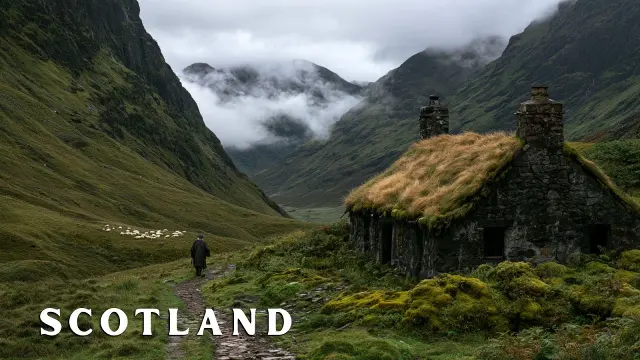
 Scotland in 4K: Highlands, Skye, Loch Ness and Glencoe
#North Coast 500
1 ideas
Scotland in 4K: Highlands, Skye, Loch Ness and Glencoe
Get new #North Coast 500 ideas by email
Every Thursday: the week's best ideas, with the newest from #North Coast 500.
Related tags
North Coast 500: A Guide to Scotland's Highland Road Trip
The North Coast 500 is a driving route that loops around the northern Highlands of Scotland, starting and ending at Inverness. It takes in roughly five hundred miles of road, following the east coast north to John o' Groats, along the wild top of the country to Durness and Tongue, then down the west coast through Assynt, Ullapool, Gairloch and Torridon before turning inland again. It was devised as a way of drawing travellers into corners of the Highlands that many visitors used to pass by, and it has become one of the best-known road journeys in Britain.
Part of its appeal is that the route is not a single experience but a string of them. The east coast is gentle and agricultural, with long beaches, fishing towns and dramatic cliffs. The far north is bleak and beautiful in equal measure, with vast open moorland and little in the way of shelter. The west is the most theatrical section: mountains rising straight from the sea, deep glens, and roads that twist along the shoreline for mile after mile.
The roads themselves
Most of the North Coast 500 is ordinary two-lane road, but long stretches of the west and north are single track, with passing places. If you are not used to them, the rules are simple: keep left, pull into a passing place on your own side to let oncoming traffic through, and if the place is on the other side, wait opposite it rather than entering it. Wave thanks. Local people use these roads for work, so let them past when you can.
Read more
Distances are deceptive. A hundred miles of single track with photo stops can fill a whole day, and it is better to plan short days and see things properly than to race the clock.
What to plan for
- Fuel up whenever you can in the north and west; filling stations are sparse and opening hours can be limited.
- Book accommodation well ahead, especially in remote areas where beds are few.
- Weather changes fast. Take waterproofs and layers whatever the forecast says, and expect wind on the coast.
- Midges are a genuine feature of the west coast in still, damp summer weather; a head net costs little and saves a lot.
- Many attractions, cafés and castles are seasonal, so check opening times before you build a day around them.
- Give wildlife room. Deer, sheep and the occasional Highland cow on the road are a real hazard, and seals and seabirds should not be approached.
Doing it well
The route rewards slowness. Some travellers drive it in a few days; most who have done it would tell you that a week or more is better, with time to walk, take a boat trip, or simply sit still. Alternative versions exist too, including sections done by bicycle or on foot, and it is easy to shorten the loop by cutting across the middle of the country.
Above all, remember that people live and work along the whole route. Drive considerately, park in passing places only to let traffic by, and take your rubbish with you.
#North Coast 500: frequently asked questions
How do I get started planning a North Coast 500 trip?
Begin with the shape of the loop rather than a rigid itinerary: it starts and ends at the same Highland town, so you can join it anywhere and travel in either direction. Pick the sections that appeal most, decide how many days you can give them, and build the days around short driving distances instead of long ones. Booking beds early matters, because accommodation thins out badly in the remote stretches.
What do I actually need to bring and arrange before setting off?
Layers and waterproofs are essential whatever the forecast promises, along with something windproof for the coast, and a head net is worth packing for still, damp evenings in the west. Make sure your vehicle is serviced and your tyres are sound, since help is far away in the north and west. Sort out your accommodation and your first fuel stops in advance rather than hoping to find them on the day.
Which version of the route should I choose?
The full loop by car gives you the widest spread of scenery, from gentle farmland and long beaches in the east to bare moorland in the far north and mountains falling straight into the sea in the west. If time is short, you can cut across the middle of the country and do only part of it, and there are quieter alternatives on bicycle or on foot for the keen. Choose based on how much slow travel you want rather than on covering the whole thing.
How should I drive the single track roads?
Keep left, pull into a passing place on your own side to let oncoming traffic come through, and if the passing place is on the far side, wait opposite it instead of pulling into it. A wave of thanks costs nothing, and letting local traffic past when you can is simply good manners on roads people use for work. Never stop in a passing place to take photographs, as you are blocking the one thing that keeps traffic moving.
Any common mistakes to avoid?
The most frequent one is overestimating how far you can travel in a day, because a modest distance of winding road with photo stops can easily fill the whole of it. Others are leaving fuel and food to chance in sparsely served areas, forgetting that many attractions and cafés close out of season, and treating wildlife as a photo opportunity rather than a hazard. Driving fast and parking carelessly spoil the trip for everyone, residents most of all.
What kind of trip or occasion does the route suit best?
It works beautifully as a slow touring holiday for couples or friends, built around walking, boat trips and long sits with a view, and it also makes a memorable milestone celebration if you plan the comfort stops properly. Families do fine on the gentler eastern stretches, while the wilder north and west reward those with more time and patience. Whatever the occasion, leave slack in the plan for weather and for the unplanned stops that turn out to be the best part.
Videos come from YouTube and posts from Instagram; titles and summaries are our own. All rights belong to their creators.