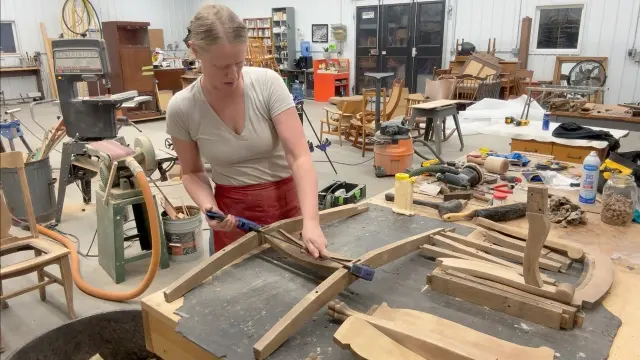
 Repairing and Assembling a Set of Four Oak Chairs
#Oak Chairs
1 ideas
Repairing and Assembling a Set of Four Oak Chairs
Get new #Oak Chairs ideas by email
Every Thursday: the week's best ideas, with the newest from #Oak Chairs.
Related tags
Oak Chairs: A Guide to Wood, Style and Care
Oak has been a chair-maker's wood for centuries, and for good reason. It is hard, dense and plentiful across Europe and North America, and it holds a joint or a carved detail better than most timbers. A chair made from it can be repaired again and again rather than replaced, which is why so many old oak chairs are still in daily use.
Why oak
The wood is ring-porous, with a strong grain that shows up plainly under a clear finish: pale gold in young timber, deepening to honey and then to a darker amber as it ages and reacts to light. It is heavy, so an oak chair tends to feel planted rather than light, and it moves with changes in humidity. That movement is normal, but it is also the reason old joints work loose and why a dry, overheated room is unkind to solid wood furniture.
The main traditions
Roughly speaking, oak chairs fall into a few families. There are the traditional joined chairs of northern Europe, built from turned legs and rails locked together with mortise-and-tenon joints, often with a solid wooden seat and sometimes with carved backs. There are ladder-back and spindle-back forms, where the back is a simple frame filled with horizontal slats or turned rods. There are Windsor-style chairs, with a plank seat and legs and back spindles socketed into it, usually painted rather than left bare. And there are the plainer, more recent farmhouse and schoolroom chairs, often with rush or cane seats, which are simple to repair and easy to live with.
Construction to look for
Good oak chairs are joined, not just screwed. Look underneath the seat: if the legs and rails are let into one another and held with wedges or pegs, the chair can be taken apart and re-glued when it loosens. Corner blocks and modern brackets are not necessarily bad, but they tell you the frame is doing less work on its own. Check that any pegs sit tight and that the seat is not split along the grain. A little wear at the feet and a mellow colour underneath are signs of age, not faults.
Read more
Finishes and patina
Traditional oak was often left bare, oiled, waxed or fumed to darken it. Modern pieces are more often lacquered. All of these are workable, but they ask for different care, so find out what is on the chair before you clean it. Never sand a patinated surface to "brighten" it; you will remove the very thing that makes an old chair worth having. A soft cloth, a little mild soap and water used sparingly, and a re-wax now and then will keep most oak chairs well.
Practical care
Keep oak away from radiators and direct sun, and aim for a steady, moderate humidity rather than a dry room. Felt pads under the feet protect both floor and chair. Tighten or re-glue a wobbling joint before it wears the socket oval, and if a seat is cane or rush, mend a small break early — it spreads. With that small attention, an oak chair will comfortably outlast the person who bought it.
#Oak Chairs: frequently asked questions
How do I choose the right oak chair for my home?
Start with how the chair will be used: a dining chair wants a firm seat and a back that supports you through a long meal, while a chair kept by a desk or in a hallway can be lighter and more decorative. Then decide between the traditions — joined chairs with solid wooden seats, ladder-backs and spindle-backs, painted Windsor styles, or the plainer farmhouse and schoolroom forms with rush or cane seats. Sit in it before anything else; oak is heavy and planted, so the chair should feel stable and comfortable rather than something you have to brace against.
How can I tell whether an oak chair is well made?
Turn it over and look underneath the seat, where the real construction shows: legs and rails that are let into one another and locked with pegs or wedges mean the frame can be taken apart and re-glued when it loosens. Screws and corner blocks alone tell you the frame is doing less work on its own. Also check that the pegs sit tight and that the seat has no split running along the grain, and don't mistake wear at the feet for damage.
What is the best way to care for a solid oak chair?
Keep it away from radiators and direct sun, and aim for a steady, moderate humidity rather than a dry, overheated room, since solid wood moves as the air changes and dry air is what loosens joints. Dust with a soft cloth and use a little mild soap and water sparingly, then re-wax now and then. Deal with a wobble as soon as you notice it, before the movement wears the joint socket out of shape.
Should I strip and sand an old oak chair to freshen it up?
Usually not. Sanding a patinated surface removes the deepened colour and mellow wear that make an old chair worth having, and it cannot be put back. Find out first what the chair was finished with — bare, oiled, waxed, fumed or lacquered — because each asks for different care, and clean gently according to that rather than abrading the surface.
What are the common mistakes people make with oak chairs?
The most frequent ones are putting a chair next to a radiator or in strong sunlight, cleaning it with something harsher than mild soap, and ignoring a loose joint until the socket has worn oval. Another is letting a small break in a cane or rush seat go unmended, since it spreads quickly. Felt pads under the feet are a small habit that protects both the floor and the chair.
Can I mix oak chairs with other furniture, or should they match?
Mixing works well, and lots of people build a set gradually by repairing and assembling chairs of similar age rather than buying everything at once. Because oak darkens to honey and amber as it ages, chairs from different periods will gradually come closer in tone, so slight differences at the start are not a problem. A shared seat height and a similar weight of frame is what makes a mixed group look intentional.
Videos come from YouTube and posts from Instagram; titles and summaries are our own. All rights belong to their creators.