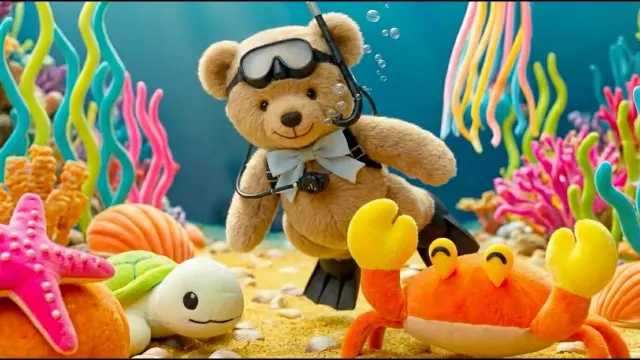
 Scuba Bear Ocean Ambience with Handcrafted Plush World
#Ocean Ambience
1 ideas
Scuba Bear Ocean Ambience with Handcrafted Plush World
Get new #Ocean Ambience ideas by email
Every Thursday: the week's best ideas, with the newest from #Ocean Ambience.
Related tags
Ocean Ambience: Bringing the Sound of the Sea Home
Ocean ambience is the sound of the sea treated as a backdrop rather than an event. It is the wash of waves on sand, the hush of water against a hull, the low rumble of a distant surf line, the small clatter of pebbles pulled back by a retreating wave. Unlike a song, it has no melody to follow and no beginning or end; it is texture, and that is exactly what makes it useful. It slips under conversation and thought, filling a room without asking to be listened to.
The appeal is old. Coastal places have long been sought out for the quality of their quiet, and the practice of reproducing sea sound indoors is simply a portable version of that. Modern ocean ambience exists in three broad forms. The first is recorded field audio: microphones left on a shore, a jetty or a boat, capturing hours of unedited water. The second is synthesised sound, generated from filtered noise shaped to imitate surf, which has the advantage of looping seamlessly for as long as you need it. The third is the physical thing itself, small water features, tabletop wave machines, or a shell held to the ear, where the "sea" you hear is really the resonance of your own body and the room around you.
People use it in fairly consistent ways: to fall asleep, to soften the edges of a noisy street or open-plan office, to hold concentration while reading or working, and to make a small room feel less enclosed. Because the sound is steady and uninformative, the ear stops monitoring it, which many people find restful. It also masks sharper noises, the lift door, a neighbour's television, that would otherwise pull attention away every few minutes.
If you are starting out, a few practical notes help. Listen before you commit: some recordings carry gull calls, foghorns, footsteps or a wash of wind that becomes irritating on the tenth repetition. Check that a loop does not click or thump at the join, the giveaway of a badly cut file. Volume matters more than fidelity; a level just above the room's own noise works better than something loud enough to dominate. If you are using it for sleep, choose a timer or a track that fades, and keep the source away from your head so it reads as distance rather than a hiss beside your ear.
Read more
For something more tactile, ocean ambience lends itself to craft and to rooms built around a theme: a shelf of sea glass and dried coral, a painted backdrop, a soft toy dressed for diving, a lap-sized diorama of a shore. These are forms of ambience too, working on the eye the way the recordings work on the ear. The aim in both cases is the same, a room that suggests openness and slow movement, and a mind that follows it there.
#Ocean Ambience: frequently asked questions
How do I start with ocean ambience at home?
Begin by simply listening: play a stretch of sea sound in the room where you want it and notice whether it settles under your thoughts or keeps pulling at your attention. Choose a quiet moment such as the evening, keep the level low, and let it run in the background rather than treating it as something to sit and follow. If it feels natural there, it will fit into your day almost without effort.
What do I actually need to create ocean ambience in a room?
Nothing beyond a way to play sound, though a small speaker that can sit away from you helps the sea read as distance rather than a hiss beside your ear. Choose a recording free of gull calls, foghorns or wind gusts, or a synthesised track that loops without a click at the join. Those who prefer something tactile can add a small water feature or a shell instead of, or alongside, the audio.
Which kind of ocean ambience is best for me?
Recorded shore audio suits people who want real texture and don't mind natural variation, while synthesised surf is better for long, uninterrupted listening because it loops without a seam. A physical piece such as a tabletop water feature or a shell works for those who want something to look at as well as hear, though it asks a little more attention and upkeep. Think about whether you want a background wash, an endless loop, or a small object in the room, and pick accordingly.
How do I look after a water feature or shell scene used for ocean ambience?
Keep the water clean and topped up, and give the surface and any stones or coral a periodic rinse so mineral build-up doesn't dull the sound or the look. Place it on something that can take a splash and away from anything that would be damaged by damp, and let the pump rest now and then. A shell needs almost nothing beyond a dusting and a dry spot.
Can I build ocean ambience around a theme, like a plush sea scene?
Yes, and it is a natural pairing: a shelf of sea glass and dried coral, a painted backdrop, or a soft toy dressed for diving gives the eye the same slow openness the sound gives the ear. Keep the palette soft and the arrangement loose so the scene feels calm rather than busy. Running a quiet sea track alongside it ties the whole corner together.
What mistakes should I avoid with ocean ambience?
The most common is turning it up too loud; a level just above the room's own noise works far better than one that dominates. Another is choosing a recording you haven't listened to all the way through, only to find footsteps or wind that become irritating on repetition, or a loop that thumps at the join. For sleep, avoid leaving the sound close to your head all night, and use a fade or timer instead.
Videos come from YouTube and posts from Instagram; titles and summaries are our own. All rights belong to their creators.