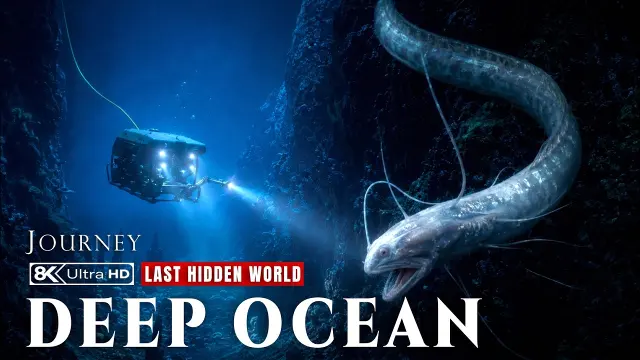
 The Deep Ocean: Journey Into the Last Hidden World
#Ocean Zones
1 ideas
The Deep Ocean: Journey Into the Last Hidden World
Get new #Ocean Zones ideas by email
Every Thursday: the week's best ideas, with the newest from #Ocean Zones.
Related tags
Ocean Zones: Layers of the Sea Explained
What ocean zones are
The ocean is often described as a single vast body of water, but it is really made up of different zones, each with its own light, temperature, pressure, and life. These zones help scientists describe where plants and animals live, how conditions change with depth, and how the sea supports life from the surface to the deepest trenches.
You can think of ocean zones as layers. Some are defined by how much sunlight reaches them, while others are described by depth or distance from shore. These ways of dividing the sea overlap, but together they give a clearer picture of the marine world.
The main zones
Read more
The most familiar division is based on sunlight:
- The sunlight zone, or epipelagic zone, is the top layer. It gets enough light for photosynthesis, so most marine plants and many familiar animals live here.
- The twilight zone, or mesopelagic zone, receives only dim light. It is too dark for most plants, but many animals here are adapted to low light and move upward at night.
- The midnight zone, or bathypelagic zone, has complete darkness. Pressure is much stronger here, and life is adapted to cold, dark conditions.
- The abyssal zone lies near the deep ocean floor. It is extremely cold and dark, with very high pressure and sparse food.
- The hadal zone includes the deepest ocean trenches. Conditions here are among the most extreme on Earth.
Another common way to describe the sea is by location:
- Coastal zones are close to land and are shaped by tides, waves, and rivers.
- Open ocean zones are far from shore and include the broad pelagic waters.
- Seafloor zones, or benthic zones, cover the ocean bottom at any depth.
How ocean zones differ
Each zone has its own environment. Near the surface, sunlight warms the water and supports plankton, seaweed, fish, and many mammals and seabirds. As you go deeper, the water becomes colder and darker, and pressure increases. Because food is less available in the deep sea, many creatures are slow-moving, energy-efficient, or specialized for life in darkness.
Some deep-sea animals are transparent, bioluminescent, or equipped with large eyes or sensitive organs to help them find food, mates, or prey. Others live on sinking organic matter that drifts down from above.
Why ocean zones matter
Understanding ocean zones helps explain how marine ecosystems work. It also helps with fishing, conservation, climate studies, and exploration. Different zones face different pressures from pollution, warming, overfishing, and habitat damage, so knowing where species live is important for protecting them.
For beginners
If you are just starting to learn about ocean zones, focus on three ideas:
- Light decreases with depth.
- Pressure increases with depth.
- Life changes as conditions change.
A simple way to remember the ocean is to picture it as a vertical world, with bright, productive waters near the top and increasingly dark, quiet, and extreme environments below.
Videos come from YouTube and posts from Instagram; titles and summaries are our own. All rights belong to their creators.