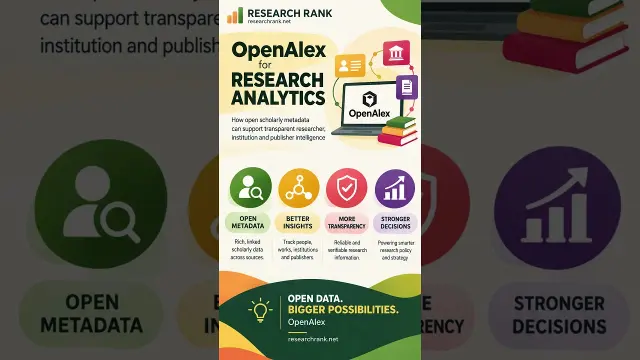
 OpenAlex for Research Analytics: Turning Open Data into Insights
#Open Data
1 ideas
OpenAlex for Research Analytics: Turning Open Data into Insights
Get new #Open Data ideas by email
Every Thursday: the week's best ideas, with the newest from #Open Data.
Related tags
Open Data: What It Is and Why It Matters
What open data means
Open data is information that is made available for anyone to access, use, reuse and share, usually without needing special permission. It can include government records, scientific datasets, transport information, maps, cultural archives, or statistics collected by organisations and communities. The idea behind open data is simple: when information is shared in a usable way, more people can learn from it, combine it with other sources and create something useful from it.
Open data grew out of broader movements for transparency, public access to information and digital collaboration. It is often associated with public institutions, but it can also come from universities, charities, research projects and private groups that choose to share data openly.
What open data is used for
Read more
Open data can support many different kinds of work. It is useful in research, journalism, design, education, planning and public services. People use it to study patterns, build maps, compare trends, create visualisations and test ideas. It can also help communities better understand how systems work, from transport networks to environmental conditions.
For creative projects, open data can be turned into charts, interactive stories, artworks or learning tools. For practical use, it can help people check routes, explore local information or analyse public records. In every case, the value of open data depends not only on having access to it, but on being able to understand it and use it well.
Common kinds of open data
Open data comes in many forms, and some types are easier to use than others. Common examples include:
- Tabular data, such as spreadsheets and CSV files
- Geographic data, such as maps, boundaries and location points
- Statistical data, such as counts, totals and time series
- Text data, such as transcripts, reports and catalogues
- Machine-readable data, prepared so computers can process it easily
Some datasets are very structured and clean, while others may need more work before they are useful. Beginners often find it easier to start with small, well-documented datasets rather than large or complicated ones.
What to look for as a beginner
If you are new to open data, focus on a few basics. First, check whether the data is truly open and whether there are any terms of use attached to it. Open does not always mean unrestricted in every possible context. Second, look for documentation, because a dataset is much easier to use when it explains what the columns mean, how the data was collected and how often it was updated.
It also helps to think about quality. Good open data should be as clear, complete and consistent as possible, but no dataset is perfect. Missing values, unclear labels and different formats are common. Learn to inspect the source carefully and note any limits before drawing conclusions.
Practical tips for working with open data
- Start with a clear question so you know what you are looking for
- Keep a copy of the original data unchanged
- Check the source, date and definitions before using it
- Clean carefully and record what you changed
- Combine datasets only when the categories and methods really match
- Be cautious about conclusions if the data is incomplete or biased
Open data works best when you treat it as a useful starting point, not an automatic answer. With patience and care, it can become a powerful resource for learning, making and understanding the world more clearly.
#Open Data: frequently asked questions
How do I get started with open data if I've never used it before?
Begin with a single, specific question you actually want answered, then look for a small dataset that speaks to it. Choosing a narrow starting point keeps the project manageable and teaches you the basics of reading, cleaning and interpreting real information before you take on anything bigger.
What do I need before I can work with an open dataset?
You mainly need a tool that can open the file format you've chosen, such as a spreadsheet program for tables or a mapping tool for location data, plus a willingness to read the documentation that comes with the source. It also helps to set aside a place to store an untouched copy of the original file so you always have something to compare your edits against.
Which kind of open data should I pick for a first project?
Tabular data in a simple spreadsheet or CSV file is usually the friendliest entry point, because rows and columns are easy to inspect and rework. Geographic or statistical sets are wonderful once you're comfortable, but they tend to demand more setup, so save them for when the basics feel familiar.
How do I take care of a dataset so it stays usable over time?
Treat the original as the master copy and never edit it directly; work on a duplicate and write down every change you make along the way. Recording where the data came from, when you downloaded it and what you altered means you, or anyone else, can retrace your steps later.
What creative things can I make from open data for a project or occasion?
Data lends itself to charts, maps, interactive stories, printed posters and even artworks that translate numbers into colour and shape. A good approach is to pick the story first and then let the dataset supply the material, rather than trying to display everything a source contains.
What mistakes do beginners most often make with open data?
The most common slip is assuming a dataset is complete and neutral just because it is public, when missing entries or biased collection methods are entirely normal. Another is stitching two sources together without checking that their categories, definitions and time periods genuinely line up, which quietly produces misleading results.
Videos come from YouTube and posts from Instagram; titles and summaries are our own. All rights belong to their creators.