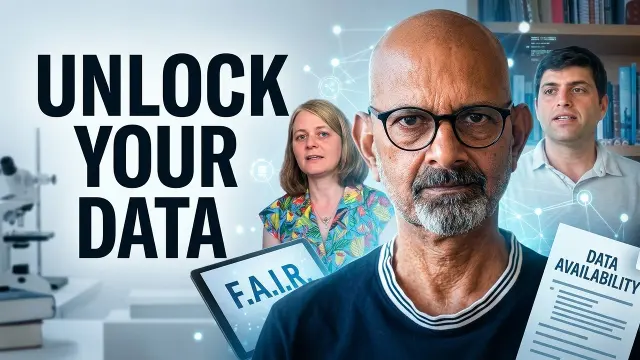
 The Truth About Open Science and Research Data Sharing Practices
#Open Science
1 ideas
The Truth About Open Science and Research Data Sharing Practices
Get new #Open Science ideas by email
Every Thursday: the week's best ideas, with the newest from #Open Science.
Related tags
Open Science: A Practical Guide to Sharing Research
Open science is a way of doing research in the open, from the first idea to the final published result. Instead of keeping methods, data and findings behind closed doors, it treats them as things to be shared, checked and built upon by others. The idea is simple: knowledge grows faster when more people can see it, question it and use it.
Where it comes from
Science has always depended on sharing. Journals, letters between researchers and public lectures were early ways of putting results into circulation. What changed is the scale. Digital tools made it possible to share not only the conclusion of a study but the whole process behind it — the raw measurements, the code that analysed them, the earlier drafts, the reviewers' comments. Open science grew out of that possibility, and out of a frustration with results that nobody could find, afford or reproduce.
The main practices
Read more
- Open access publishing: making an article free to read rather than locked behind a subscription, so that a student, a teacher or a curious reader anywhere can use it.
- Open data: sharing the measurements, transcripts or observations a study was based on, usually cleaned and documented so that someone else can understand them.
- Open source software: publishing the code used for analysis, with a licence that allows others to inspect, reuse and improve it.
- Preregistration: writing down the plan and the hypotheses before collecting data, so that readers can tell the difference between what was predicted and what was discovered.
- Open peer review: making the review process visible, either by publishing the reports alongside the article or by removing the anonymity.
- Citizen science: inviting members of the public to contribute observations, counts or classifications, often at a scale no single team could manage.
What it means for reproducibility
Much of the value of open science comes down to one word: reproducibility. If another researcher cannot repeat your analysis, your result is hard to trust and hard to extend. Sharing data and code does not guarantee that a study is sound, but it makes the claim testable in a way a summary paragraph never can. It also protects you. A well-documented dataset and a clear protocol are the best answer to a reader who doubts your work.
Getting started
You do not have to change everything at once.
- Begin with your own record-keeping. Name your files clearly, write a short description of what each one contains, and keep notes on every decision you make.
- Choose a licence before you share, not after. It tells people what they may do with your material and spares you a long exchange later.
- Ask about consent and privacy early. Anything involving personal information needs care, and some data can be described or aggregated rather than released raw.
- Publish what is useful, not everything. A small, well-explained dataset serves people better than an unlabelled archive.
Open science is less a set of rules than a habit of mind: assuming that someone will read your work, and making it possible for them to do so.
#Open Science: frequently asked questions
What exactly is open science, in plain terms?
It is the habit of carrying out research so that other people can see the whole of it, not just the tidy conclusion at the end. Methods, measurements, analysis code and drafts are treated as things to be shared and questioned rather than guarded. The underlying belief is that knowledge improves faster when more people can reach it and test it.
How do I get started without overhauling everything at once?
Start with your own working habits: give files clear names, note what each one holds, and record the reasoning behind your decisions while it is still fresh. That private discipline makes any later sharing far easier, because the material is already understandable. You can add public steps gradually as your comfort grows.
Which practice should I choose first — open access, open data, or open code?
There is no single right order; pick whichever matches what you already have and what feels safe to release. Many people begin with the written record, since describing and organising material is useful to them regardless of whether they publish it. If your work rests heavily on computation, sharing the analysis code tends to be the most valuable step.
What do I need to sort out before sharing data or code?
Decide on a licence first, because it tells people plainly what they may reuse and saves awkward negotiations later. Think early about consent and privacy, since anything touching personal information needs care and can often be summarised or aggregated instead of released raw. A small, well-documented set is worth more to readers than a large unlabelled dump.
How does openness relate to reproducibility?
Reproducibility means another person can follow your steps and reach a comparable result, which is hard when the data and code stay hidden. Sharing them does not prove a study is sound, but it makes the claim checkable in a way a summary paragraph cannot. It also works in your favour, as a clear protocol is the strongest reply to a sceptical reader.
What mistakes do newcomers commonly make?
The usual ones are dumping everything without explanation, choosing a licence only after someone asks, and leaving privacy questions until the last moment. Another is treating openness as a box to tick rather than a way of working, which produces material nobody can actually use. Documenting as you go, and publishing selectively, avoids most of this.
Videos come from YouTube and posts from Instagram; titles and summaries are our own. All rights belong to their creators.