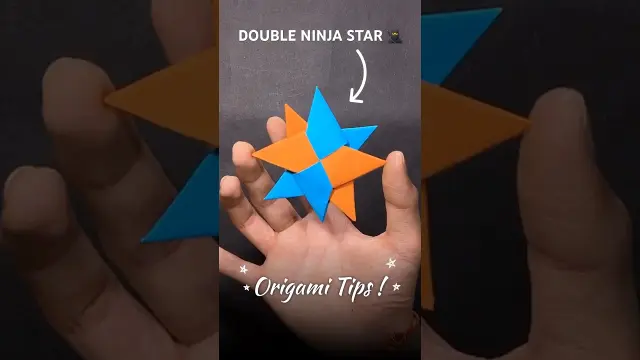
 Double Ninja Star: Folding a Two-in-One Origami Shuriken
#Origami Weapons
1 ideas
Double Ninja Star: Folding a Two-in-One Origami Shuriken
Get new #Origami Weapons ideas by email
Every Thursday: the week's best ideas, with the newest from #Origami Weapons.
Related tags
Origami Weapons: Paper Swords, Stars and Kunai
Folding paper into the shape of a sword, a dagger or a throwing star is one of the liveliest corners of modern papercraft. It is a playful offshoot of origami — the Japanese tradition of folding a single sheet into a shape without cutting or gluing — adapted to a different purpose: making a toy you can wave, throw or spin. The objects are paper and nothing else. Nothing here is a real weapon, and that is exactly why it is fun: a flat sheet becomes something with weight, edge and a satisfying snap when it opens in the air.
Why paper weapons appeal
Most children and quite a few adults go through a phase of making them. The shapes are familiar from films, comics and games, the folds tend to be fast, and the reward is immediate — a ninja star that spins, a sword that holds its shape, a kunai that fits neatly in the hand. Unlike a slow, delicate model, a paper weapon can be played with, thrown at a target and folded again. For a beginner, that quick result is often what keeps the interest alive long enough to learn the harder folds later.
The main kinds
Read more
The most popular is the shuriken, or ninja star. Two common versions exist: a folded star made from a single sheet, and a modular star built from several identical units locked together. The modular kind is the classic "two-in-one" star, where four or eight folded pieces are tucked into one another to form a wheel. Beyond stars, folders make kunai and daggers, swords with a wrapped handle, paper guns and crossbows, boomerangs and throwing discs. Most of them rely on a handful of shared ideas: a firm crease, a lock fold that holds the layers together, and often a repeated unit assembled into a whole.
What beginners should know
Start with square paper, ideally thin, and a flat hard surface. Press every crease with a fingernail or the back of a spoon — a soft, rounded fold will not hold a shape under tension. For modular models, fold all the units at once so they match; small differences accumulate and make the final lock loose. Thin paper works better than heavy card for stars that need to slide together, while stiffer paper suits swords and handles that must stay straight. Expect to be clumsy at first and to fold the same model several times — repetition is how the creases become predictable.
Handling them sensibly
Paper edges, especially several layers folded tight, can give a sharp paper cut, and a folded point thrown hard can sting. Aim at a wall, a box or empty air rather than at people or pets, keep clear of faces and eyes, and put the toys away when rough play begins. Younger children need a hand from an adult, partly for the folding and partly for the throwing. Treat them as the toys they are: not objects to carry into school, not something to point at someone as a joke. Folded with care, they stay what they should be — a sheet of paper, two hands and a bit of showmanship.
#Origami Weapons: frequently asked questions
How do I get started with origami weapons?
Start with a square sheet and the simplest star or dagger you can find, since the folds are short and the result shows up quickly. Fold the same model several times rather than jumping ahead — repetition is what makes the creases predictable and the finished shape hold together. Clumsiness in the first attempts is normal and passes faster than most people expect.
What do I need to fold a paper sword or star?
A square of paper and a flat, hard surface are enough to begin with, plus a fingernail or the back of a spoon to press the creases. Thin paper slides together best for stars and modular pieces, while stiffer paper suits swords and wrapped handles that need to stay straight. Nothing needs cutting or gluing, which is part of the appeal.
Which kind of origami weapon should a beginner choose?
A shuriken folded from a single sheet is the friendliest entry point, because it teaches firm creasing and a locking fold without demanding precision assembly. Modular stars built from repeated units come next, and swords or kunai suit folders who already trust their hands on a straight fold. Match the model to your patience rather than to how impressive it looks finished.
How should I care for a folded paper weapon so it lasts?
Store it flat or lightly supported rather than crushed in a pocket, since a bent crease is hard to press out again. Keep it away from damp and from anything heavy, both of which soften the paper and let the layers loosen. If a lock starts to slip, re-press the creases instead of adding tape.
What are the common mistakes people make with paper weapons?
The usual culprits are soft, rounded creases that will not hold under tension, and units folded at slightly different sizes so the final lock sits loose. Fold every repeated piece at the same sitting so they match, and press each fold sharply as you go. The other mistake is forgetting that these are toys — aim at a wall, a box or empty air, never at people or pets.
What can I do with finished origami weapons?
They work well as targets-and-toys props: throw a star at a cardboard box, spin it in the hand, or use a folded sword as part of a costume or party theme. Folding a batch also makes a pleasant group activity, with an adult helping younger children with both the folds and the throwing. Just put them away once the play gets rough.
Videos come from YouTube and posts from Instagram; titles and summaries are our own. All rights belong to their creators.