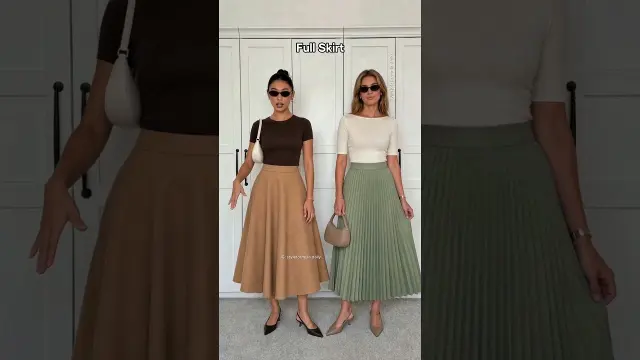
 Simple Skirt Styling Formula and Color Pairing Tips
#Outfit Formula
1 ideas
Simple Skirt Styling Formula and Color Pairing Tips
Get new #Outfit Formula ideas by email
Every Thursday: the week's best ideas, with the newest from #Outfit Formula.
Related tags
Outfit Formulas: Dress Well Without Starting From Zero
An outfit formula is a simple, repeatable recipe for getting dressed: a fixed combination of shapes, colours and layers that you know works on you, so you don't have to invent a new look every morning. Instead of choosing individual garments one by one, you choose a pattern — "fitted top, wide trousers, flat shoes" or "dark column, light outer layer, one accent" — and then fill in the pieces. The point isn't to wear the same thing forever. It's to remove the guessing, keep a recognisable style, and free your attention for the parts of dressing that are actually enjoyable.
Where it comes from
Formulas come from the practical side of style: capsule wardrobes, uniform dressing and the habit many well-dressed people have of repeating a silhouette that suits them. Personal stylists often work this way too, because once a client's proportions and colour preferences are clear, the same skeleton can be dressed up or down for years. It is closer to home cooking than to fashion: a handful of reliable recipes you can adapt with what's in the cupboard.
The main kinds of formula
Read more
The most common is the proportions formula, pairing one fitted element with one loose one — a slim knit over wide trousers, or a fluid shirt over straight-leg jeans. It keeps an outfit from looking shapeless without ever feeling tight.
The colour formula is built on a base: two or three neutrals you wear easily, plus one accent you return to. Related ideas include dressing in a single tonal family, or the "column" of dressing — top and bottom in the same or near-same tone, which lengthens the body and makes accessories optional.
The layer formula fixes the outer shape: a long coat over a short layer, or a cropped jacket over a longer top. Once you know which one flatters you, replacing the pieces changes the mood without changing the maths.
There is also the one-piece formula: a dress or jumpsuit shape that suits you, repeated with different shoes, bags and knits. Simple, and almost impossible to get wrong.
Starting out
Begin with what you already wear rather than what you think you should wear. Lay out a few outfits you feel good in and look for the pattern: the same trouser shape, the same neckline, the same contrast level. That pattern is your formula.
Choose your base colours first, then decide on the silhouette balance — fitted with loose, short with long, structured with soft. Keep shoes and one accessory consistent while you test a new formula; changing everything at once makes it hard to tell what works.
Practical tips
Fit matters more than any rule. A formula in clothes that don't fit will not save the outfit, while a very plain formula in clothes that do can look polished.
Repeat your winners without apology. Repetition is what makes a style readable and, in practice, what makes dressing quick.
Adapt for the weather and the occasion by changing fabric weight, sleeve length and footwear within the same skeleton, not by abandoning it.
Finally, keep it small. Two or three formulas you trust are worth more than twenty you're unsure about — and the mental space they free up is the real reward.
#Outfit Formula: frequently asked questions
How do I start building an outfit formula if I have no idea what suits me?
Start from your own wardrobe instead of from trends: pull out the outfits you reach for most and look for what they share, such as a trouser shape, a neckline or a level of contrast. That repeated element is already your formula, you just haven't named it yet. Once you spot it, build future outfits around it rather than reinventing the whole look each time.
What do I actually need to put a formula together?
You mainly need two decisions: your base colours and your silhouette balance, meaning whether you pair fitted with loose, short with long or structured with soft. From there, a couple of reliable shoes and one accessory you return to are enough to test a look without changing too many variables at once. Everything else can be filled in with pieces you already own.
Which kind of formula should I choose?
Pick the one that solves the problem you have most often: if outfits tend to look shapeless, a proportions formula helps, while if you struggle with colour, start with a neutral base plus one accent. If you dread matching separates, the one-piece route, repeated with different shoes and layers, is the easiest to get right. Many people settle on more than one and use them for different kinds of days.
How do I keep a formula from looking like the same outfit over and over?
Change the fabric weight, sleeve length and footwear inside the same structure, which shifts the outfit's mood without breaking what already works. Swapping a knit for a shirt, or flats for boots, reads as a new look even when the underlying proportions are identical. The recognisable part is the point; the variation lives in the details around it.
How many formulas are worth having?
A small handful you genuinely trust will serve you better than a long list you feel unsure about, because the value comes from not having to decide from scratch. Two or three cover most ordinary days, and you can add another when a recurring occasion keeps catching you out. Resist the urge to keep collecting ideas you never actually wear.
What mistakes should I avoid when trying a new formula?
Fit is the one thing a formula can't rescue, so check that the pieces sit properly before blaming the structure itself. Changing everything at once also makes it impossible to tell what failed, so hold your shoes and one accessory steady while you experiment. Finally, don't treat the formula as a rigid rule; it's a shortcut, and adapting it to the weather or the occasion is part of using it well.
Videos come from YouTube and posts from Instagram; titles and summaries are our own. All rights belong to their creators.