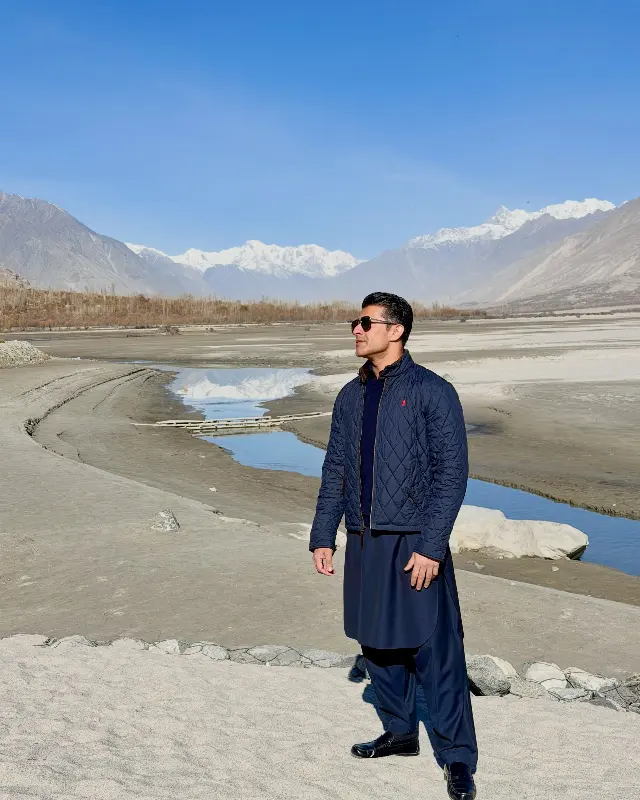
 Skardu, Pakistan: Raw Mountain Scenery Worth the Wait
#Pakistan
1 ideas
Skardu, Pakistan: Raw Mountain Scenery Worth the Wait
Get new #Pakistan ideas by email
Every Thursday: the week's best ideas, with the newest from #Pakistan.
Related tags
Pakistan: Mountains, Bazaars and Hospitality
Pakistan sits at the junction of South Asia, Central Asia and the Middle East, and that position explains almost everything about it. The Indus and its tributaries run the length of the country, feeding plains that hold most of its farmland and cities, while to the north the Karakoram, Hindu Kush and Himalaya ranges meet in some of the highest terrain on earth. Between those extremes lie deserts, plateaus, mangrove coastlines and monsoon-fed valleys, which is why the country can feel like several distinct worlds stitched together.
Regions and peoples
The four main provinces each carry a strong identity. Punjab is fertile and densely settled, with an emphasis on agriculture, poetry and music. Sindh, further south and warmer, is known for its Sufi shrines, its lake and river landscapes and a visual tradition of block printing and dyed cloth. Khyber Pakhtunkhwa and the tribal belt to its west are mountainous and historically shaped by trade routes moving toward Afghanistan. Balochistan, the largest province by area, is sparsely populated and largely desert and mountain. Gilgit-Baltistan and Azad Kashmir in the north are defined by glaciers, high passes and small communities that have adapted to long, hard winters. Urdu is the shared national language, but Punjabi, Sindhi, Pashto, Balochi, Saraiki and many others are spoken at home, and English is used widely in business and education.
Crafts and visual culture
The country rewards people who look closely. Truck and bus decoration turns ordinary vehicles into rolling folk art, with painted panels, mirror work, chains and brightly coloured motifs. Textiles are the other great thread: ajrak block printing in Sindh, phulkari embroidery in Punjab, mirror-embroidered dresses, woven rugs and kilims, and the geometric embroidery of the northern valleys. Potters, coppersmiths, wood carvers and truck artists still work in the older bazaars of Lahore, Karachi, Multan, Peshawar and Quetta, though much production now sits alongside mass manufacturing.
Food and daily life
Rice, wheat breads, lentils, vegetables and meat appear across the country in regional forms: slow-cooked curries, grilled skewers, rice dishes cooked with meat and spices, and street snacks fried fresh. Tea is the constant. Hospitality is taken seriously, and being offered tea or a meal is an invitation rather than a transaction.
Read more
Practical notes for beginners
Dress modestly, especially outside major cities and at religious sites; loose clothing covering shoulders and legs is comfortable and appropriate. Remove shoes where others do, ask before photographing people, and accept that many conversations begin with questions about your family and work. Bargaining is normal in markets, though fixed prices exist in shops. The north is best visited in the warmer months and the plains are extremely hot in midsummer; travel inland is easiest outside the fasting month, when timings shift. Some northern valleys require permits, distances are longer than maps suggest, and local advice always beats a schedule.
#Pakistan: frequently asked questions
How should I start planning a first visit to Pakistan?
Start with the season you can travel and let that pick the region, since the northern mountains and the hot plains are pleasant at very different times of year. Build a short route with slack in it, because road journeys take longer than a map suggests and local advice usually reshapes the plan once you arrive.
Which part of the country suits the kind of trip I want?
For bazaars, shrines, craft workshops and city food, the historic centres of Punjab and Sindh give you the most to look at in a small area. The north is for raw mountain scenery, glaciers and long, quiet valleys, while Balochistan rewards travellers who want emptiness and distance rather than convenience. Be honest about how much driving and altitude you actually want before choosing.
What do I need to know about dress and manners?
Loose clothing that covers shoulders and legs is the most comfortable and least conspicuous choice, particularly away from big cities and at religious sites. Take your shoes off where others do, ask before photographing people, and treat an offer of tea as an invitation rather than a transaction — it usually comes with questions about your family and work.
How do I look after block-printed cloth or embroidered textiles I bring home?
Hand-wash separately in cool water with a mild soap, rinse until the water runs clear, and dry in shade rather than direct sun, which fades dyes quickly. Store folded pieces somewhere dry with a little air, and keep mirror work and heavy embroidery from being crushed under other luggage.
What are good occasions and gifts for Pakistani handmade pieces?
Textiles carry most of the weight here: block-printed wraps, embroidered shawls, mirror-work and woven rugs all translate easily into wedding decoration, table settings or a present that feels personal. Truck-art motifs work well for something lighter and more graphic, such as a framed panel or a painted household object. Choose pieces you will actually use rather than the biggest thing you can carry.
What do first-time visitors most often get wrong?
The usual mistakes are cramming in too many stops, arriving in the plains at the hottest time of year, and assuming a northern valley needs no paperwork or that a schedule can be kept exactly. Bargaining hard in shops that display fixed prices is another easy misstep, and it rarely gets you a better deal.
Videos come from YouTube and posts from Instagram; titles and summaries are our own. All rights belong to their creators.