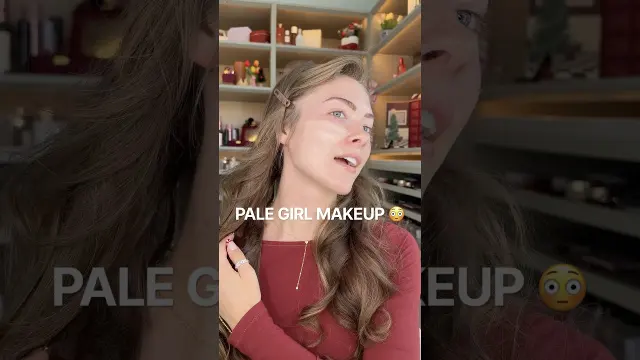
 Testing a Pale Girl Makeup Look With Light Cool Tones
#Pale Girl Makeup
1 ideas
Testing a Pale Girl Makeup Look With Light Cool Tones
Get new #Pale Girl Makeup ideas by email
Every Thursday: the week's best ideas, with the newest from #Pale Girl Makeup.
Related tags
Pale Girl Makeup: A Guide to Fair Skin and Cool Tones
Pale skin sits at the far light end of the foundation spectrum, and it comes with its own set of rules. The term "pale girl makeup" describes an approach rather than a single look: choosing products light enough to disappear into the skin, and using colour that flatters a fair complexion instead of overwhelming it. Fair skin is not automatically cool-toned — plenty of very light skins run warm or neutral — but the two often overlap, which is why cool pinks, muted mauves and soft greys turn up so often in these routines.
Why shade matching is harder than it looks
The usual problem is not that a foundation is too dark, but that it is too saturated. Many lightest shades still carry a peachy or golden depth that reads as orange against a very fair face, especially along the jaw. Test along the jawline and down the neck, in daylight rather than shop lighting, and let the product settle for a few minutes before judging — many formulas darken slightly as they dry. If the nearest match is close but not quite right, a tiny amount of a white or blue mixer can lift a shade without changing its texture. Check the neck in a mirror outdoors; that is where a mismatch shows first.
Cool versus warm, and what it changes
Read more
If your veins look bluish and silver jewellery flatters you, you are likely cool-leaning; if gold suits you better, you probably lean warm, which shifts the blush, lip and eye colours that flatter you most. Cool pinks, berries, soft plums and rose-browns tend to sit naturally on cool fair skin, while warm fair skin carries peach, coral and soft terracotta beautifully. The most common mistake on very pale faces is a warm bronzer used all over: it can look like a stripe of colour rather than shadow. A cool taupe contour, applied lightly under the cheekbone, gives dimension without turning orange.
Building a look that stays soft
Sheer layers forgive almost everything. A light coverage base, a cream blush tapped on with fingers, and a soft brown mascara create definition without weight. On pale skin, contrast is strong by default — dark liner and heavy lashes look dramatic very quickly — so blending edges and choosing softer tones keeps the face balanced. Set only where you shine, since powder across the whole face can flatten the natural luminosity fair skin often has.
Practical habits
Check your base in natural light before leaving the house. Photograph your face with a phone flash, which exposes mismatches harshly. Remember that skin often shifts between winter and summer, so the shade that fits in one season may not fit in another. Exfoliate and moisturise regularly, because dry patches catch pigment and make light foundation look uneven. And keep the neck and ears blended — the line where makeup stops is the detail people notice most.
#Pale Girl Makeup: frequently asked questions
What exactly is pale girl makeup?
It is less a single look than a way of choosing makeup: products sheer and light enough to blend into very fair skin, plus colour soft enough not to overwhelm it. The aim is definition that reads as natural rather than a visible layer of pigment. It also means accepting that very fair skin can be cool, warm or neutral, so the palette follows your undertone rather than the label.
Why does every foundation look orange on me, even the lightest one?
Because the problem is usually saturation rather than depth — many pale shades still carry a peachy or golden richness that turns obvious against a fair face, particularly along the jaw. Swatch down the jawline and onto the neck in daylight, and give the formula a moment to settle, since some deepen slightly as they dry. If a shade is close but slightly off, a drop of white or blue mixer can lift it without altering how it wears.
How do I work out whether I am cool or warm toned?
Look at the veins on your inner wrist and at which metal flatters you — bluish veins and silver usually point cool, gold points warm, and a bit of both suggests neutral. That answer then guides your blush, lip and eye choices rather than your base. Cool fair skin tends to suit pinks, berries and soft plums, while warm fair skin carries peach, coral and muted terracotta well.
Which colours should I avoid on very pale skin?
The usual culprit is a warm bronzer swept across the whole face, which tends to look like a painted stripe instead of shadow; a cool taupe contour placed lightly under the cheekbone gives shape without turning orange. Very dark liner and heavy lashes also read as dramatic almost instantly on fair skin, so softer tones and well-blended edges keep the face balanced. Powder over the entire face is another one to skip — set only where you actually shine.
How do I keep a pale makeup look from turning patchy?
Smoothness starts before makeup: regular exfoliation and moisturising stop dry patches from catching pigment and making a light base look uneven. Check the finished face in daylight rather than indoor lighting, and photograph it with a phone flash, which exaggerates any mismatch. Since skin shifts with the seasons, the base that suits you in one part of the year may need adjusting in another.
Where do people usually go wrong when starting out?
Most often at the edges — leaving a visible line where the base stops at the jaw instead of blending down the neck and over the ears. The second common slip is building coverage too quickly, when thin layers are far more forgiving and easier to correct. Testing in shop lighting rather than natural light is the other frequent mistake, since a shade can look right indoors and wrong the moment you step outside.
Videos come from YouTube and posts from Instagram; titles and summaries are our own. All rights belong to their creators.