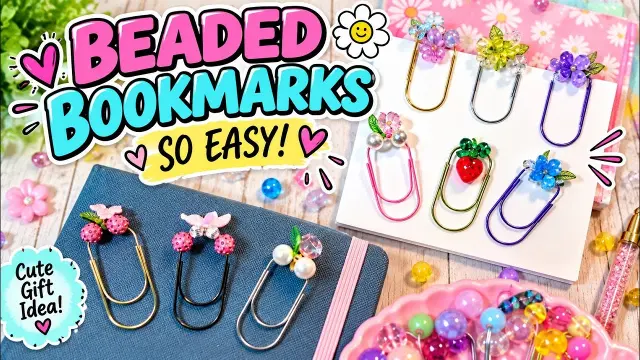
 Beaded Paper Clip Bookmarks: A Simple DIY for Book Lovers
#Paper Clip Crafts
1 ideas
Beaded Paper Clip Bookmarks: A Simple DIY for Book Lovers
Get new #Paper Clip Crafts ideas by email
Every Thursday: the week's best ideas, with the newest from #Paper Clip Crafts.
Related tags
Paper Clip Crafts: Bending Wire Into Small Useful Things
A paper clip is one of the humblest objects on a desk, which is exactly what makes it such good material. For almost nothing you get a short, springy length of wire already bent into a clean double loop — and it will curve, twist and hold a line under your own fingers. Paper clip crafts are the small, patient pleasure of turning that into something else: a bookmark, a hook, a tiny figure, a charm.
A material that wants to be bent
Most clips are steel wire, either bare or coated in coloured plastic. The coating is easier on your hands, keeps the metal from marking paper and gives you a ready-made palette. Bare wire takes a sharper, more precise bend and shines up nicely, but it is harder on fingertips and can leave grey traces behind.
Wire holds its shape because it is stiff, but every fold weakens it a little. Work the same spot back and forth often enough and it will snap. Where you can, plan the bend and make it in one committed movement rather than adjusting it five times.
Read more
What people make with them
- Bookmarks. Slide small beads onto one straight leg, or bend the clip into a heart, an arrow or a simple hook that catches the page.
- Pendants, charms and chain links. Keep the beads light so the wire does not droop, and attach the piece to a cord or a bought chain rather than making the findings yourself.
- Ornaments and garlands. Bend a hook at one end, thread a loop through, hang small things from it.
- Photo and card holders. Bend a foot at the back so the clip stands up and grips a corner.
- Zipper pulls, keyrings and bag charms. Loop through and close the end neatly.
- Miniature animals and figures. The classic trick: the double loop becomes a body, the legs become legs.
- Quiet practical help. Plant ties, cable wraps, a thread tail held out of the way, a torn page temporarily held.
One limit worth knowing: paper clip wire is not made for contact with skin, and its coating and metal can irritate a piercing or leave marks on a wrist. Wear your finished pieces as charms and ornaments, and use proper jewellery findings for anything that goes through an ear or sits against skin all day.
The basic moves
You need very little: your fingers, a pair of small pliers with a rounded jaw, and wire cutters.
- To straighten a clip, grip one end and pull the coil open; it unfolds into a mostly straight line.
- To get a smooth curve, wrap the wire around something round — a pen barrel, a dowel, a coin — instead of shaping it freehand.
- To cut, snip and then pinch or file the end flat. Freshly cut wire is sharp.
- To close a loop, bring the end right round past the gap and back on itself, so it cannot pull open.
If you are just starting
Choose jumbo clips in a coated colour: the wire is thicker, gentler on your hands and easier to see. Bend slowly and let the pliers do the gripping where the wire is tight. Keep a shallow tray under your work so clips and beads cannot roll away, and sketch the shape on paper first if it has more than two or three bends.
Small children should work alongside an adult: the wire ends are sharp, and beads are a choking risk for very young ones. Expect a few clips to break along the way — every material has its limits, and learning where they are is part of the craft.
#Paper Clip Crafts: frequently asked questions
How do I get started with paper clip crafts if I've never bent wire before?
Start with a jumbo clip in a coated colour, since the thicker wire is easier on your fingers and easier to see while you work. Add small pliers with a rounded jaw and a pair of wire cutters, then practise straightening a clip and closing a loop before you attempt a shape. Sketching anything with more than a couple of bends on paper first keeps you from over-working the same spot.
What should I use to shape the wire without kinking it?
Wrap the wire around something round — a pen barrel, a dowel or a coin — rather than shaping it freehand, which gives you a smooth curve instead of a kink. Let the pliers do the gripping where the wire is tight, and commit to each bend in one motion instead of adjusting it repeatedly. Working the same point back and forth weakens it until it snaps.
Should I choose coated or bare paper clips?
Coated clips are the friendlier choice for beginners: the plastic is gentler on fingertips, keeps the metal from marking paper and gives you a ready-made colour palette. Bare wire takes a sharper, more precise bend and polishes up nicely, but it is harder on your hands and can leave grey traces. Many people keep both on hand and pick based on whether the piece needs a crisp line or a soft, colourful look.
Can I wear the charms and pendants I make?
Wear them as ornaments hung from a bought cord or chain, or use them as bag charms, zipper pulls and keyrings. Paper clip wire is not intended for contact with skin, and its coating can irritate a piercing, so use proper jewellery findings for anything that goes through an ear or rests against skin all day. Keep bead additions light so the wire doesn't droop.
What are some good paper clip craft ideas for gifts or occasions?
Beaded bookmarks, small charms and photo or card holders made from a bent clip all work as lightweight, personal gifts, and a hook-and-loop garland suits festive decorating. For zipper pulls and keyrings, loop the clip through and close the end neatly so it cannot pull open. Matching a set to the recipient's colours is an easy way to make it feel considered.
What mistakes do beginners make most often?
The usual ones are bending the same spot over and over until the wire fatigues, and leaving freshly cut ends sharp instead of pinching or filing them flat. Another is making loops that stop short of the gap, which lets the piece pull open later, or choosing wire too thin to carry the beads. Keep a shallow tray under your work so clips and beads can't roll away, and expect a few breakages while you learn the material's limits.
Videos come from YouTube and posts from Instagram; titles and summaries are our own. All rights belong to their creators.