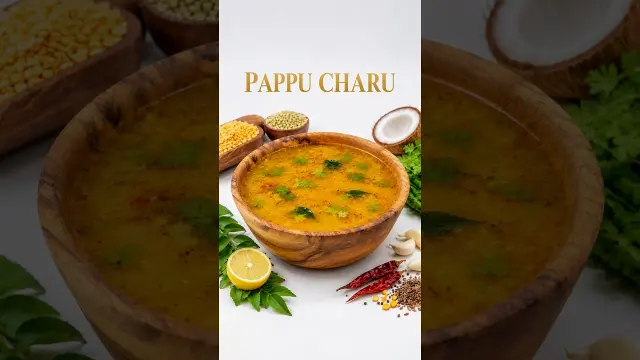
 Easy South Indian Pappu Charu With Toor Dal
#Pappu Charu
1 ideas
Easy South Indian Pappu Charu With Toor Dal
Get new #Pappu Charu ideas by email
Every Thursday: the week's best ideas, with the newest from #Pappu Charu.
Related tags
Pappu Charu: A Guide to the Tangy Telugu Lentil Broth
Pappu charu is one of those everyday dishes that carries a whole region's way of eating inside it. In Telugu, pappu means cooked lentils — most often toor dal, known locally as kandi pappu — and charu means a thin, soupy broth. Put together, the name describes exactly what the dish is: lentils cooked soft, then loosened with tamarind water into a tart, drinkable broth. It comes from the Telugu-speaking kitchens of Andhra Pradesh and Telangana, where it has long been a home staple rather than a restaurant dish, ladled over hot rice at the middle of the meal.
It sits somewhere between dal and rasam, and that in-between position is what makes it distinctive. A plain pappu is thick enough to hold its shape on rice; a rasam is almost entirely spiced water. Pappu charu is cooked dal that has been let out with tamarind, so it is pourable but still has body, and it tastes sour, savoury and gently sweet all at once.
What goes into it
The base is toor dal, rinsed and cooked until it collapses. Tamarind does the souring — soaked and squeezed into pulp, never added as a dry paste if you can help it. Tomatoes are common and add a second, softer sourness. Garlic, dried red chillies, curry leaves and a little turmeric round it out. Some kitchens add a spoon of sambar powder or a pinch of jaggery to balance the tartness.
Read more
The tempering at the end matters as much as the cooking: mustard seeds, cumin, dried chillies and curry leaves popped in hot oil or ghee, poured over the pot just before serving. That last step is what lifts the aroma.
Variations worth knowing
- Plain pappu charu, with only tamarind and tomato, is the simplest and most common.
- Drumstick pappu charu adds pieces of moringa pod, which soften into the broth.
- Gongura, the sour sorrel leaf, gives a sharper, greener version.
- Leafy greens, bottle gourd or brinjal are all folded in depending on the household and the season.
- In parts of Telangana it is eaten with ragi mudda, a firm millet ball, rather than rice.
Tips for a first attempt
Cook the dal further than you think you should — it should be soft enough to mash against the side of the pot with a spoon. Add the tamarind gradually and taste as you go, because sourness builds quietly and cannot be taken back. Keep the broth on the thin side; it thickens as it sits. Hold the tempering until the very end, and add the curry leaves to the hot oil away from your face, since they spit.
Pappu charu keeps well for a day or two in the fridge and often tastes better the next day, once the tamarind and spices have settled. Reheat gently and loosen with a splash of water.
#Pappu Charu: frequently asked questions
What exactly is pappu charu, and how is it different from rasam or plain dal?
It is a Telugu home dish made from lentils, usually toor dal, that are cooked until soft and then thinned with tamarind water into a pourable, tart broth. Think of it as sitting between the two: thicker and more substantial than rasam, but looser and sharper than a plain dal. It is everyday homestyle food in Andhra Pradesh and Telangana, not a restaurant preparation.
What do I need on hand to make it for the first time?
The essentials are toor dal, tamarind soaked and squeezed into pulp, and tomatoes, plus garlic, dried red chillies, curry leaves and turmeric for the pot. For the finishing tempering you want mustard seeds, cumin and more curry leaves, popped in oil or ghee. Optional extras like sambar powder or a touch of jaggery are only there to round out the tartness.
Which version of pappu charu should a beginner choose?
Start with the plainest one — just tamarind and tomato against the dal — because it teaches you how the sourness and consistency behave before anything else competes for attention. Once that feels familiar, the drumstick version is a gentle next step since the pod softens into the broth, while gongura gives a noticeably sharper, greener result.
What are the usual mistakes people make with it?
Under cooking the dal is the most common one — it should be soft enough to crush against the side of the pot, not just tender. Adding tamarind all at once is the second, because the sourness creeps up on you and cannot be dialled back. Finally, keep the broth thinner than looks right and save the tempering for the moment before serving, so the aroma survives.
How should I store and reheat leftovers?
It holds up well in the fridge for a short while and is often more settled and flavoursome once the tamarind and spices have had time to mingle. Reheat it gently rather than hard, and loosen it with a splash of water, since the broth thickens considerably as it cools and sits.
What can I serve alongside it for a family meal?
Hot rice is the classic partner, with the charu ladled over it in the middle of the plate and something dry or fried on the side. In parts of Telangana it is instead eaten with ragi mudda, a firm millet ball, which stands up to the thin, tart broth. Either way it works as the centre of an unfussy home meal rather than a showpiece.
Videos come from YouTube and posts from Instagram; titles and summaries are our own. All rights belong to their creators.