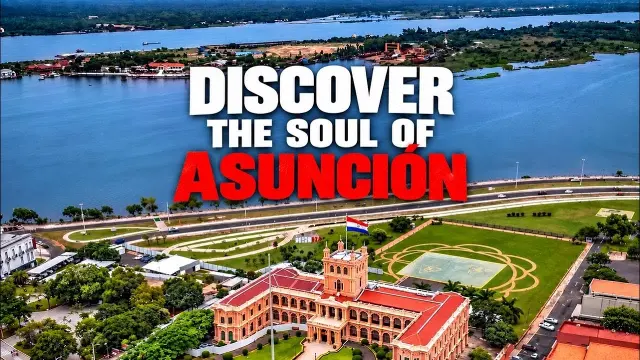
 The Ultimate Asuncion City Guide: History and Culture in Paraguay
#Paraguay
1 ideas
The Ultimate Asuncion City Guide: History and Culture in Paraguay
Get new #Paraguay ideas by email
Every Thursday: the week's best ideas, with the newest from #Paraguay.
Related tags
Paraguay Guide: Culture, Landscapes and Traditions
Paraguay at a glance
Paraguay is a landlocked country in the heart of South America, known for its strong cultural identity, bilingual heritage, and blend of Indigenous and colonial influences. It is a place where everyday life often feels closely tied to family, community, music, food, and local traditions. To understand Paraguay, it helps to think of it not only as a destination, but as a culture shaped by rivers, rural life, city life, and deep historical memory.
The country’s identity is strongly connected to Guaraní and Spanish influences. Many people speak both languages, and Guaraní remains an important part of national culture, not just in words but in expressions, stories, and daily life. This mixture gives Paraguay a distinct character that feels both South American and uniquely its own.
Culture and traditions
Read more
Paraguayan culture is often expressed through music, dance, crafts, and hospitality. Traditional music and dance are important parts of celebrations and community gatherings, and handmade work has a long place in daily life. If you explore local markets or craft traditions, you may notice finely made textiles, lacework, and pottery, often reflecting skills passed down through generations.
Family is central in Paraguay, and many customs revolve around shared meals, gatherings, and respect for elders. If you are visiting or meeting Paraguayans, a friendly and patient approach is usually appreciated. Simple courtesy goes a long way, especially when entering homes or joining a local event.
Landscapes and regions
Paraguay is often divided between its eastern and western regions, each with a different feel. The eastern part is generally greener and more populated, with cities, farmland, and rolling countryside. The western part, known as the Chaco, is broader, drier, and more sparsely settled, with a landscape that feels open and expansive.
Rivers are essential to understanding the country. They shape transport, livelihoods, and settlement patterns, and they also give Paraguay much of its geographic identity. If you are interested in nature, you will find a country of contrasts: wetlands, forests, farmland, and dry plains all within one national space.
Food and everyday life
Paraguayan food is simple, hearty, and rooted in local ingredients. Corn, cassava, cheese, and meat appear often in traditional dishes, and many meals are designed to be shared. Food is part of hospitality, and local eating habits often reflect a practical and communal spirit.
One of the most recognizable everyday traditions is the drinking of yerba mate, especially in social settings. It is more than a beverage; it is a habit of sharing, conversation, and pause. Even if you do not take part, it helps to understand how important such rituals can be in daily life.
What to keep in mind
If you are learning about Paraguay for the first time, start with the basics: the bilingual culture, the importance of family, the role of rivers, and the balance between urban and rural life. Paraguay is not always widely understood from the outside, but that is part of what makes it interesting. Its culture rewards attention, openness, and respect.
When you approach Paraguay with curiosity, you’ll notice a country that is modest in presentation but rich in tradition, memory, and character.
#Paraguay: frequently asked questions
How do I start learning about Paraguay if I know almost nothing about it?
Begin with the two things that shape almost everything else: the bilingual culture, where Guaraní and Spanish live side by side, and the central role of family and community in daily life. From there, add the rivers and the split between the greener, busier east and the open, drier west. That basic frame makes everything you read afterward fit into place.
What should I keep in mind when visiting or meeting Paraguayans for the first time?
Warmth and patience go further than efficiency, so greet people properly, take time with conversation, and show respect for elders. If you are invited into a home or a gathering, enter with simple courtesy and let your hosts set the pace. Accepting a shared drink or meal, even briefly, is usually read as goodwill rather than as a commitment.
Which part of Paraguay should I focus on, the east or the Chaco?
The eastern region suits travelers who want cities, farmland, rolling countryside, and easier movement between places. The Chaco rewards people who prefer openness, quiet, and a sense of scale, though it is drier and far more sparsely settled. Many visitors combine a taste of both rather than picking one.
How should I approach yerba mate and other everyday rituals I don't know?
Treat it as a social habit rather than a drink order: it is about sharing, conversation, and a deliberate pause in the day. If it is offered, accepting is a friendly gesture; if you would rather not, a polite decline is understood. Either way, the point is to notice the rhythm of it rather than to master the etiquette.
What are common mistakes people make when they first explore Paraguay?
The most frequent one is expecting a single, familiar culture and missing the Guaraní layer running underneath everything. Another is treating the country as a quick stopover and skipping the crafts, music, food, and rural life that actually carry its character. Assuming it is already well understood from the outside usually leads people to look in the wrong places.
Videos come from YouTube and posts from Instagram; titles and summaries are our own. All rights belong to their creators.