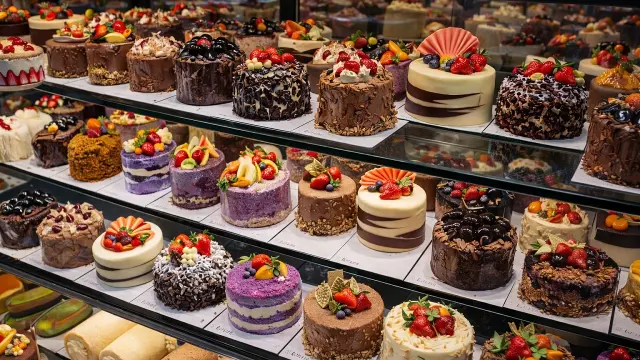
 Behind the Scenes Inside a Busy Turkish Patisserie Kitchen
#Pastry Kitchen
1 ideas
Behind the Scenes Inside a Busy Turkish Patisserie Kitchen
Get new #Pastry Kitchen ideas by email
Every Thursday: the week's best ideas, with the newest from #Pastry Kitchen.
Related tags
Pastry Kitchen Essentials and Baking Craft
What a pastry kitchen is
A pastry kitchen is the part of a kitchen devoted to sweet baking and dessert preparation. It can be a corner of a home kitchen, a dedicated room in a bakery, or a professional workspace where cakes, tarts, pastries, cookies, and plated desserts are made. The focus is on precision, clean organization, and careful timing, because many pastry recipes depend on exact measurements and gentle handling.
Pastry work has deep roots in European baking traditions, especially in French, Austrian, Italian, and Middle Eastern kitchens, though nearly every food culture has its own sweet doughs, filled pastries, and celebratory desserts. Over time, the pastry kitchen became associated with both everyday home baking and highly skilled professional craft.
What happens there
Read more
In a pastry kitchen, ingredients are measured, mixed, shaped, baked, cooled, filled, and finished. Depending on the setting, you may find workstations for mixing batters, rolling dough, tempering chocolate, assembling cakes, piping cream, glazing pastries, or decorating desserts.
Common types of pastry include:
- Shortcrust and tart shells
- Puff pastry and laminated doughs
- Choux pastry
- Yeasted sweet doughs
- Cookies, biscuits, and bars
- Cakes, sponges, and roulades
- Cream-filled desserts, mousses, and custards
Each type behaves differently, so the kitchen needs calm, order, and good timing.
Skills and techniques to know
If you are new to pastry, start with a few basic habits that make a big difference:
- Measure carefully, especially flour, sugar, butter, and liquids
- Read the full recipe before starting
- Keep ingredients at the right temperature when the recipe calls for it
- Work cleanly and organize your tools before you begin
- Cool baked items fully before filling or decorating them
Some essential techniques include:
- Creaming butter and sugar
- Folding delicate mixtures without losing air
- Rolling dough evenly
- Piping neat shapes and borders
- Blind baking tart shells
- Whisking, whisking, and whisking properly for batters and creams
A pastry kitchen often rewards patience more than speed. Many recipes improve when you give dough time to rest, chill, or rise.
Tools that help
You do not need a professional setup to begin, but a few reliable tools make pastry work easier:
- Mixing bowls in several sizes
- A digital scale or accurate measuring tools
- Whisks, spatulas, and wooden spoons
- Rolling pin
- Baking trays and cake tins
- Parchment paper
- Cooling racks
- Sifters and sieves
- Piping bags or spoons for filling and decoration
Good storage also matters. Keep dry ingredients sealed, butter and dairy chilled, and finished pastries protected from heat and moisture.
Practical tips for beginners
Begin with simpler recipes before moving to layered pastries or advanced decoration. A tart, a tray bake, or a basic cookie recipe can teach you a lot about texture, timing, and oven behavior. If something goes wrong, use it as information: pastry often improves when you notice whether the dough was too warm, the oven too hot, or the mixing too heavy.
A well-run pastry kitchen is less about perfection and more about consistency. Once you understand the rhythm of measuring, chilling, baking, and finishing, you can create desserts that feel polished, balanced, and satisfying.
Videos come from YouTube and posts from Instagram; titles and summaries are our own. All rights belong to their creators.