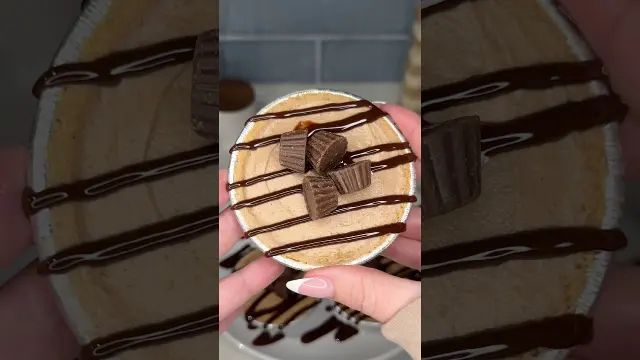
 Mini Reese's Peanut Butter Pies in Graham Crusts
#Peanut Butter Dessert
1 ideas
Mini Reese's Peanut Butter Pies in Graham Crusts
Get new #Peanut Butter Dessert ideas by email
Every Thursday: the week's best ideas, with the newest from #Peanut Butter Dessert.
Related tags
Peanut Butter Desserts: A Complete Guide
Peanut butter sits in an unusual place among dessert ingredients. It is savoury by nature, ground from a legume rather than a nut, and yet it carries the fat, the depth and the toasted flavour that sweet baking depends on. Used well, it makes desserts that taste less sugary than they are, because salt and roastiness balance the sweetness from the inside.
Where it comes from
Peanuts are native to South America, and grinding them into a paste is an old practice there. The spread as most of the world knows it took shape in North America in the late nineteenth and early twentieth centuries, and from there it moved into home baking — first as a sandwich filling, then folded into cookies, brownies, frostings and pies. Its arrival in desserts was quick because it solved a practical problem: it added fat and body cheaply, and it kept baked goods soft for longer.
The main kinds
Read more
The most familiar split is between natural peanut butter, which separates and needs stirring, and the stabilised kind, which stays uniform on the shelf.
- Natural, unsweetened: intense flavour, looser texture, no added sugar. Best where you control the sweetness yourself, as in sauces, fillings and ganache.
- Stabilised, sweetened: firmer, sweeter, more predictable. Better in cookie dough and frostings, where consistency matters.
- Chunky versus smooth: chunky adds crunch but can tear delicate doughs and clog piping tips. Smooth is the safer default.
- Powdered peanut butter, with the oil pressed out, behaves differently again — useful when you want flavour without extra fat, though it needs liquid to come back to life.
Kinds of dessert
The classics are few and durable. Cookies, usually cross-hatched and rolled in sugar, where peanut butter supplies chew and a faint salt edge. Brownies and blondies, swirled through rather than fully mixed, so the layers stay distinct. No-bake bars and slices set with melted chocolate or crushed biscuits, reliable because nothing needs to rise. Pies and tarts, often with a graham or biscuit crust and a whipped, mousse-like filling. Cheesecakes, where it blends into the cream cheese without thinning it. Fudge and confectionery. And frostings, sauces and ice creams, which is where it works hardest: a spoonful in chocolate frosting deepens it considerably.
What to know before you start
Choose your peanut butter by recipe, and do not swap freely. Natural peanut butter with a run of oil will make cookies spread and fillings loose; the stabilised kind will make a sauce stiffen. If a recipe does not specify, stabilised smooth is the safer guess.
Taste as you go and lean on salt. A small pinch in a peanut butter filling makes the flavour read as roasted rather than flat. Brown sugar and vanilla round it out; a little dark chocolate or jam sharpens it.
Chill no-bake mixtures properly before shaping, and remember that peanut butter desserts keep well but soften at room temperature, so store them cool.
Finally, peanut allergy is common and serious. If you are serving to others, say clearly what is in the dish, and keep separate utensils and surfaces when preparing it.
#Peanut Butter Dessert: frequently asked questions
How do I choose the right peanut butter for a dessert recipe?
Pick it to match the job rather than reaching for whatever is in the cupboard. Natural, unsweetened peanut butter gives the strongest roasted flavour and lets you control the sugar, which suits sauces, fillings and ganache, while the stabilised kind holds its shape better in cookie dough and frostings. If a recipe leaves it open, smooth stabilised peanut butter is the safest bet.
Can I swap natural peanut butter for the stabilised kind?
Swapping freely tends to change the texture of the finished dessert, so it is worth following what the recipe asks for. The loose, oily sort can make cookies spread and fillings runny, while the firm stabilised sort can stiffen a sauce that was meant to pour. Smooth is generally the safer choice, since chunky can tear delicate doughs and block a piping tip.
What kind of desserts can I make with peanut butter?
The dependable classics are cookies with a slight chew and salt edge, brownies and blondies with it swirled through so the layers stay separate, and no-bake bars set with melted chocolate or crushed biscuits. It also works in pies and tarts on a biscuit crust, in cheesecakes where it blends into the cream cheese, and in fudge, frostings, sauces and ice cream. A spoonful stirred into chocolate frosting is one of the easiest ways to deepen it.
How do I stop peanut butter desserts from tasting flat or cloying?
Salt is the main lever, since a small pinch makes the flavour read as roasted rather than merely sweet. Brown sugar and vanilla soften the edges, and a little dark chocolate or jam gives it something sharp to push against. Taste as you mix rather than waiting until the dessert is finished.
What are the common mistakes to avoid?
The usual ones are using the wrong style of peanut butter, skipping the salt, and rushing a no-bake mixture before it has chilled enough to shape. Another is storing the finished dessert somewhere warm, since these sweets soften at room temperature and hold up better kept cool. Also note that peanuts are a common allergen, so it helps to tell people what is in a dish when you serve it.
Videos come from YouTube and posts from Instagram; titles and summaries are our own. All rights belong to their creators.