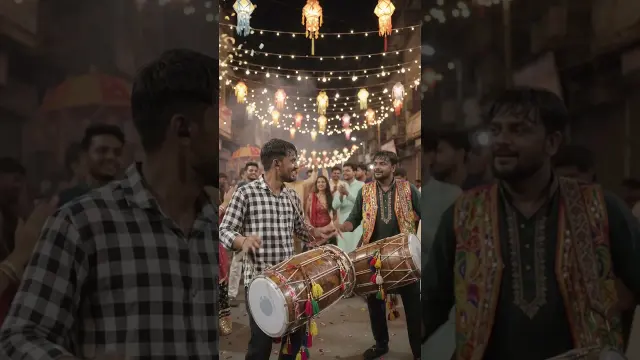
 Live Dhol Drumming Celebration Under Festival Lights
#Performances
2 ideas
Live Dhol Drumming Celebration Under Festival Lights
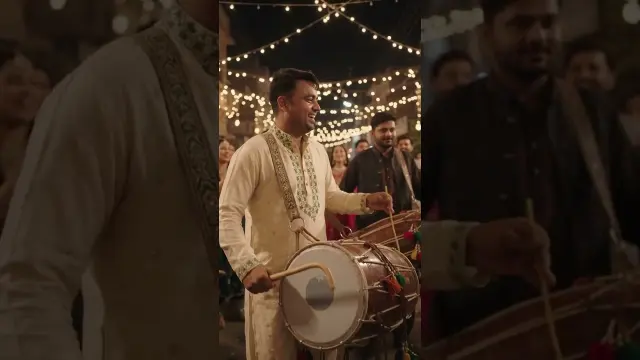 Traditional Dhol Performance at a Night Street Party
Get new #Performances ideas by email
Every Thursday: the week's best ideas, with the newest from #Performances.
Related tags
Live Performance: A Guide to Stagecraft and Presence
A performance is any moment when something made to be witnessed is offered to an audience in real time. It can be a drummer alone in a courtyard, a theatre company, a dancer, a singer, a storyteller or a full ensemble. What separates it from a recording is presence: the same event will never happen twice, and everyone in the room knows it.
Where it comes from
Performance is older than written history. People have drummed, danced, sung and acted to mark seasons, weddings, harvests, worship and war for as long as there have been communities. Many instruments now heard on stages began as ritual or ceremonial tools: the dhol, a large double-headed drum from the Punjab region, was carried through processions and celebrations long before it appeared in concert halls. The move from ceremony to entertainment happened gradually, and most living traditions still hold both at once.
The main kinds
Read more
Performances are usually grouped by what carries them:
- Musical, from solo instrumental work to large ensembles and marching or street bands
- Dance, including classical, folk, social and contemporary forms
- Theatre and spoken word, scripted or improvised
- Ceremonial and processional performance tied to festivals, weddings and religious observance
- Street and outdoor performance, where the audience comes and goes freely
These overlap constantly. A festival drumming group is at once musical, ceremonial and outdoor, and that mix is often what gives it its energy.
What makes a performance work
Three things carry almost any show. Rhythm, in the broadest sense: a clear pulse or structure the audience can follow. Contrast: loud and quiet, fast and slow, crowded and spare. And contact: the performers acknowledging that people are watching, through eye contact, spacing, timing or invitation.
Preparation matters more than inspiration. Rehearsal builds the muscle memory that lets performers respond when something goes wrong, which it usually does. Sound checks, knowing the space, and agreeing on cues protect a show far more reliably than talent alone.
Practical tips
If you are performing, start and end deliberately. A confident beginning settles an audience, and a clear ending tells them the moment is complete. Warm up your body and your instrument, keep your setup simple enough to repeat anywhere, and leave room for the unexpected.
If you are watching, give your attention generously. Arrive before the start, keep phones out of sight, and stay for the ending. Applause is part of the form, not an interruption of it. Outdoors, position yourself where you can both see and hear, and remember that a crowd is itself part of the performance.
Whether you are on stage or in it, live performance is a shared act of attention, and that is what makes it worth protecting.
#Performances: frequently asked questions
How do I get started with performing in front of an audience?
Begin with something small and repeatable — a short piece you can play, dance or speak comfortably from start to finish. Practice it in the space you will actually use, or somewhere similar, so the surroundings do not surprise you. Invite a few people to watch before the real occasion, since an audience changes how a piece feels.
What do I actually need to put on a performance?
You need a piece of material, a place to present it, and someone to witness it. Beyond that, the essentials are a clear beginning and ending, a setup simple enough to repeat anywhere, and agreement among performers on cues. Fancy equipment helps far less than preparation does.
Which kind of performance should I choose?
Pick the form that fits what you already enjoy doing — music, dance, theatre, ceremony or street work — rather than the one that looks most impressive. Many forms overlap, so a drumming group can be musical, ceremonial and outdoor at once. Choose the setting and audience that match the form, not the other way around.
How do I prepare for a live show so that mistakes matter less?
Rehearsal is what lets you recover when something goes wrong, which it usually will. Warm up your body and your instrument beforehand, check the sound and the space, and agree on cues with everyone involved. Repetition builds the muscle memory that carries you through the unexpected.
What are the most common mistakes performers make?
Drifting into a piece without a clear opening and letting it fade instead of ending it deliberately are the usual ones. Overcomplicated setups that cannot be repeated elsewhere, and skipping warm-ups, cause avoidable trouble. Trying to be inspired instead of prepared is the underlying mistake.
How should I behave as an audience member?
Arrive before the start, keep phones out of sight, and stay until the ending so the performers get a complete moment of attention. Applause belongs to the form rather than interrupting it. Outdoors, place yourself where you can both see and hear, and remember the crowd is part of the show too.
Videos come from YouTube and posts from Instagram; titles and summaries are our own. All rights belong to their creators.