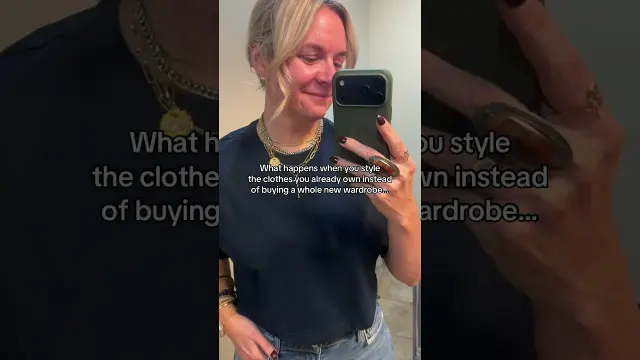
 Three Ways to Style One Neglected Piece in Your Closet
#Personal Styling
1 ideas
Three Ways to Style One Neglected Piece in Your Closet
Get new #Personal Styling ideas by email
Every Thursday: the week's best ideas, with the newest from #Personal Styling.
Related tags
Personal Styling: A Beginner's Guide to Dressing Well
Personal styling is the craft of putting clothes together so that they serve the person wearing them. It sits somewhere between a practical skill and a form of self-knowledge: part wardrobe management, part image work, part the simple daily question of what to put on. A personal stylist is someone who does this for other people, but the underlying skills belong to anyone willing to learn them.
The practice grew out of two older traditions. One is tailoring, where a garment is shaped to an individual body rather than a standard size. The other is the department store and the fashion magazine, which taught people to think of clothing as a coordinated look rather than a set of separate purchases. Personal shopping services existed for much of the twentieth century; styling as a recognised profession for private clients became common later, as wardrobes grew larger and shopping moved partly online.
What it involves
Styling usually starts with questions rather than clothes. What does your week actually look like, and how much of it is spent at work, at home, outdoors, at events? What do you want your appearance to communicate, and to whom? What do you already own that you genuinely wear? Answering these honestly narrows a wardrobe more effectively than any trend list.
Read more
From there, a stylist typically considers proportion and fit, colour, fabric and the level of formality a person needs. Colour analysis, which matches palettes to skin tone and contrast, is one common method; capsule wardrobes, where a small number of pieces are chosen to combine with each other, is another. Neither is a rulebook. They are tools for making decisions faster.
Main approaches
Some stylists work editorially, building outfits for photographs and events. Others work personally, editing a client's existing wardrobe, shopping alongside them, or assembling outfits from pieces they already own. Online styling, where clothes are selected remotely and sent to try at home, applies the same logic without the in-person fitting. Styling for film, advertising and music is a related but separate discipline, closer to costume design.
If you are starting out
Begin with what you have. Pull everything out, try it on, and set aside what does not fit, what you never reach for, and what you keep only out of guilt. Be honest about the difference between clothes you like on the hanger and clothes you like on yourself.
Learn your own measurements and keep them roughly current; sizes vary between makers, so numbers serve you better than labels. Notice which garments you wear repeatedly and why, then look for more of that quality rather than more variety.
Build around a base of pieces that work together in colour and formality, and add interest through texture, layers and accessories. Resist buying for a version of your life you do not actually live.
Finally, treat fit as the thing worth spending on. A modest garment that has been altered to sit properly will almost always look better than an expensive one that does not.
#Personal Styling: frequently asked questions
How do I start with personal styling if I have no experience?
Start by looking at your own life before you look at clothes: how your week is actually spent, what you need to look like in each part of it, and what you already reach for. Then go through your wardrobe, try things on, and separate what fits and gets worn from what only survives out of habit or guilt. That honest inventory gives you a clearer direction than any shopping list or trend guide.
Do I need to replace my whole wardrobe to look well styled?
No. Most people already own enough to work with, and the useful work is editing rather than replacing: keeping what fits and suits you, and letting go of the rest. What remains can be organised around pieces that share colours and levels of formality, so more of it can be combined. New purchases then fill genuine gaps instead of adding duplicates.
Should I use colour analysis or build a capsule wardrobe?
Both are decision-making shortcuts rather than rules you have to obey. Colour analysis helps you narrow a palette to tones that flatter your skin and contrast, while a capsule approach helps you choose a small set of pieces that combine easily. Pick whichever removes more of your daily hesitation, and feel free to borrow from the other where it helps.
How do I care for clothes so a styled wardrobe lasts?
Care begins at the point of buying: check how a garment is made and how it is meant to be washed before you commit to it. Store things so they keep their shape, deal with small repairs early rather than after they spread, and keep your measurements roughly up to date so fit stays accurate as your body and your clothes change.
What can I do with a piece I own but never wear?
Before giving up on it, try it in combinations you have not attempted: layered under or over something else, paired with a different level of formality, or given a new role through accessories and texture. Sometimes the piece is fine and the way it was being worn was the problem. If it still does not work after a few honest attempts, it is not earning its space.
What mistakes do people make most often when styling themselves?
Buying for an imagined life rather than the one you actually live is a common one, as is choosing clothes you like on the hanger but not on your body. Chasing variety instead of repeating the qualities of garments you already wear often leads to a full wardrobe with nothing to put on. The other frequent mistake is ignoring fit, when alterations to an inexpensive piece usually do more for how you look than spending more on something that sits badly.
Videos come from YouTube and posts from Instagram; titles and summaries are our own. All rights belong to their creators.