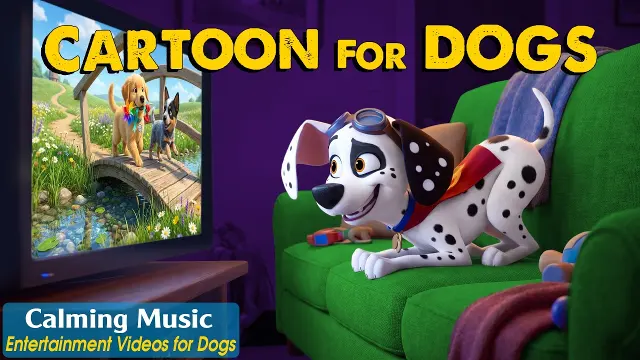
 Relaxing Dog Cartoon and Stress Relief Music for Lonely Dogs
#Pet Animation
1 ideas
Relaxing Dog Cartoon and Stress Relief Music for Lonely Dogs
Get new #Pet Animation ideas by email
Every Thursday: the week's best ideas, with the newest from #Pet Animation.
Related tags
Pet Animation: Animated Stories with Animals
Pet animation is the use of animation to create moving images of animals, especially pets such as dogs, cats, rabbits, birds, and other familiar companions. It can appear in cartoons, short films, advertisements, games, social videos, and illustrated stories. Because animals are expressive and easy to relate to, they are a natural subject for animation and often used to create warmth, humor, comfort, and emotional connection.
What pet animation is
At its simplest, pet animation means giving an animal character movement, personality, and expression. The animal may be realistic, stylised, or completely imaginary, but the goal is the same: to make the character feel alive. In some work, the animation focuses on realistic motion, such as a dog running or a cat stretching. In other work, the pet becomes a character with human-like emotions, habits, and gestures.
This kind of animation has deep roots in illustrated storytelling, comic art, and early cinema. Animals have long been used in folklore and children’s stories, and animation expanded that tradition by allowing them to move and communicate in ways that live-action cannot easily show.
Read more
Common styles and uses
Pet animation can take many forms:
- Hand-drawn animation, with each frame illustrated by hand
- Digital 2D animation, using software to build movement from drawn shapes
- 3D animation, where the pet is modeled in a digital space and animated like a small actor
- Stop-motion, where physical models or puppets are moved frame by frame
- Motion graphics and simple looped animation, often used for social media or branding
It is used for entertainment, children’s content, educational material, greeting cards, pet-related marketing, and calming visual loops. Some pet animation is playful and expressive, while other versions are soft, repetitive, and designed to feel relaxing.
What makes pet animation effective
A good pet character usually depends on clear observation. Real animals communicate through posture, tail movement, ear position, eye direction, and speed of motion. Animators study these details and then decide how much realism or exaggeration to use. Even a simple animated pet feels convincing when its movement follows familiar animal behavior.
Expression is also important. Since animals do not speak in the real world, animation often relies on body language, timing, and subtle facial cues to suggest mood and intention.
Tips for beginners
If you are new to pet animation, start with simple movements before trying complex scenes. Walking, turning, blinking, sitting, or tail wagging are useful exercises. Watch real pets closely and sketch what you see. Notice how weight shifts from one paw to another, how the head changes angle, and how the body relaxes or tenses.
A few practical tips:
- Begin with one clear action instead of a full story
- Keep the silhouette readable so the pose is easy to understand
- Use natural timing; small pauses often make motion feel more believable
- Exaggerate carefully if you want a cute or comic style
- Keep backgrounds simple at first so the animal remains the focus
Whether you want realism, charm, or comfort, pet animation works best when it feels thoughtful and observant. A well-animated animal can be funny, expressive, and deeply engaging, even with very few movements.
#Pet Animation: frequently asked questions
How do I start with pet animation if I've never animated anything before?
Pick a single, short action rather than a whole story — a tail wag, a blink, or a head turn — and animate just that until it feels natural. Watch a real pet doing it, sketch the key poses, and only then worry about smoothing the movement out. Starting small keeps the process encouraging instead of overwhelming.
What do I actually need to make a pet animation?
You need something to draw with and something to put the drawings in motion — paper and a phone camera work just as well as a tablet and animation software. Beyond tools, the real requirement is observation: posture, ear position, and the way weight shifts from paw to paw. Simple backgrounds and a clear silhouette matter more than expensive equipment.
Which style of pet animation should I choose for my project?
Let the purpose decide — a soft, looping cartoon suits calming content or social clips, while hand-drawn or 3D work fits stories and character-driven pieces. Stop-motion gives a tactile, crafted feel but demands patience with physical models. Choose the style you can actually finish on your own, since a simple approach done well reads better than an ambitious one left unfinished.
What kinds of occasions call for pet animation?
It works well for greeting cards, children's stories, pet-related advertising, and calming visual loops meant to relax a room. Personal occasions like a pet's birthday or a memory piece about a companion animal are also natural fits. The tone should follow the occasion — playful and exaggerated for humor, gentle and repetitive for comfort.
What are the most common mistakes beginners make with pet animation?
The usual slip is animating a full scene before mastering a single action, which makes everything feel rushed and unclear. Another is ignoring natural timing — motion without small pauses reads as mechanical rather than alive. Cluttered backgrounds and unclear silhouettes also hide the animal, so keep the focus on the character's pose.
How do I make an animated pet feel believable rather than stiff?
Study how real animals communicate through body language instead of facial expression, since pets don't speak. Let posture, tail movement, and eye direction carry the mood, and exaggerate only slightly if you want a cute result. Thoughtful, observant motion does more than elaborate detail.
Videos come from YouTube and posts from Instagram; titles and summaries are our own. All rights belong to their creators.