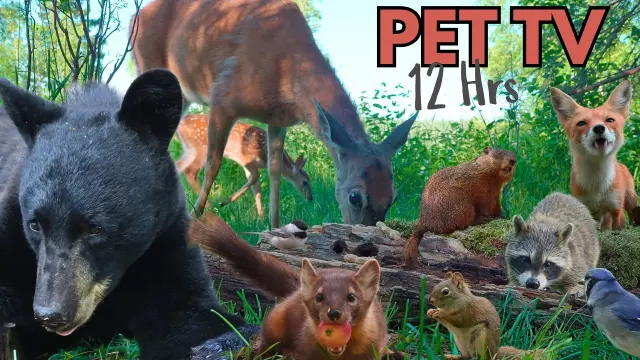
 Nature Compilation Video for Pets Featuring Wildlife and Forest Scenery
#Pet Entertainment
2 ideas
Nature Compilation Video for Pets Featuring Wildlife and Forest Scenery
 Autumn Cartoon Dog TV Entertainment for Pets Home Alone
Get new #Pet Entertainment ideas by email
Every Thursday: the week's best ideas, with the newest from #Pet Entertainment.
Related tags
Pet Entertainment: Helping Pets Stay Busy and Content
Pets share our homes, but they do not share our days. While we work, run errands or scroll through our phones, a dog or cat may spend hours with nothing much to do. Pet entertainment is the practice of filling that time with things worth paying attention to. It is not about spoiling an animal; it is about giving a curious mind something to work with, the way a walk gives a body something to do.
Why boredom deserves attention
Dogs and cats are animals with instincts for watching, sniffing, chasing and solving. When those instincts have no outlet, restlessness tends to appear: chewing, scratching, following you from room to room, or long stretches of sleeping out of sheer lack of options. Entertainment does not fix every behaviour, but a pet with a satisfying outlet is usually easier company and calmer when left alone.
Kinds of entertainment
Read more
There are more options than most people expect, and they suit different animals.
- Screens: nature footage, films of birds, fish or other animals, and slow-moving imagery can hold some pets' attention. Cats often respond to small fast movement; dogs more often to other dogs and animals.
- Sound: gentle music, nature recordings and quiet talk radio give a lonely room a bit of company.
- Toys: balls, soft toys, tunnels, crinkle sacks and things that can be batted, carried or chased.
- Puzzle feeders: food toys that make an animal work for a meal, turning eating into a task.
- Scent games: hiding treats or a favourite toy around a room and letting the nose do the searching.
- The window: a perch or a low chair facing the street or a garden is quiet entertainment that costs nothing.
- Company: a few minutes of real play, a slow grooming session, or simply sitting nearby.
What beginners should know
Start with your individual animal rather than with what works for pets in general. Some dogs sit riveted to animal footage; others ignore a screen entirely and would rather shred a cardboard box. Cats are famously selective, and a video that thrills one may bore another to sleep. Try a few things, notice what actually gets used, and build from there.
Safety matters more than variety. Choose toys that are hard to swallow or pull apart, remove strings and ribbons once play is over, and check for worn seams. With screens, keep the volume modest, place the screen at a comfortable distance, and never leave a pet alone with something it could knock over or chew.
Everyday rhythm
Entertainment works best as a routine rather than a novelty. A puzzle feeder at the same hour, a short play session before you leave, a window seat that stays available: small predictable pleasures carry more weight than a room full of forgotten toys. Rotate a few items and put the rest away, so that what returns feels new again. Watch your pet more than the clock, and let its interest guide you.
#Pet Entertainment: frequently asked questions
How do I get started with pet entertainment?
Begin by watching your own pet rather than copying what works for other animals. Offer one simple thing at a time — a toy, a few minutes of play, a seat by the window — and notice what actually holds its attention. Build your routine around those preferences instead of buying a whole collection at once.
What do I need to entertain a pet at home?
Very little beyond what most homes already have: a safe toy or two, something to hide treats in, and a spot near a window. Screens and sound can add company for animals left alone, and your own time is the most valuable piece. The point is giving a curious mind something to do, not filling a room with equipment.
Which kind of entertainment should I choose for my pet?
It depends on what your animal is drawn to. Cats often respond to small, fast movement and things they can bat or chase, while dogs tend to notice other animals and smells more than screens. Scent games, puzzle feeders, toys and simply sitting together all suit different temperaments, so try a few and keep what gets used.
Do I need to supervise my pet with toys and screens?
Yes. Pick toys that are hard to swallow or pull apart, take away strings and ribbons when play ends, and check regularly for worn seams. With screens, keep the volume low, place the screen where it cannot be knocked over, and never leave a pet alone with something it might chew.
What are common mistakes people make with pet entertainment?
Two stand out: buying lots of things at once and assuming a pet will like what another one did. Leaving every toy out all the time also makes them dull, since novelty fades quickly. Rotate a few items, put the rest away, and let your pet's interest rather than your expectations decide what stays.
How do I keep pet entertainment interesting over time?
Treat it as a rhythm rather than a treat. A puzzle feeder at the same hour, a short play session before you leave, and a window seat that is always available give a pet small predictable pleasures to rely on. Swapping items in and out keeps returning favourites feeling new.
Videos come from YouTube and posts from Instagram; titles and summaries are our own. All rights belong to their creators.