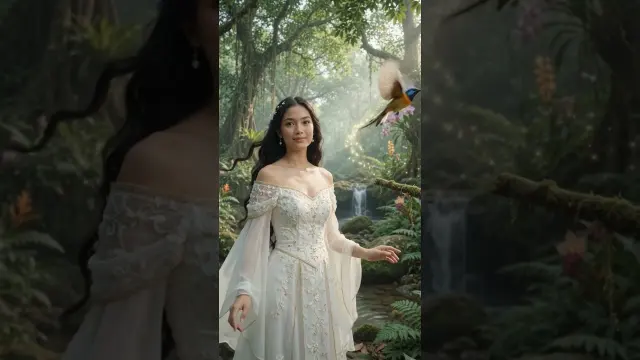
 Philippine Legends That Shaped the Country's Heritage
#Philippine Mythology
1 ideas
Philippine Legends That Shaped the Country's Heritage
Get new #Philippine Mythology ideas by email
Every Thursday: the week's best ideas, with the newest from #Philippine Mythology.
Related tags
A Beginner's Guide to Philippine Mythology
Philippine mythology is the body of stories, spirits, and beliefs that developed across the islands long before written records, passed down by mouth and later woven into the country's literature and art. It is not a single tidy pantheon but a patchwork: each region, each ethnolinguistic group, carried its own accounts of how the world began, who watches over the harvest, and what waits in the dark beyond the village.
Where the stories come from
These traditions grew out of animist belief, the conviction that the natural world is alive with presence. Early Filipinos honoured ancestors and addressed spirits in the surroundings: the sea, the river, the forest, the rice field. When Islam arrived in the south and Christianity spread elsewhere, older stories did not vanish. They were folded into new frameworks, sometimes renamed, sometimes hidden in folk practice, which is why a tale can sound pagan in one village and Catholic in the next.
Gods and sky dwellers
Read more
Among the Tagalog, Bathala is remembered as the creator and ruler of the sky. Related figures appear elsewhere: Apolaki, associated with the sun, and Mayari, with the moon. Some traditions describe a sky world inhabited by deities who took an interest in human affairs, sending rain, thunder, or harvest. In the Visayas, the great serpent Bakunawa is said to swallow the moon during eclipses, a story people told to explain a frightening sight in the sky. Other accounts feature Sidapa, a mountain deity, or the diwata, guardians of nature who could bless or punish.
Creatures and cautionary tales
Folklore also populates the ordinary world with beings: the aswang, a shape-shifter blamed for illness and night terrors; the kapre, a giant said to smoke in the branches of old trees; the duwende, small dwellers in anthills and mounds; the nuno sa punso, an elder spirit of the earth who asks to be respected when you walk. Many of these tales function as etiquette. Say "tabi po" before passing a mound, don't whistle at night, don't point at strange things in the dark.
How to approach the stories
If you are new to this material, start with the understanding that versions differ. The same figure can be gentle in one province and fearsome in another, and a story you find online may be a modern retelling rather than an old one. Read widely, note where a telling comes from, and treat local accounts with care; these are living traditions for many communities, not just entertainment. Look for collections published by regional writers and university presses, and visit museums and cultural festivals where the stories are still performed.
Why they still matter
Mythology gives shape to values: hospitality, respect for elders, caution in unfamiliar places, gratitude for a good harvest. It also speaks to the landscape and to a history of many peoples. You do not have to believe the tales to learn from them. Read them as literature, as history, and as a window into how people made sense of the world.
#Philippine Mythology: frequently asked questions
How do I start learning about Philippine mythology?
Begin with the understanding that there is no single official version of these stories — each region and ethnolinguistic group carries its own accounts, so versions will differ wherever you look. Read widely, and pay attention to where a telling comes from, because a retelling you find online may be quite modern rather than old. Collections by regional writers and university presses are a sturdier starting point than loose internet summaries.
What do I need to keep in mind before reading these stories?
A little context goes a long way: these traditions grew out of animist belief, the conviction that the natural world is alive with presence, and were later folded into Islamic and Christian frameworks rather than replaced by them. That is why the same tale can sound pagan in one village and Catholic in the next. Treating local accounts with care matters too, since for many communities these are living traditions rather than entertainment.
Which kind of story should I look for first?
It depends on what draws you in — sky deities and creation accounts explain how the world began, while creature tales about shape-shifters, tree giants, and small earth dwellers are more like cautionary etiquette dressed as folklore. Stories about nature guardians and ancestor spirits sit somewhere between the two and reveal a lot about everyday values. Start with whichever thread you find most interesting and follow it into the region it comes from.
How should I approach these traditions respectfully, especially when visiting places where they are still told?
Look for museums and cultural festivals where the stories are still performed, and let local voices lead rather than correcting them against a book version. Old customs attached to the tales, such as asking permission before passing an earthen mound, are still observed by many people and are best treated as courtesy rather than superstition. If you write about the material, credit the community and region a telling comes from.
What common mistakes do people make with Philippine mythology?
The most frequent one is assuming a single tidy pantheon, when the reality is a patchwork of regional accounts with overlapping but distinct figures. Another is treating a modern retelling, a film, or a comic as the old version and repeating it as fact. It also helps to remember that you do not have to believe the tales to learn from them — reading them as literature and history is a legitimate way in.
Videos come from YouTube and posts from Instagram; titles and summaries are our own. All rights belong to their creators.