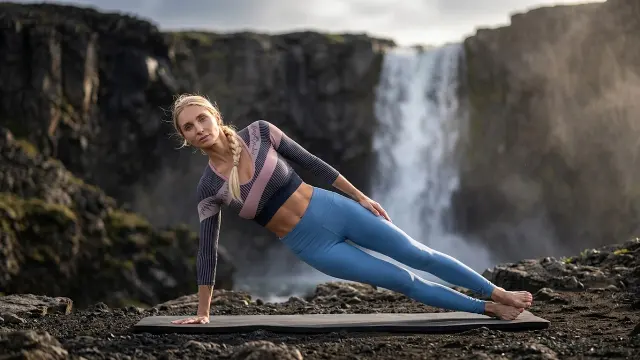
 Full Body Pilates Class to Sculpt and Energise in 30 Minutes
#Pilates Class
2 ideas
Full Body Pilates Class to Sculpt and Energise in 30 Minutes
Get new #Pilates Class ideas by email
Every Thursday: the week's best ideas, with the newest from #Pilates Class.
Related tags
Pilates Class: A Beginner's Guide to the Basics
A Pilates class is a guided session of controlled, low-impact movement built around posture, breath and core stability. Rather than repeating an exercise many times at speed, the work is done slowly and deliberately, with attention on alignment and on the quality of each movement. It suits a wide range of people, from those who sit at a desk all day to dancers, runners and anyone returning to exercise after a long pause.
Where it comes from
The method was developed by Joseph Pilates, who devised a system of exercises in the early twentieth century. He combined ideas from gymnastics, boxing, yoga and rehabilitation work, and famously built apparatus to support bodies that could not yet move freely against gravity. What began as a small studio practice spread through the dance world and eventually into general fitness, where it is now taught in dedicated studios, gyms and community halls. The underlying principle has stayed the same: train the body as a connected whole instead of isolating single muscles.
Mat work and equipment
Read more
Most classes fall into two families. Mat classes use only your own body weight, sometimes with small props such as a ring, resistance band or soft ball. They are portable and relatively gentle on the joints, but they demand good control, since there is little external support. Equipment classes use spring-based machines, the best known being the reformer, along with the chair and other apparatus. The springs can assist a movement or add resistance to it, which is why equipment can feel both more supportive and more demanding depending on the setting.
Styles you will meet
Classes vary in tone and pace. Classical Pilates keeps close to the original repertoire and sequence. Contemporary teaching adapts exercises for individual bodies and often blends in other influences. Some sessions are slow and restorative, focused on mobility and breathing; others move at a brisker tempo and work the muscles hard. You will also find group reformer classes, one-to-one sessions and short classes built around a single area such as the back or the hips.
Before your first class
Wear close-fitting clothes you can move in, and bring a water bottle. Many studios ask for grip socks, so check beforehand. Arrive early enough to tell the instructor about any injury, stiffness or limitation, and expect a short questionnaire about your health. A good teacher will offer alternatives for every exercise and will not treat a small class as a chance to push everyone at the same pace.
Practical tips
Start with a beginner or mixed-level class rather than the most advanced one on the timetable. Choose a mat over a hard floor, and keep a towel or blanket nearby for comfort under the spine. Expect to be corrected: hands-on guidance and clear cues are part of the method. Progress comes from precision, so resist the urge to move faster or bigger than you can control. Two classes a week, done consistently, usually teach you more than one exhausting session. Be patient with the breath and the coordination; they tend to click after a few weeks rather than in the first one.
#Pilates Class: frequently asked questions
How do I start a Pilates class if I've never done it before?
Pick a beginner or mixed-level session rather than the most advanced option on the timetable, so you can learn the basics without feeling rushed. Let the instructor know about any stiffness, injury or limitation before you begin, since good teaching adapts to the body in front of it. Arriving a little early also gives you time to ask questions and settle in.
What do I need to bring or wear to my first class?
Close-fitting clothes you can move and breathe in work best, because loose fabric hides the alignment a teacher needs to see. Bring water, and check with the studio about grip socks, which many places require. A small towel or folded blanket is handy for padding under the spine during mat work.
Should I choose mat classes or equipment classes?
Mat work relies on your own body weight with only small props, so it builds control quickly but offers little external support. Equipment such as the reformer uses springs that can either help a movement along or add resistance to it, which makes it feel supportive and challenging at once. Neither is better; mat suits those who want something portable, while equipment suits anyone who likes guidance from the apparatus.
How do I look after my body between sessions?
Progress in this method comes from precision rather than volume, so a steady, repeatable routine teaches you more than one punishing session. Give yourself rest days, and keep practising the breath and alignment cues in everyday positions like sitting at a desk. If something feels sharp or wrong during a class, say so and take the alternative the teacher offers.
What are the common mistakes beginners make?
The most frequent is chasing speed or a bigger range of motion than you can actually control, which undoes the point of slow, deliberate work. Another is treating corrections as criticism; hands-on guidance and clear cues are simply how the method is taught. Finally, don't expect everything to click immediately — breath and coordination usually fall into place after a few weeks of regular practice.
What style of class should I pick for a gentle or an energetic session?
Classes range from slow and restorative sessions centred on mobility and breathing to brisker ones that work the muscles hard, and classical teaching stays closer to the original sequence while contemporary teaching adapts it. If you want something calmer, look for restorative or single-focus sessions; if you want to feel worked, choose a faster full-body class. Reading the class description carefully is the quickest way to match the tone you're after.
Videos come from YouTube and posts from Instagram; titles and summaries are our own. All rights belong to their creators.