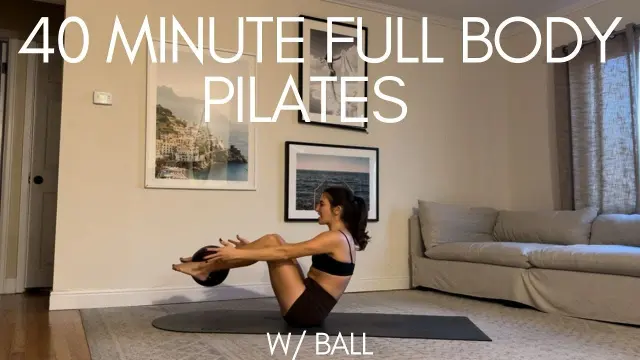
 40-Minute Mat Pilates Sculpt Class Using a Small Ball
#Pilates Sculpt
1 ideas
40-Minute Mat Pilates Sculpt Class Using a Small Ball
Get new #Pilates Sculpt ideas by email
Every Thursday: the week's best ideas, with the newest from #Pilates Sculpt.
Related tags
Pilates Sculpt: A Beginner's Guide to Long, Strong Movement
Pilates is a system of controlled movement work developed in the early twentieth century around a few simple ideas: that strength should come with mobility, that the body moves best when it is aligned, and that a small number of precise repetitions can ask more of you than a long, hurried set. Pilates Sculpt grows out of that tradition. It keeps the principles of classic Pilates and adds higher repetition, lighter resistance and a steady, flowing rhythm, with the aim of building lean, balanced strength rather than bulk.
What makes it a "sculpt" class
Where a classical Pilates session tends to favour precise, low-repetition work, a sculpt session lengthens the sequences and keeps the muscles under continuous tension. The movements are often smaller and more sustained: pulses, small circles, slow lowers and holds at the end of a range. Props are commonly used to add a gentle challenge and to make the work more interesting, including a soft ball, a resistance band, a magic circle ring or very light hand weights. Because the load stays low, the emphasis falls on endurance, control and posture rather than heavy lifting.
The main kinds
Read more
Most sculpt work happens on a mat, using body weight alone or with one or two small props. Some classes combine mat work with standing sequences, balance challenges or light cardio intervals, which makes them feel more athletic. Others stay purely on the floor and move slowly, closer to a traditional mat practice. On apparatus such as the reformer, springs can be adjusted to give support or resistance, and the same principles carry over. Videos and studio classes range from short, focused routines to longer full-body sessions.
Where to begin
Start with a class labelled for beginners and expect the first few sessions to feel like learning a language. Breath leads the movement: you generally inhale to prepare and exhale as you exert, which helps you recruit the deep abdominal muscles and keeps the ribs from flaring. Move more slowly than feels natural at first. Precision matters far more than speed, and a smaller range performed with control will do more for you than a big, loose one.
Practical tips
- Learn the neutral spine and the idea of a gentle, continuous core engagement before adding props.
- Keep the ribs stacked over the pelvis rather than letting the lower back arch as you tire.
- Expect small, sometimes trembling movements; that is the point, and it is not a sign of failure.
- Use a mat with enough cushioning for the spine, and keep a folded towel or cushion nearby for support.
- Let your neck and jaw stay relaxed; tension there usually means you are working too hard.
- Build up gradually, with rest days between sessions, and stop if something sharp or painful appears.
Consistency, not intensity, is what changes a body over months. Two short, careful sessions a week will serve you better than one heroic one. If you have an injury, are pregnant, or are returning to exercise after a long break, check with a qualified professional before you start.
#Pilates Sculpt: frequently asked questions
How do I get started with Pilates Sculpt if I've never done Pilates?
Pick a class or video that is clearly labelled for beginners, and treat your first sessions as a lesson in a new movement language rather than a workout to get through. Let your breath set the pace — inhaling to prepare, exhaling as you exert — and move far more slowly than feels natural, since control matters much more than speed. Starting with plain mat work before you add any props makes the learning curve gentler.
What equipment do I actually need for Pilates Sculpt?
Most sculpt classes need nothing more than a mat with enough cushioning to protect your spine. A folded towel or small cushion nearby is worth having for support, and once you're comfortable with the basics you can add a soft ball, a resistance band, a magic circle ring or very light hand weights. The resistance stays deliberately light, so there's no need to invest in heavy equipment.
What's the difference between Pilates Sculpt and classic Pilates?
Classic Pilates tends to favour precise, low-repetition work, while a sculpt class lengthens the sequences and keeps the muscles under continuous tension. The movements are often smaller and more sustained — pulses, small circles, slow lowers and holds at the end of a range — so the emphasis lands on endurance, posture and control rather than on lifting heavy loads. The underlying principles are the same; the rhythm and emphasis are what change.
Should I choose a mat, standing, or reformer sculpt class?
Mat work is the most common and the easiest place to begin, using your own body weight alone or with a small prop. Classes that mix in standing sequences, balance challenges or light cardio intervals feel more athletic, while purely floor-based ones move slowly and sit closer to a traditional mat practice. Reformer work applies the same ideas with springs that can be adjusted to support or resist you, but it needs a studio and some guidance.
What are the most common mistakes people make in Pilates Sculpt?
The usual one is rushing — going faster than the work allows, when a smaller range performed with control will do far more for you than a big, loose one. Letting the lower back arch as you tire, or gripping in the neck and jaw, are both signs you're working too hard; keep the ribs stacked over the pelvis and the shoulders easy. Adding props before you've learned a neutral spine and a gentle, continuous core engagement is another common shortcut worth avoiding.
How often should I practise, and what should I expect to feel afterwards?
Consistency matters far more than intensity, so favour short, careful sessions spread through the week over one long heroic effort. Expect small, sometimes trembling movements during the work and mild soreness afterwards — that's the point of the sustained tension, not a sign of failure. Build up gradually, take rest days in between, and stop if anything sharp or painful appears.
Videos come from YouTube and posts from Instagram; titles and summaries are our own. All rights belong to their creators.