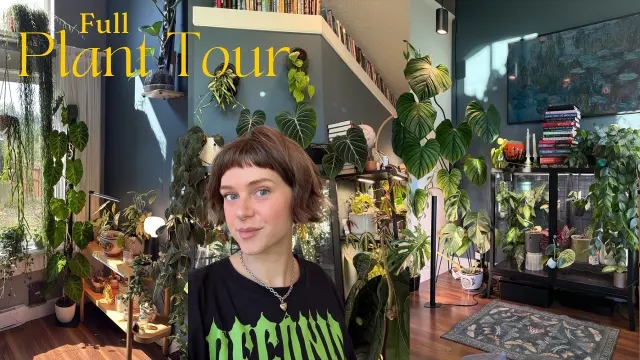
 Full Tour of a 150-Plant Houseplant Collection in a Small House
#Plant Tour
2 ideas
Full Tour of a 150-Plant Houseplant Collection in a Small House
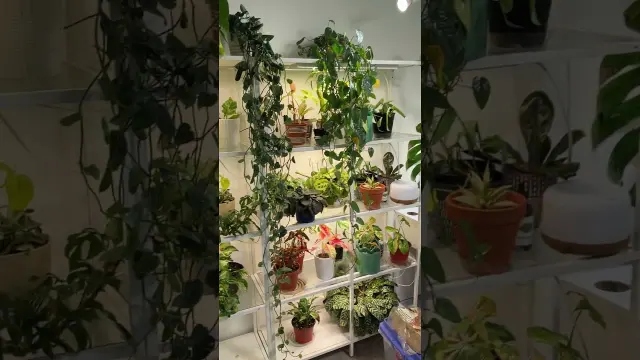 Morning Routine With a Collection of More Than 150 Houseplants
Get new #Plant Tour ideas by email
Every Thursday: the week's best ideas, with the newest from #Plant Tour.
Related tags
Plant Tours: A Walk Through a Home Full of Green
A plant tour is a guided look around someone's indoor garden, usually filmed or photographed room by room, following the plants as they are actually lived with. It is a simple idea: instead of showing a single perfect specimen, the tour shows the whole picture — the crowded windowsill, the shelf that has quietly become a jungle, the corner where nothing survives. Tours are shared because plants are hard to judge in isolation. A plant tells you far more when you see where it stands, what light reaches it, what it grows beside and how long it has been there.
What a tour usually shows
Most tours move through a home in a fixed order, and along the way they pause on the things that matter: where the light comes from and at what time of day, which plants sit closest to the glass, how pots are grouped and raised, how climbing plants are supported, and how soil and watering are handled in practice. Many tourers point out their failures as openly as their successes, which is often the most useful part.
Kinds of tours
Read more
- Whole-home tours that follow a route from room to room.
- Single-room tours, useful when one space has been planned around plants.
- Collection tours focused on a family of plants, such as ferns, succulents or foliage plants.
- Seasonal tours showing a space in winter light or summer growth.
- Before-and-after tours following a room through a change.
What beginners can take from them
Watching a tour is a way to learn by comparison. Notice how much of a room is given over to plants, and ask whether you have that much light and floor space. Look at how plants are lifted off cold floors and grouped to share humidity. Pay attention to the plants that look tired, not just the thriving ones, and to how honestly the owner talks about them. One tour rarely answers every question, but several will start to show you the patterns behind a collection that works.
Planning a tour of your own
Start by tidying rather than styling: clear dead leaves, wipe dusty foliage, remove spent flowers and check that saucers are not holding stale water. Water a day or two beforehand so plants look settled rather than freshly drenched. Then choose a route that follows the light, from the brightest room to the shaded ones, and decide what you want to say at each stop — the plant, its position, and one honest note about how it is doing.
Film in soft daylight rather than direct sun, hold the camera steady, and let a few seconds pass on each plant so viewers can actually look. Speak plainly and skip anything you are unsure of. A good plant tour is not a showroom; it is a walk through a living space, and its value lies in being real about what grows there and what does not.
#Plant Tour: frequently asked questions
What exactly is a plant tour, and why do people share them?
A plant tour is a room-by-room look around someone's indoor garden, usually photographed or filmed so viewers can see plants where they actually live rather than as isolated specimens. People share them because a plant is much easier to understand once you can see the light it gets, what it grows beside, and how long it has been in that spot. The honest ones include the corners where things struggle, which is often the most instructive part.
How do I start planning a tour of my own plants?
Begin with tidying rather than styling: clear dead leaves, wipe dusty foliage, remove spent flowers, and empty any saucers holding stale water. Water a day or two ahead so plants look settled instead of freshly drenched, then plan a route that follows the light from the brightest room toward the shaded ones. For each stop, decide in advance what you will say about the plant, its position, and how it is honestly doing.
What kind of tour should I watch or make if I am new to houseplants?
Single-room tours and whole-home tours are the easiest entry point, since they show how an entire space is organized around light and floor space. If you already know what draws you in, a collection tour focused on one family of plants, or a seasonal tour showing a space in winter light, tells you more about what that group actually needs. Before-and-after tours are especially useful for seeing how a room changes as a collection grows.
How should I film or photograph a plant tour so it is actually watchable?
Use soft daylight rather than direct sun, keep the camera steady, and hold on each plant for a few seconds so viewers have time to look properly. Speak plainly and leave out anything you are unsure of, since a tour works best as a walk through a real living space rather than a polished showroom. Showing a tired plant alongside a thriving one is more helpful than hiding it.
What common mistakes should I avoid when watching tours for advice?
The main trap is copying a plant's placement without checking whether your own light and space match, since a windowsill that works in one home can be far too dark in another. Look at the tired plants as carefully as the thriving ones, and pay attention to how honestly the owner discusses them, because that is where the real lessons are. One tour rarely answers everything, but several start to reveal the patterns behind a collection that works.
What does a tour usually show that a single plant photo cannot?
It shows where the light comes from and at what time of day, which plants sit closest to the glass, how pots are grouped and raised off cold floors, and how climbing plants are supported. You also see how watering and soil are handled in practice, which is hard to judge from a portrait of one perfect specimen. That wider context is what makes a plant's condition legible.
Videos come from YouTube and posts from Instagram; titles and summaries are our own. All rights belong to their creators.