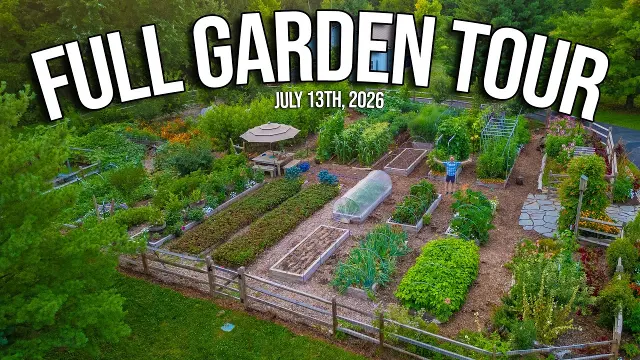
 Complete Mid-Summer Garden Tour and Growing Tips
#Plant Varieties
1 ideas
Complete Mid-Summer Garden Tour and Growing Tips
Get new #Plant Varieties ideas by email
Every Thursday: the week's best ideas, with the newest from #Plant Varieties.
Related tags
Plant Varieties: Cultivars, Hybrids and Heirlooms Explained
A plant variety, in everyday gardening language, is a distinct form of a species that people have selected and kept growing because it does something well: a particular colour, a habit, a flavour, a season, a tolerance for hard conditions. Where a species is the broad category — the tomato, the rose, the lavender — a variety is one recognisable version within it, stable enough that when you grow it again you get more or less the same plant.
What the words mean
Botanists and gardeners use a few overlapping terms. A cultivar is a plant selected and maintained in cultivation, and its name is written in single quotes after the species name — that quoted name is the variety's identity and does not change. A variety in the strict botanical sense is a naturally occurring population that differs from the type, often separated by geography. A hybrid is the offspring of a cross, either between two species or between two cultivated forms. Heirloom and heritage are looser, traditional words for older varieties passed down and saved by growers rather than produced commercially. Landrace describes a locally adapted population that varies from plant to plant rather than being uniform.
Why varieties matter
Read more
Choosing a variety is usually the single biggest decision a grower makes, because it fixes the plant's limits. Two tomato varieties of the same species can differ in fruit size, ripening time, disease resistance, leaf cover and how well the fruit holds after picking. The same is true of apples, dahlias, chillies and houseplants. Varieties also carry culture: local cuisine, regional gardens and family plots are often built around particular ones, and that is part of why seed saving matters.
Kinds you will meet
Vegetables and fruit are usually divided into heirloom or open-pollinated varieties, which come back true from saved seed, and hybrids, which are uniform and vigorous but must be bought again each year because their seed does not repeat the parent. Ornamentals add further categories: sport varieties that arise from a chance mutation, such as a branch with different flowers, and selections made for dwarf habit, variegation or scent. Natives and locally adapted selections are worth knowing if you garden for wildlife or dry summers.
If you are just starting
Read the description properly rather than the picture. Look for habit and mature size, hardiness, days to maturity or flowering time, light and water needs, and whether the plant is grown for one season or many. Match the variety to your conditions before you fall for its looks, and buy from a grower whose climate resembles yours where you can. Grow one new variety at a time alongside ones you trust, so you learn what it actually does in your soil.
Keep the label. Variety names are easy to forget and impossible to guess, and a plant that suits your garden is a name worth writing down.
#Plant Varieties: frequently asked questions
What is the difference between a species, a variety and a cultivar?
A species is the broad plant category, while a variety is one recognisable version of it with stable traits you can count on when you grow it again. Cultivar is the term for a form selected and maintained in cultivation, and its name is written in single quotes after the species name, which is what makes that identity fixed.
How do I choose which plant variety to grow?
Read the written description rather than falling for the photo, and check habit, mature size, hardiness, time to flowering or fruiting, and light and water needs. Match those to your own conditions and climate first, and buy from a grower whose conditions resemble yours.
Should I pick an heirloom or a hybrid variety?
Heirloom and open-pollinated varieties come back true from saved seed, so you can keep growing them year after year. Hybrids tend to be uniform and vigorous but their seed does not repeat the parent, so they have to be bought again each season.
Is it better to try several new varieties at once?
Start with one new variety at a time and grow it alongside plants you already trust, so you can see how it actually performs in your soil. Comparing it to a known plant tells you far more than a whole bed of unknowns would.
What mistakes do beginners make with plant varieties?
Choosing by looks alone and skipping the details on size, hardiness and timing is the commonest one, and it leads to plants that simply do not suit the spot. Losing the label is the other: variety names are easy to forget and impossible to guess, so write down the ones that work in your garden.
Videos come from YouTube and posts from Instagram; titles and summaries are our own. All rights belong to their creators.