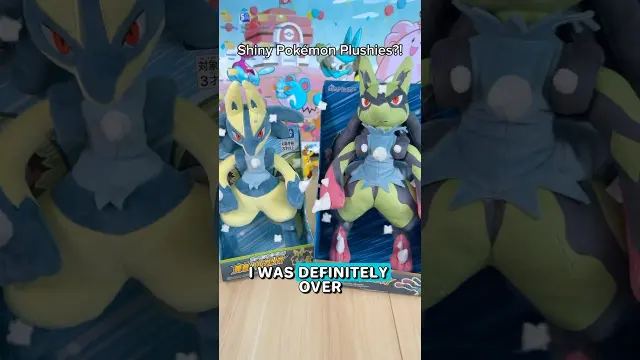
 Adding the first Shiny Lucario plushies to my collection
#Pokemon Plush
1 ideas
Adding the first Shiny Lucario plushies to my collection
Get new #Pokemon Plush ideas by email
Every Thursday: the week's best ideas, with the newest from #Pokemon Plush.
Related tags
A Beginner's Guide to Pokémon Plush
A Pokémon plush is a soft toy made in the shape of one of the creatures from the Pokémon games and animated series. Part toy, part collectible, it is one of the friendliest ways to bring a favourite character into your home — something to hug, to display on a shelf, or to hunt down in a particular size or colour.
Where they come from
Pokémon began as a Japanese video game series built around catching and training creatures, and grew into a worldwide franchise with hundreds of characters. Because the creatures are designed as simple, rounded shapes with strong silhouettes, they translate into fabric unusually well. A plush maker only has to get the eyes, the markings and the overall proportions right for a fan to recognise a character instantly, which is why the range of available characters is so wide.
The main kinds
Read more
- Standard plush, roughly hand-sized to arm-sized, usually the most detailed.
- Large cuddle or cushion-style plush, softer and simpler in shape, made for hugging rather than display.
- Mini plush and keychain or bag-clip versions, often sold in sets.
- Handmade plush: crochet amigurumi, felt, and hand-sewn versions made from patterns.
Choosing a good one
Look at the seams first. Even stitching, no loose threads and no thin patches where stuffing might escape are the signs of a well-made toy. Feel the fabric: minky and fleece are the softest and most common, while smoother fabrics show marks more easily. Embroidered eyes and markings tend to age better than printed ones, which can fade or peel. Check the label for licensing and material information, and be wary of a plush whose colours or proportions look noticeably off — unofficial copies are common and rarely last.
Collecting
You do not need to own everything. Most collectors pick a focus: one favourite character, one type, one size, or a particular era of design. Keep the paper tags if you think you might trade later, store spares somewhere dry and out of direct sunlight, and rotate what is on display so that dust and light do not settle on the same few pieces.
Care and cleaning
Surface-wash with a little mild soap and lukewarm water, then air dry away from radiators. Avoid hot tumble drying, which can melt synthetic fur. Brush the pile gently once dry to restore the texture. Plush with sound modules or batteries should never be soaked — wipe them only.
Making your own
Crochet amigurumi is the most popular handmade route: a simple sphere, a few colours and some felt details are enough for many characters. Sewing patterns work well for flatter shapes, and felt is forgiving for small details.
If a plush is for a child, check the recommended age on the label and keep an eye on small parts, plastic eyes and loose fibres.
#Pokemon Plush: frequently asked questions
How do I start collecting Pokémon plush without getting overwhelmed?
Start with a single character you genuinely love, then decide what your focus will be — a favourite Pokémon, a size you have room for, or a particular style of design. From there, add pieces slowly and keep the paper tags if you might trade later. Storing spares somewhere dry and away from direct sunlight keeps them in good condition while your collection grows.
What should I check before buying a Pokémon plush?
Look at the seams first, since even stitching and no thin patches are the clearest sign of a well-made toy, and feel the fabric to see whether it suits a toy you will hug or one you will display. Embroidered eyes and markings usually hold up better than printed ones. Check the label for licensing and material information, and be wary of plush whose colours or proportions look noticeably off.
Which type of Pokémon plush is best for cuddling versus displaying?
Standard plush tend to be the most detailed and work well on a shelf, while large cuddle or cushion-style plush are softer and simpler in shape, made for hugging. Mini and keychain versions are fun for bags or small displays. If you want something handmade, crochet, felt and hand-sewn patterns offer a different look entirely.
How do I clean a Pokémon plush safely?
Surface-wash with a little mild soap and lukewarm water, then air dry well away from radiators, and avoid hot tumble drying since it can melt synthetic fur. Brush the pile gently once dry to bring the texture back. Plush with sound modules or batteries should never be soaked — just wipe them.
What are common mistakes people make with Pokémon plush?
Buying copies with off colours or odd proportions is the most frequent regret, since they rarely last and are hard to clean well. Another is skipping the seam check and ending up with stuffing escaping after a wash or two. Collectors also often forget that dust and light settle on whatever stays displayed longest, so rotating pieces helps.
Can I make my own Pokémon plush, and what is the easiest way in?
Crochet amigurumi is the most popular handmade route — a simple sphere with a few colours and some felt details is enough to read as many characters. Sewing patterns suit flatter shapes, and felt is forgiving for small details. If the plush is for a child, follow the recommended age on the label and watch for small parts and loose fibres.
Videos come from YouTube and posts from Instagram; titles and summaries are our own. All rights belong to their creators.