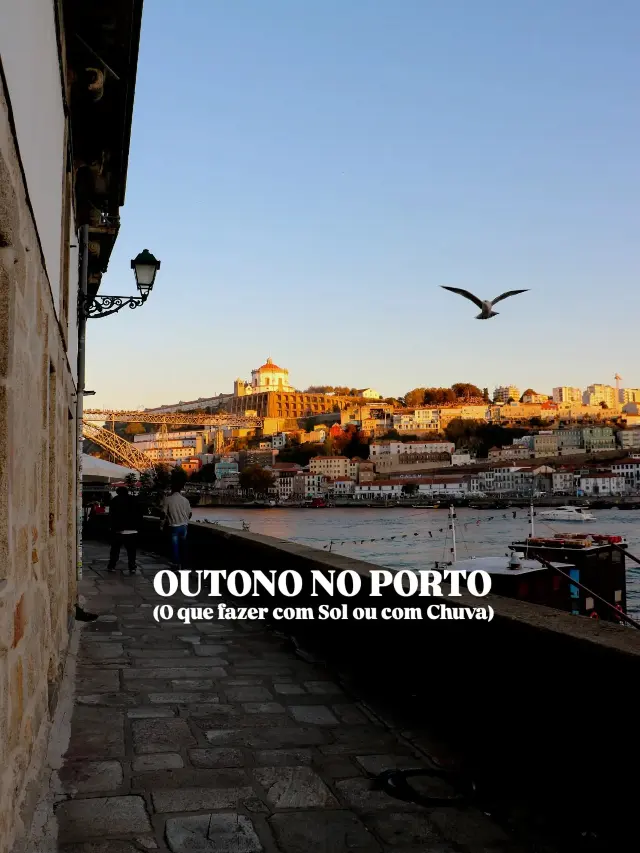
 Autumn Travel Guide for Porto in Portugal
#Porto
1 ideas
Autumn Travel Guide for Porto in Portugal
Get new #Porto ideas by email
Every Thursday: the week's best ideas, with the newest from #Porto.
Related tags
Porto: A Guide to Portugal's Riverside City
Porto sits where the Douro river meets the Atlantic, in the north of Portugal. It is the country's second city, and though it is often treated as a quick stop between Lisbon and the wine country upstream, it rewards a slower visit. The historic centre climbs steeply from the water in layers of granite, terracotta and painted tile, and much of it is protected as a World Heritage area.
The river and the two banks
The Douro is the organising line of the city. On the north bank, the Ribeira district runs along the water in a dense row of tall, narrow houses with balconies and hanging laundry. On the south bank lies Vila Nova de Gaia, where the port wine lodges have stored and aged their wines for centuries. Crossing between them is part of the pleasure: the great iron arch bridge carries a road on one level and a metro line above it, and the walk across gives you the classic view of both banks. Traditional wooden boats once carried the barrels downriver; a few still make short trips.
Port wine
Read more
Port is a fortified wine, made by adding grape spirit during fermentation, which stops the process and keeps sweetness. It comes in styles that range from young and ruby-coloured to tawny wines aged for years in wood, and it is served in small glasses. The grapes grow upstream in the terraced Douro valley, and the lodges in Gaia offer tours and tastings that explain the difference between the styles. If you go upstream, the valley itself — vineyards cut into schist slopes above the river — is worth a day of its own.
Streets, tiles and viewpoints
Porto is a city of azulejos, the glazed ceramic tiles that cover church interiors, station halls and ordinary house fronts in blue-and-white patterns. Look up as you walk. The old neighbourhoods around the cathedral and the Clérigos tower are a maze of stepped lanes, and the city is famously hilly, so comfortable shoes matter more than a plan. Several high points and riverside terraces give wide views; the light at the end of the day is the reason many people come back.
Eating and everyday life
The cooking is hearty and Atlantic-facing: salt cod in many forms, grilled fish, stewed tripe, and the francesinha, a thick layered sandwich served with a spiced sauce. Meals are long, and a coffee at a counter is a standing ritual. In June the city celebrates São João with grilled sardines, paper balloons and fireworks over the river, but the streets are lively year-round.
Practical notes
Spring and early autumn are mild and comfortable; summer is warm and busy, winter wet and quieter. The metro, the historic tram along the river and the trains along the Douro make a car unnecessary. Book wine lodge visits ahead in high season, and allow time simply to wander — Porto is best absorbed on foot, slowly, and with frequent stops.
#Porto: frequently asked questions
How should a first-time visitor plan a trip to Porto?
Start by accepting that the city is hilly and best absorbed on foot, so build in unstructured wandering rather than a tight schedule of sights. Group the riverside and the old lanes near the cathedral into one slow day, and save a separate stretch of time for crossing the bridge and visiting the wine lodges on the opposite bank. If the Douro valley is on your list, treat it as a day of its own rather than an add-on.
Which bank should I stay on, and does it matter?
The north bank puts you inside the historic centre, close to the stepped lanes, tiled churches and everyday street life, which suits people who want to walk everywhere. The south bank is quieter and centred on the wine lodges, with the classic view back across the river. Either works well, since the bridge and the metro link the two sides quickly.
What do I need to know to choose a port wine?
The main division is between ruby styles, which stay young, fruity and deep in colour, and tawny styles, which mellow and take on nutty notes through long ageing in wood. Sweeter, simpler versions are the affordable everyday choice, while the older wood-aged ones are meant to be sipped slowly in small glasses. A tasting at one of the lodges is the quickest way to find which style you actually like before buying.
How should I care for a bottle of port once it is open?
Because it is fortified, an open bottle keeps far longer than ordinary wine, but it still fades once air gets to it. Recork it, keep it somewhere cool and dark, and finish it within a reasonable stretch rather than leaving it on a warm shelf. Serve it slightly cool rather than chilled, in small glasses, since the sweetness is intense.
How do I get around Porto without a car?
You do not need one: the metro covers the city well, a historic tram runs along the river, and trains follow the Douro upstream. That makes driving more of a nuisance than a help, given the steep, narrow streets and limited parking. Comfortable shoes matter more than any transport plan, because the city rewards walking.
What are the common mistakes people make in Porto?
The biggest one is treating the city as a brief stopover and rushing the historic centre in a few hours, when the appeal is in the slow wander and the viewpoints. Others are packing for flat ground and being caught out by the hills, or turning up at wine lodges in high season without booking ahead. Many visitors also forget to look up at the tiled facades, which are half the point of the place.
Videos come from YouTube and posts from Instagram; titles and summaries are our own. All rights belong to their creators.