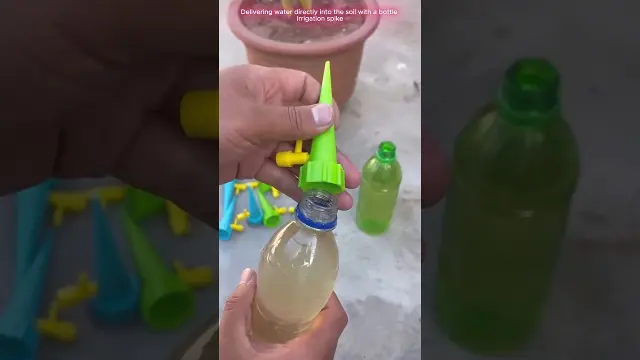
 Adjustable Bottle Drip Irrigation Spike Demonstration
#Potted Plants
1 ideas
Adjustable Bottle Drip Irrigation Spike Demonstration
Get new #Potted Plants ideas by email
Every Thursday: the week's best ideas, with the newest from #Potted Plants.
Related tags
Potted Plants: A Beginner's Guide to Growing in Containers
A potted plant is simply a plant grown in a container rather than in the ground. The idea is old — people have moved plants into pots for as long as they have wanted greenery on balconies, windowsills and courtyards — and it remains one of the easiest ways to garden. A pot lets you control the soil, shift a plant toward better light, bring it indoors for the cold months, or start small on a windowsill with no garden at all.
What makes pot growing different is that everything happens inside a small, closed world. The roots cannot reach deeper for water, the soil holds only so many nutrients, and the plant depends on you for all of it. Once you understand that, most of the rest follows.
Choosing a pot and a place
The container matters more than it looks. Whatever you choose, it needs drainage holes at the bottom, because roots that sit in standing water rot. Terracotta dries out faster and suits plants that like to breathe; glazed ceramic and plastic hold moisture longer.
Read more
Size should match the plant rather than overwhelm it. A small seedling in a huge pot sits in wet soil it cannot use yet. When roots fill the pot and start circling, it is time to move up one size — not several.
Then look at the light in your space. Most flowering plants want a bright spot; many foliage plants tolerate shade. Watch where the sun actually falls during the day before you decide, and remember that a spot can be brighter or darker than it feels.
Soil, water and the everyday care
Use a potting mix rather than garden soil. It is lighter, drains freely and is made for containers. Garden soil compacts in a pot and suffocates roots.
Watering is where most plants are lost, usually by kindness. Check the top of the soil with a finger before watering: damp means wait, dry a little below the surface means water thoroughly until it runs out the drainage holes. Empty the saucer afterwards. Frequency changes with the season, the light and the size of the pot, so learn to read the plant rather than follow a fixed schedule.
- Feed sparingly during the growing season, as potted plants use up their soil.
- Turn pots now and then so growth stays even.
- Wipe dust from leaves so the plant can use the light.
- Remove faded flowers and dead leaves to keep energy going to new growth.
A few things worth knowing
Repot in spring when the plant is waking up. Group pots together to make watering easier and to soften dry indoor air. Check the undersides of leaves and the rim of the pot for small pests, and deal with them early.
Start with a couple of forgiving plants and let your sense of them grow. Potted plants reward attention, and even a modest collection can change how a room or a balcony feels.
#Potted Plants: frequently asked questions
How do I get started with potted plants if I've never grown anything before?
Begin with a small container that has drainage holes, fill it with a proper potting mix rather than soil dug from the garden, and pick a plant known for being forgiving. Place it where you can actually see it each day, because noticing it is most of the skill. Starting modestly lets you learn how a plant behaves before adding more.
What do I actually need to keep a potted plant alive?
A container with drainage, a light potting mix, a spot with suitable light, and a watering can are really the whole kit. A saucer to catch runoff and something to feed with during the growing season round it out. Everything else is optional.
How do I choose the right plant for my space?
Watch your space for a few days and note where the sun genuinely falls, since a corner can be brighter or dimmer than it feels. Then match the plant to that reality: flowering types generally want plenty of light, while many foliage plants cope with less. Also consider how much tending you will realistically do.
How often should I water a potted plant?
There is no fixed schedule that works, because the answer changes with the season, the light and the size of the pot. Push a finger into the surface: if it feels damp, wait; if it is dry a little deeper, water thoroughly until it drains out the bottom. Empty the saucer afterwards so the roots are not left standing in water.
What are the most common mistakes people make with potted plants?
Overwatering is the big one, usually done out of kindness, and it is made worse by pots without drainage. Putting a tiny plant into a large container leaves it sitting in wet soil it cannot use, and using garden soil instead of potting mix compacts and starves the roots. Repotting only when roots have filled the current pot avoids both problems.
When should I move a plant into a bigger pot?
Repot in spring, when the plant is beginning to grow again and can recover quickly. The signal to act is roots crowding the surface or circling around the inside of the pot. Step up to the next size only — jumping to a much larger container leaves unused wet soil around the roots.
Videos come from YouTube and posts from Instagram; titles and summaries are our own. All rights belong to their creators.