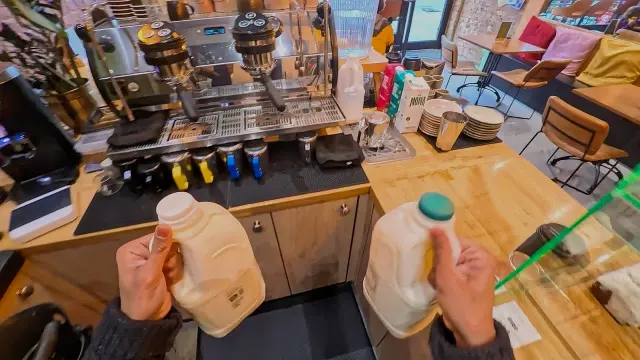
 Point of View of a Barista Working a Coffee Shop Shift
#POV
1 ideas
Point of View of a Barista Working a Coffee Shop Shift
Get new #POV ideas by email
Every Thursday: the week's best ideas, with the newest from #POV.
Related tags
Point of View: How to Use the POV Style
What POV means
POV stands for point of view. In visual storytelling, it shows a scene as if you are seeing it through someone’s eyes. Instead of watching from the outside, the viewer is placed inside the moment. That can make a photo, video, or story feel more immediate, personal, and immersive.
The idea comes from storytelling in literature and film, where point of view shapes what the audience knows and feels. In visual content, POV is used to create a stronger sense of presence. It can suggest routine, emotion, surprise, or intimacy without needing a full explanation.
Where it is used
Read more
POV is common in photography, short videos, social media clips, and creative storytelling. It works especially well for everyday moments because it makes familiar actions feel more vivid. You might see it used for cooking, working, getting ready, traveling, crafting, or any task where the viewer can imagine themselves doing the same thing.
It can also be used to show a specific role or perspective, such as a customer, a worker, a parent, or a friend. The main idea is always the same: the scene is shown from inside the experience rather than from a distance.
Common styles
There are a few simple ways to use POV:
- First-person view: the camera shows what the person sees directly.
- Handheld POV: a more natural, slightly moving view that feels spontaneous.
- Interactive POV: the scene is framed so the viewer feels addressed or involved.
- Narrative POV: the visual style helps tell a small story with a beginning, middle, and end.
Each version can be calm, playful, dramatic, or practical, depending on the subject.
Tips for beginners
If you want to try POV, start with a simple action. Think about what the person would naturally see: hands, objects, movement, and the space around them. Keep the composition clear so the viewer can follow what is happening without confusion.
A few helpful things to keep in mind:
- Focus on one moment or task rather than too many details.
- Use angles that feel natural to human eyesight.
- Let the movement be smooth enough to follow, but not so perfect that it loses its realism.
- Include small details that make the scene believable, like gestures, tools, or surroundings.
- Think about sound, light, and pacing if you are making video, since they help shape the feeling.
Why it works
POV feels effective because it invites the viewer into the scene. It can make ordinary moments feel more alive and help tell a story without many words. For that reason, it is useful for both creative work and everyday content.
If you are trying it for the first time, keep it simple. Choose a clear viewpoint, a recognizable action, and a mood you want to share. The strength of POV is not in complexity, but in how naturally it places someone inside the moment.
Videos come from YouTube and posts from Instagram; titles and summaries are our own. All rights belong to their creators.