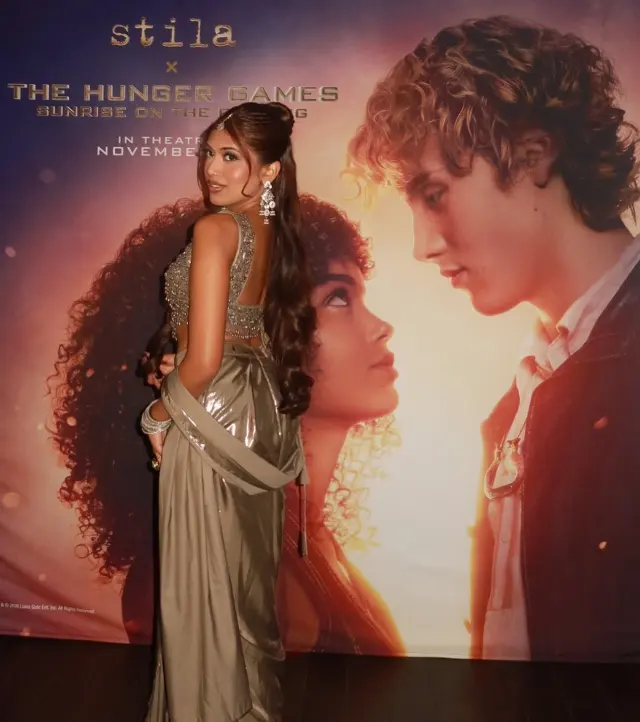
 Premiere makeup look for a Hunger Games event
#Premiere Makeup
1 ideas
Premiere makeup look for a Hunger Games event
Get new #Premiere Makeup ideas by email
Every Thursday: the week's best ideas, with the newest from #Premiere Makeup.
Related tags
Premiere Makeup: A Guide to Red Carpet-Ready Looks
A premiere is a public first screening — the night a film, series or stage show meets its audience, with photographers, cameras and often a crowd along the way. Premiere makeup is the makeup worn for that kind of evening: photographed from every angle, lit by flash as well as spotlights, and expected to survive several hours of greeting, posing and standing around. It borrows from bridal and editorial makeup but has its own logic, because the goal is not to look transformed in person so much as to look like yourself, clearly, on camera.
Why it differs from an evening out
Ordinary evening makeup is judged by the people in the room. Premiere makeup is judged by a lens. Cameras flatten features, flash washes out colour, and strong light finds every patch of dryness. That shapes the whole approach: features are defined with shape and placement rather than heavy layers, skin is prepared carefully, and anything that photographs unpredictably — very pale shimmer, translucent powders with flashback, glossy finishes on the centre of the face — is used with restraint.
The main styles
Read more
- Classic Hollywood: defined brow, fine liner, a red or berry lip, softly sculpted cheek. Reliable, timeless, works with almost any outfit.
- Modern minimal: even skin, groomed brow, a wash of neutral shadow, lashings of mascara, tinted balm. Suits daytime premieres and festival settings.
- Smoky and dramatic: deeper eyes balanced by a quieter lip, often built in thin layers so it stays blended rather than heavy.
- Bold colour: a single saturated element — a graphic liner, a bright lip, a coloured inner corner — kept clean and everything else quiet.
- Editorial: matte skin, sculpted contours, unusual placement of blush or liner. More of a statement, and the hardest to keep looking intentional in real light.
What beginners should know
Start with the skin, not the colour. Cleanse gently, moisturise, and let everything settle before you build. Primer is optional; well-hydrated skin usually does more than any product. Use thin layers everywhere — base, shadow, blush — because thin layers can be adjusted and thick ones cannot.
Match your base in daylight, not in the shop's lighting, and check it on your jawline rather than your hand. Set only where you actually get shine. If you plan to be photographed with flash, test your finishing powder and sun protection beforehand on a phone with flash on; some leave a pale cast.
Practical tips for the night
- Bring a small kit: blotting papers, your lip colour, a compact powder, cotton buds.
- Blot before you powder; powdering over shine is what makes makeup look heavy.
- Keep lips matte or satin if you will be kissing cheeks and drinking; gloss moves.
- Practise the full look at least once, including in photographs, so nothing surprises you.
- Give yourself more time than you think. The face that reads well on camera is a calm, unhurried one.
#Premiere Makeup: frequently asked questions
How should a beginner start with premiere makeup?
Begin with skin preparation rather than colour: cleanse gently, moisturise, and let everything settle before applying makeup. Build base, shadow, and blush in thin layers so you can adjust them, and match your base in daylight along the jawline rather than on your hand.
What should I pack for touch-ups at a premiere?
Keep a small kit with blotting papers, your lip colour, a compact powder, and cotton buds. Blot shine before powdering, and choose a matte or satin lip rather than a gloss if you will be greeting people and drinking.
Which premiere makeup style should I choose?
Let the event and your outfit guide you: a classic defined brow and berry or red lip is reliable, while modern minimal suits daytime or festival settings. A smoky eye or one bold colour works when the rest of the face stays quiet and clean.
How can I make premiere makeup look good in photos?
Cameras flatten features and flash can wash out colour, so define features through shape and placement instead of heavy layers. Use pale shimmer, translucent powder, and centre-face gloss with restraint, and test your finishing powder and sun protection beforehand using a phone with flash on.
What common mistakes should I avoid with premiere makeup?
Avoid thick layers that cannot be corrected, and do not powder over shine without blotting first, as that is what makes makeup look heavy. Also avoid matching foundation under shop lighting or on your hand, and practise the full look in photographs before the event.
Videos come from YouTube and posts from Instagram; titles and summaries are our own. All rights belong to their creators.