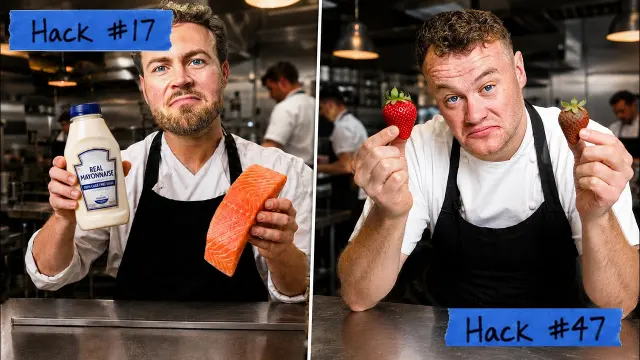
 75 Chef-Tested Hacks And Restaurant Kitchen Tricks
#Pro Cooking
1 ideas
75 Chef-Tested Hacks And Restaurant Kitchen Tricks
Get new #Pro Cooking ideas by email
Every Thursday: the week's best ideas, with the newest from #Pro Cooking.
Related tags
Pro Cooking: Kitchen Techniques Worth Learning
"Pro cooking" describes the habits and methods of people who cook for a living, and the useful thing about them is that almost none depend on expensive equipment or secret ingredients. They are decisions about order, temperature, patience and repetition. Whether you want to cook better on a weeknight or simply understand why restaurant food tastes the way it does, the same handful of principles applies.
Everything in its place
The first difference you notice in a working kitchen is organisation. Ingredients are prepared, measured and arranged before any heat is applied. This is not decoration: it means nothing burns while you are still chopping, and it lets you taste and adjust as you go instead of guessing. Read a recipe through twice, portion your ingredients into bowls, sharpen your knives, and clear space before you start. Small tasks that can be done ahead — washing herbs, boiling water, softening butter, taking meat out of the fridge — should be done ahead.
Knife skills come first
Read more
Most kitchen time is cutting time, and a sharp knife makes that time shorter, safer and more consistent. Learn a small number of cuts rather than many: slices of even thickness, sticks, and dice built from those sticks. Consistency matters more than speed, because evenly cut pieces cook evenly. Keep your fingertips curled back, your guiding hand steady, and the tip of the blade on the board. A cheap knife kept sharp outperforms an expensive one kept dull.
Heat is a tool, not a setting
Professionals talk about heat in terms of what it does, not what number it is. High heat browns and chars; moderate heat cooks through gently; low heat builds flavour slowly. A pan must be hot enough before food goes in, and it must not be crowded — steam is the enemy of browning. Learn to hear and smell what is happening: a sizzle that fades means the pan is losing temperature, and a smell turning sharp means you are close to burning. Dry food browns; wet food boils.
Season in layers
Seasoning is not one act at the end. Salt a little at each stage, taste as you go, and use acid — lemon, vinegar, wine — the way you would use salt, because many dishes taste flat when what they lack is brightness. Taste with a clean spoon, and taste the component parts, not only the finished dish.
Build flavour from the base
Stocks, browned onions, roasted bones, fond left in the pan, aromatics added in the right order: these are the quiet foundations of restaurant cooking. When a dish tastes thin, the answer is usually in the base rather than in the garnish.
Rest, then serve
Meat benefits from resting so its juices settle. Sauces benefit from a moment off the heat. Plates benefit from being warm. Serving food at the right temperature, on warmed plates, with everything ready at once, is a skill in itself.
None of this requires talent. It requires attention, repeated until it becomes instinct.
#Pro Cooking: frequently asked questions
How do I start cooking in a more professional way at home?
Start with the routine rather than the recipes: read the recipe through before touching anything, prepare and arrange every ingredient, sharpen your knife and clear your workspace. Doing the small jobs ahead — washing herbs, boiling water, bringing meat out of the fridge — removes the panic that causes most home cooking mistakes. Once the setup feels automatic, your attention goes where it belongs, on heat and seasoning.
What equipment do I actually need to cook like a pro?
Far less than people expect. A sharp knife, a sturdy board, a heavy pan that holds heat well, a couple of bowls for organising ingredients and something to taste with will carry you through nearly everything. Technique and organisation matter much more than owning more gadgets.
Which knife should I choose, and how do I look after it?
Pick one that feels balanced in your hand and is comfortable to grip for long stretches, since most kitchen time is cutting time. The important part is keeping it sharp — a modest knife maintained well cuts better than an expensive one left dull. Hone it regularly, wash and dry it by hand rather than leaving it in the sink, and store it so the edge isn't knocking against anything.
What are the most common mistakes home cooks make?
Crowding the pan is the big one: food releases steam instead of browning, and you lose the flavour that comes from a proper sear. Seasoning only at the end is the next — salt added in stages, with a squeeze of lemon or splash of vinegar for brightness, tastes far better than a single correction. Rushing the base, whether onions or stock, is the third; thin-tasting dishes usually need work at the foundation, not more garnish.
How do I judge heat without a numbered setting?
Think about what you want the heat to do: high heat browns and chars, moderate heat cooks food through gently, low heat builds flavour slowly. Let the pan come up to temperature before anything goes in, and use your senses — a sizzle that dies away means the pan is cooling, and a sharp smell means you're close to burning. Dry surfaces brown; wet ones steam.
Any ideas for cooking a special occasion meal without stress?
Choose dishes that can be partly done ahead so the final stretch isn't a scramble, and build the menu around a base you've made in advance, such as a stock or slow-cooked onions. Warm the plates, rest the meat so its juices settle, and give sauces a moment off the heat before serving. Getting everything to the table at the right temperature, at the same time, is the real achievement.
Videos come from YouTube and posts from Instagram; titles and summaries are our own. All rights belong to their creators.